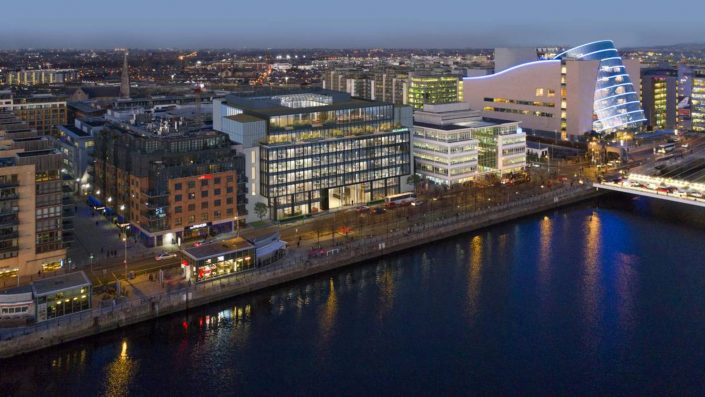
Following an extended period of “head burying”, most property fund managers are bracing themselves for material negative valuer adjustments across their portfolios (with the potential exception of retail which has already been massively discounted). This trepidation is clearly derived from the escalating impacts of the war in Ukraine, spiralling inflation, rising interest rates, looming recession in both the US and across the EU, and now the calamitous UK economic situation. However, there is one area of the property market where the impact of these issues will be magnified and, to add to its woes, systemic shortfalls exposed which have been historically overlooked. This is the area of non-ESG (environmental, social and governance) compliant offices, many of which are already on their way to becoming “stranded assets”.
If a building does not meet ESG requirements and the cost of improving it to satisfy these exceeds the required market return, the building in question can be considered a stranded asset. In the valuers’ defence, the office occupational market has been very slow in adjusting to the environmental agenda
Until relatively recently very few valuers were appropriately differentiating between offices that could satisfy occupier ESG requirements and those that could not. This is especially the case for those perceived “modern schemes” constructed in the past 10 years but whose energy conservation specification does not satisfy the 2017 Part L building guidelines — the effective start of the nZEB (nearly zero energy building) standards. Even if ESG upgrades were accounted for, the costs being applied were often only a fraction of the reality. These costs, which include the likes of glass/facade replacement, plant enhancement/replacement, electrical hardware upgrades, new BMS (building management systems), PV (photovoltaic) installation, rainwater harvesting and general water conservation initiatives are now materially higher and rising.
A scarcity of materials and competition for labour and expertise is unlikely to see these costs abate in the next few years as the scale of the issue becomes apparent. The Bannon office team estimates than less than 15 per cent of Dublin’s current office stock is actually ESG compliant.
In the valuers’ defence, the office occupational market has been very slow in adjusting to the environmental agenda, and rent is ultimately the primary driver of value. However, since the ramifications of the EU’s sustainable finance directive (adopted in April 2021) and the UK’s escalating Minimum Energy Efficiency Standards (MEES) have become clearer, and with various recent high-profile climate events driving public (and corporate) opinion, a sea change in attitudes has swept over the occupational market.
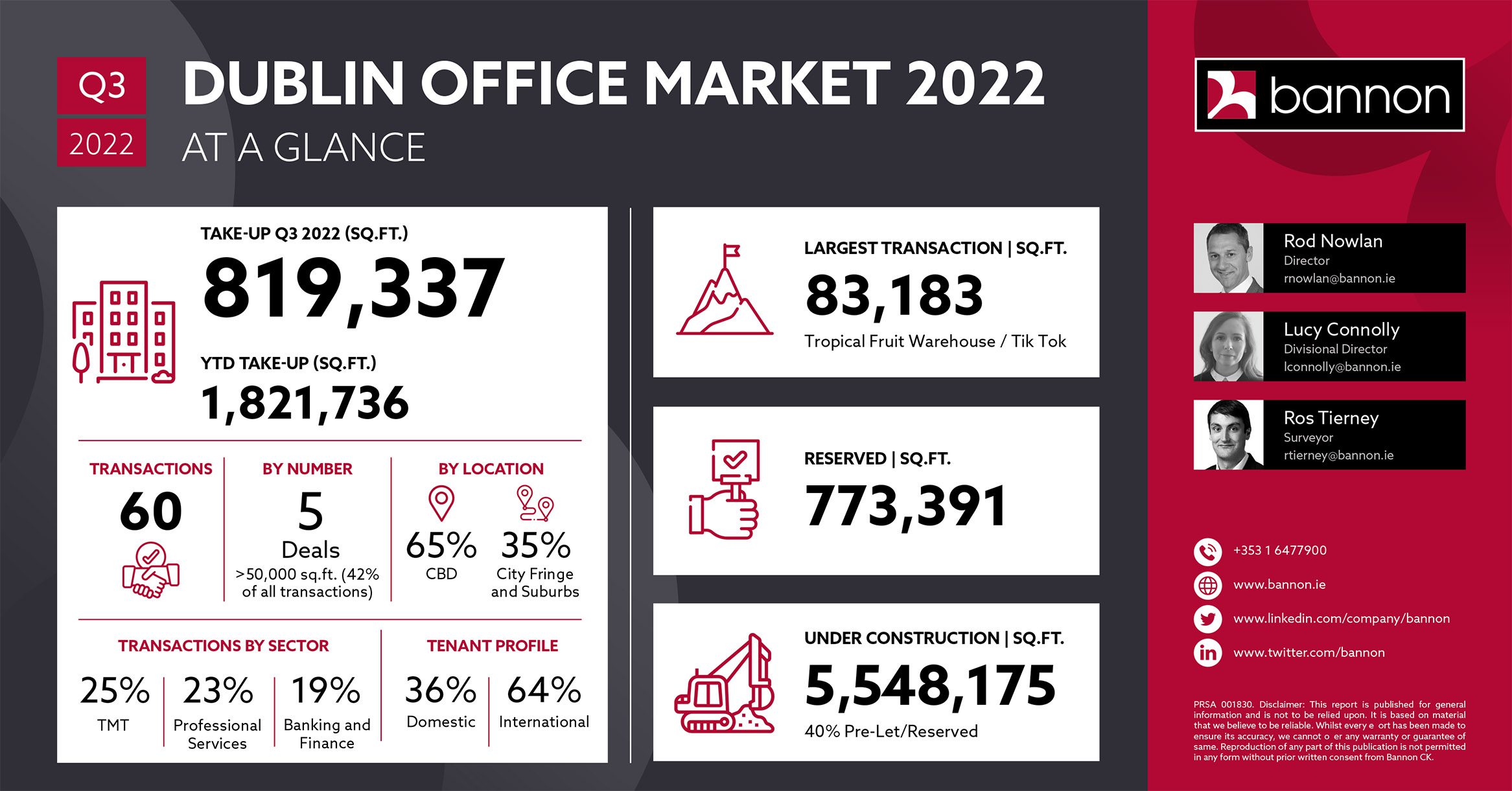
If we look back at this quarter’s office lettings, the transition in the market’s thinking is clear. There was almost 400,000sq ft of take-up in Dublin’s core central business district (Dublin 1, 2 and 4) with 86 per cent of this accounted for by ESG-compliant space. Clearly there is now a firmly established two-tier office occupational market in the city centre, namely ESG-compliant offices and the rest. Interestingly, from a further review of this quarter’s take-up, it is clear that ESG is still not a priority in the more “value-focused” suburban locations with a mere 15 per cent of the 275,000sq ft of take-up outside of Dublin 1,2 and 4 being ESG-compliant. However, the pressure on all occupiers is likely to intensify further in January 2023 when the rest of the taxonomy regulations — technical screening criteria (TSC) and regulatory technical standards (RTS) — and the second phases of financial services sector regulation and the FCA climate-related disclosure regime come into effect.
This will be particularly difficult for suburban assets to react to as the rent available in these locations is unlikely to be sufficient to support ESG retrofits.
The extent of this micro-sector’s woes doesn’t stop there either. The “latent carbon” movement is also upon us meaning that it will become increasingly difficult to knock down existing buildings. Increased density and height can support the economics of ESG which is often maximised by demolition. The increasing focus on preserving latent carbon will mean the best that will be on offer for these buildings is to be extended vertically and horizontally, which will have both structural and planning limitations. As a consequence, valuers are finally consulting their quantity-surveyor colleagues to determine the true scale of the issue. The “tic-tic” of the rollercoaster looks to be falling silent for this part of the market, and I’m not sure the current non-ESG compliant office owners will enjoy the ride to come.
There will however be a huge opportunity for those with the skills to efficiently transition these buildings back towards the institutional mainstream. In this regard, valuing and selling these assets will require an in-depth analysis of the true costs associated with bringing them up to standard. For some, the maths just will not work, while for others pursuing an alternate use may be the only avenue open to them.
Article by The Irish Times


 Bannon’s latest monthly Retail Pulse has now gone live.








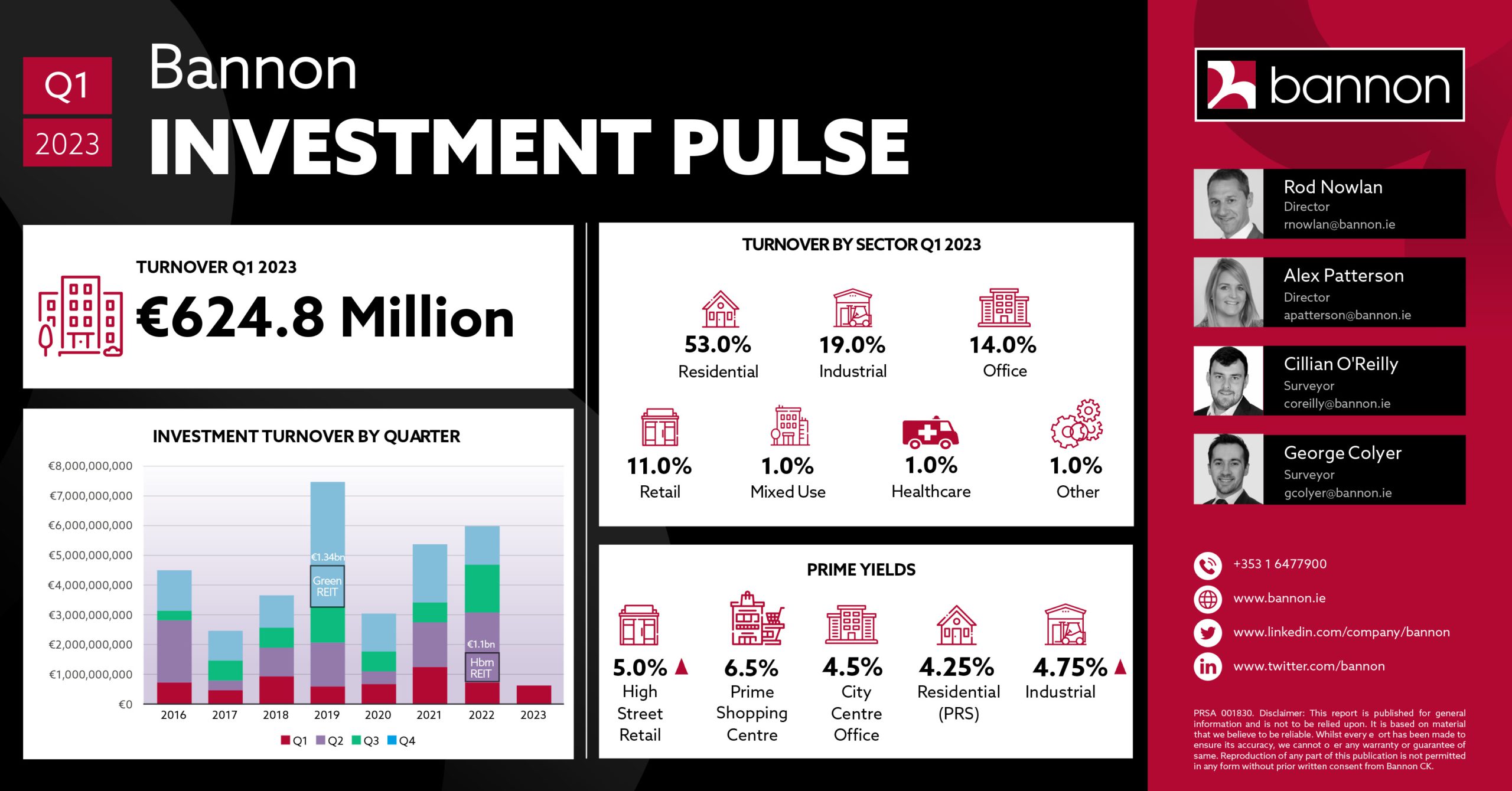



 Bannon’s latest Office Pulse is now live!
 Bannon’s latest monthly Retail Pulse has now gone live.

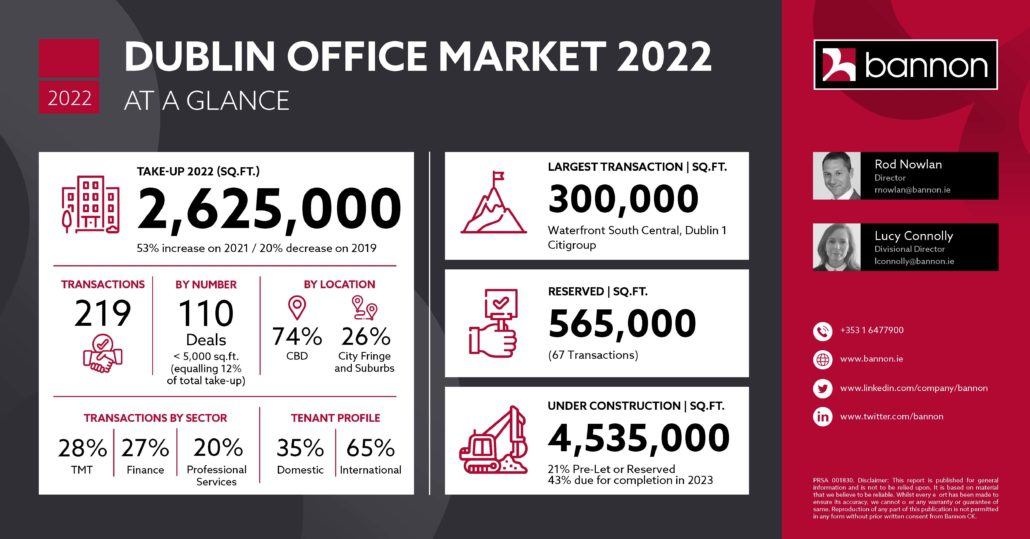
 The first Bannon Dublin Office Market Pulse of 2023 is now live. Dublin office market take up exceeded 2,650,000 sq.ft. in 2022, boosted by a busy Q4 with over 804,000 sq.ft. transacting in the final quarter. See full details below together with expert insight from



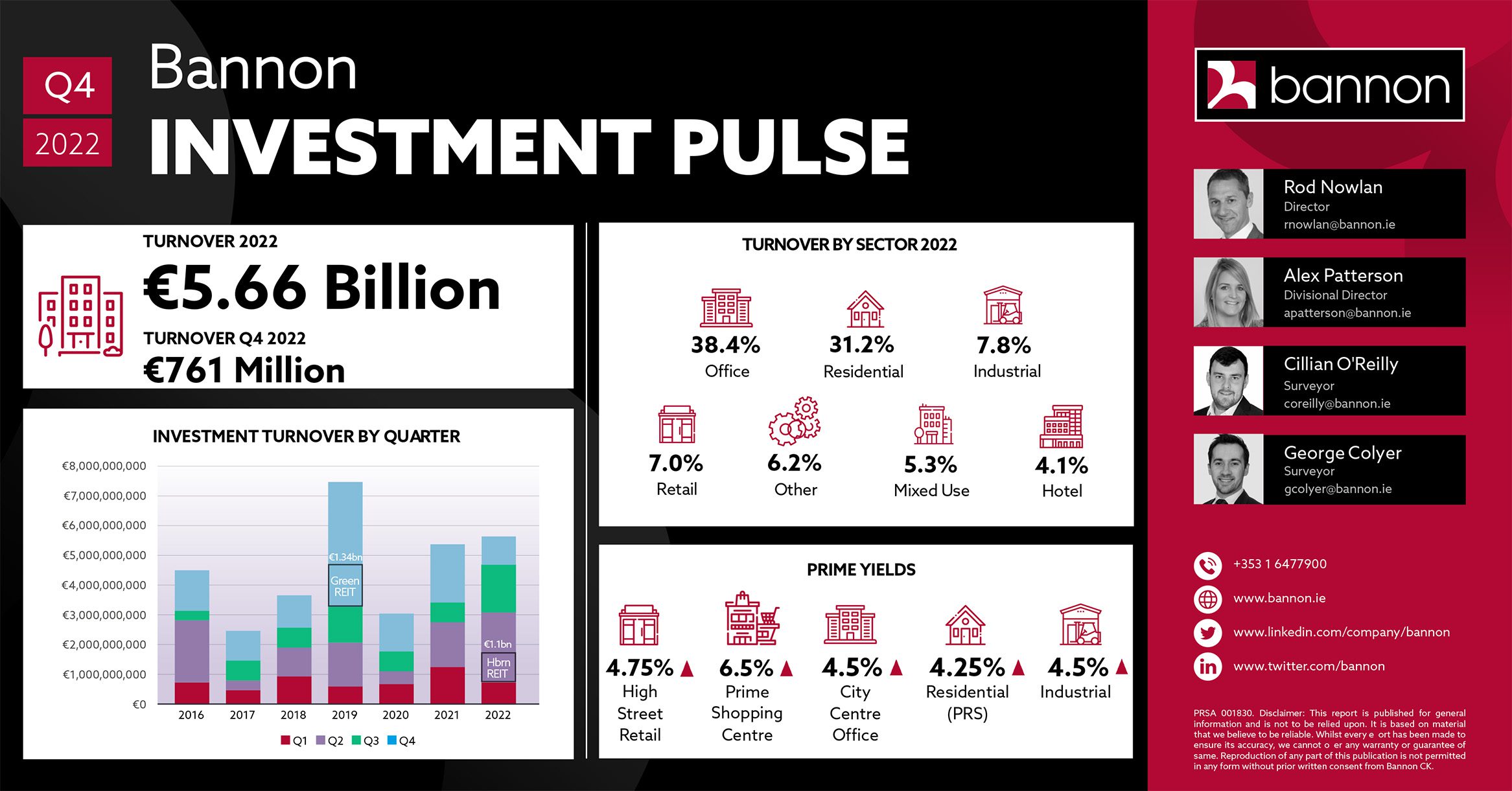
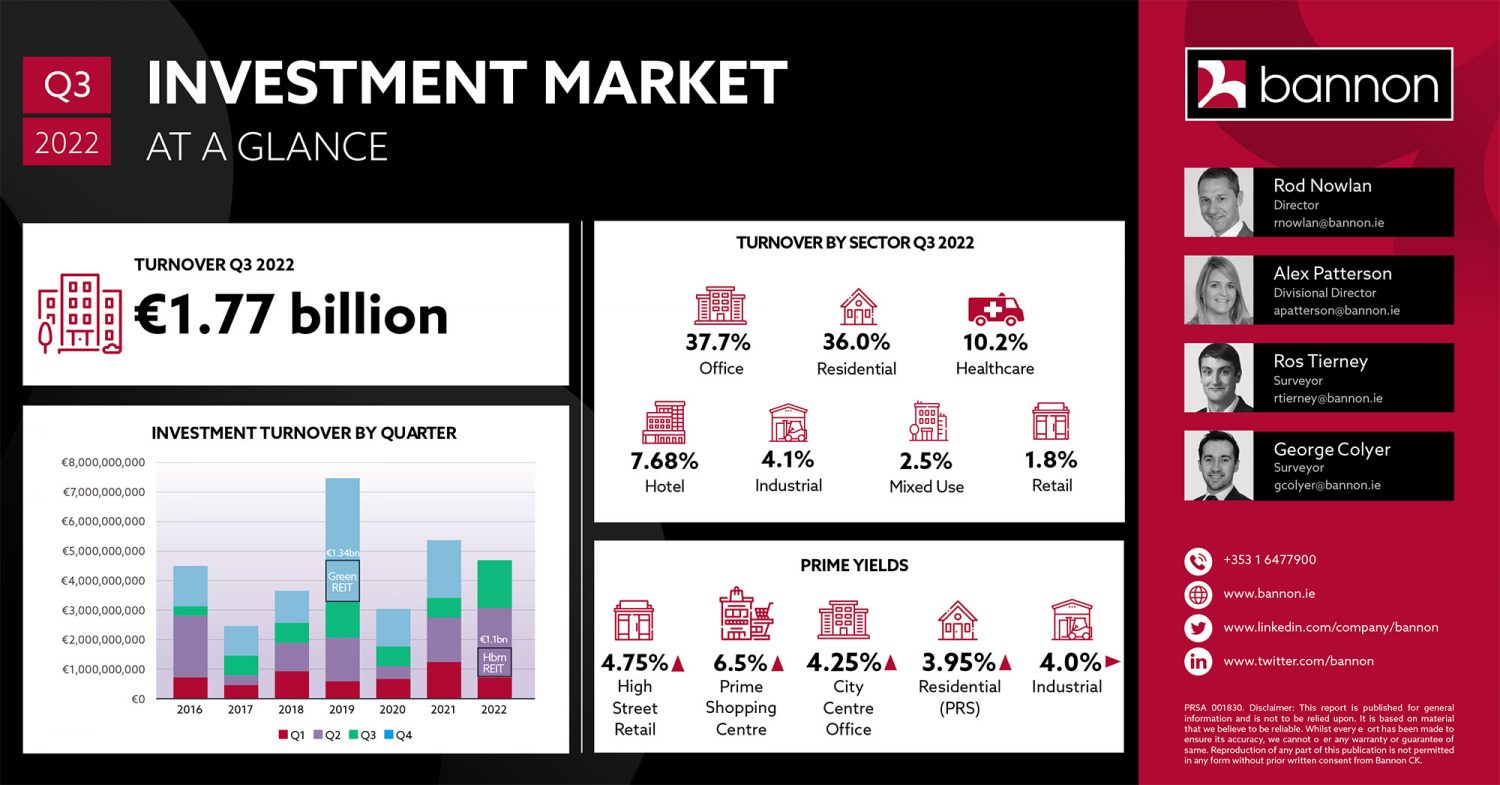
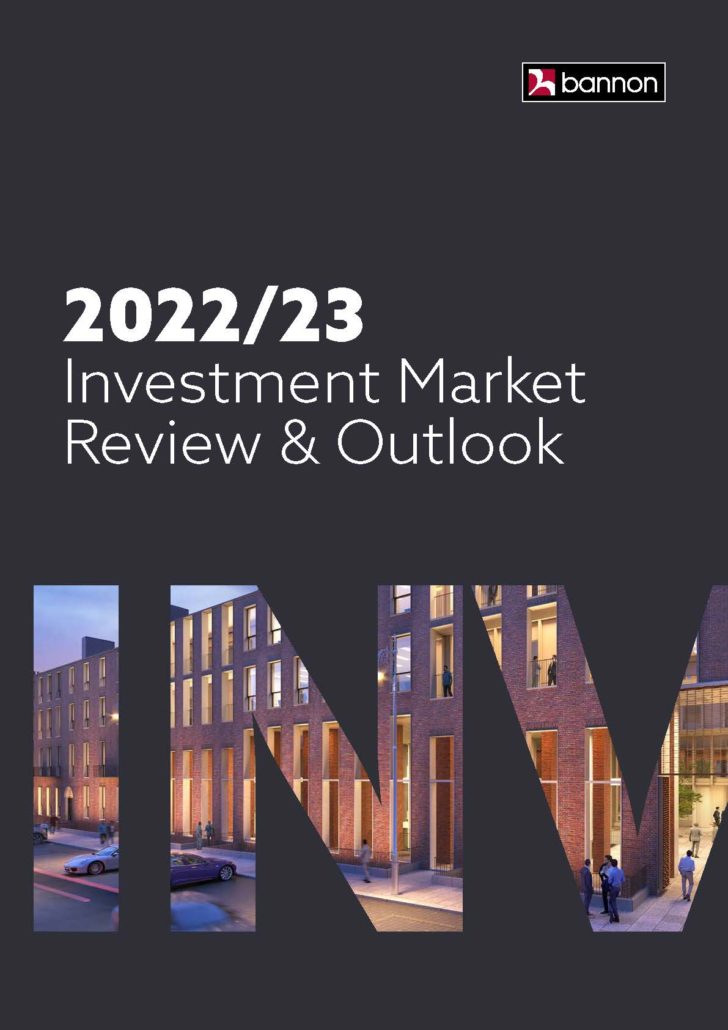 For the property sector, while one of strongest capital market years on record (second only to 2019), 2022 will be best remembered as the “year of reckoning”. A year where a mixture of macro-economic and geopolitical issues combined to commence rebasing the market following almost a decade of effectively zero interest rates, low inflation, and expansive monetary policies.

 The first Bannon Pulse of 2023 is now live. We look back at the strong level of activity in 2022, highlighted by the large number of lettings and new market entrants. Our occupancy trackers finished 2022 in positive form, as did our trading analysis across the retail categories.
 Our final Retail Pulse of 2022 has just gone live. All in all, an exceptionally busy year for the team at Bannon. 2023 is looking very promising for Retail.
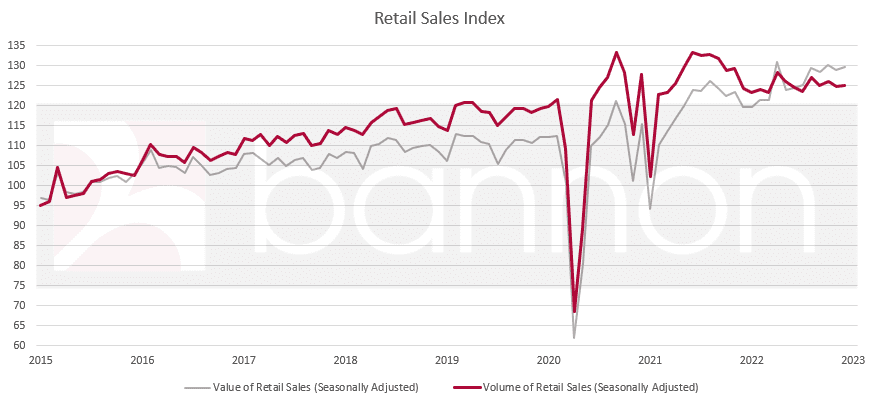
 Bannon’s latest monthly Retail Pulse has now gone live. Neil Bannon looks at recent retail sales data to demonstrate how the negative narrative continues to clash with reality.


 The Bannon Dublin Office Market report is available now. Take up for the third quarter reached 819,000 sq.ft. representing a 60% increase on Q2 and a 77% increase in the same period last year. Lease flexibility continues to be sought in the short term as companies continue to assess their office requirements as remote and hybrid models are fully determined.






 Whatever the short balance of the year has in store, there is little doubt that in 2022 a rubicon was crossed for assets that are not scoring well with their ESG credentials. The RICS made sure valuers took the step to acknowledge the importance of ESG credentials on buildings and their impact on values with the publication of a new guidance note effective from January this year. Also in 2022, more than ever, both occupiers and owners made known their absolute preference for ESG compliant buildings. In the office sector in Q3 over 85% of city take-up related to ESG compliant offices.

:quality(70)/cloudfront-eu-central-1.images.arcpublishing.com/irishtimes/RD72OWG6Z5BTFCE3SO7DUQKALI.jpg)



 The Croí Cónaithe scheme, which has had €450m earmarked for it over the next three years, is designed for the State to plug the gap between the cost of construction and the market value of apartments. It relates to certain areas where the sales price achievable is less than the costs of development.
 Sustainability impacts everybody, whether it is investors securing the long-term value of their assets, corporate occupiers demonstrating their environmental credentials to clients and staff, retailers reacting to shifts in consumer demand or funding institutions protecting the security of their loan books. There is no part of the property market that is and will not be increasingly impacted by the move to a zero-carbon future. This realisation was the reason Bannon established EVIA 3 years ago; a consultancy business whose sole focus is the delivery of sustainable solutions to stakeholders in the commercial real estate sector. Since its inception EVIA, working hand in hand with the Bannon Management, Investment and Consultancy teams, has delivered dozens of sustainability projects including LED lighting projects, smart metres and energy monitoring, solar power installation and increasingly we are seeing demand from clients to provide an overarching strategy to put their entire relationship with real estate on a long-term sustainable footing.










 Bannon’s latest monthly Retail Pulse has now gone live. In this publication Neil Bannon shares some insights into the ongoing decline of online fast fashion retailers and Darren Peavoy focuses on the rebound in footfall levels which has been seen in Dublin City Centre.
 Predictably Irish Consumer Sentiment has dropped significantly in the face of an onslaught bad news; interest rates up, cost of living crisis, energy bills and the ongoing War in Ukraine. What will be interesting to watch is how this drop in sentiment manifests itself in retail sales.
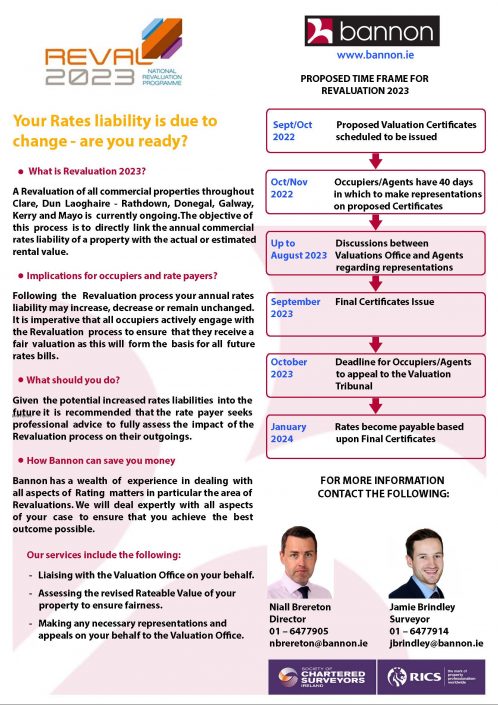 Revaluation 2023 is about to get underway in earnest with Proposed Valuation Certificates due to issue to ratepayers in the coming days.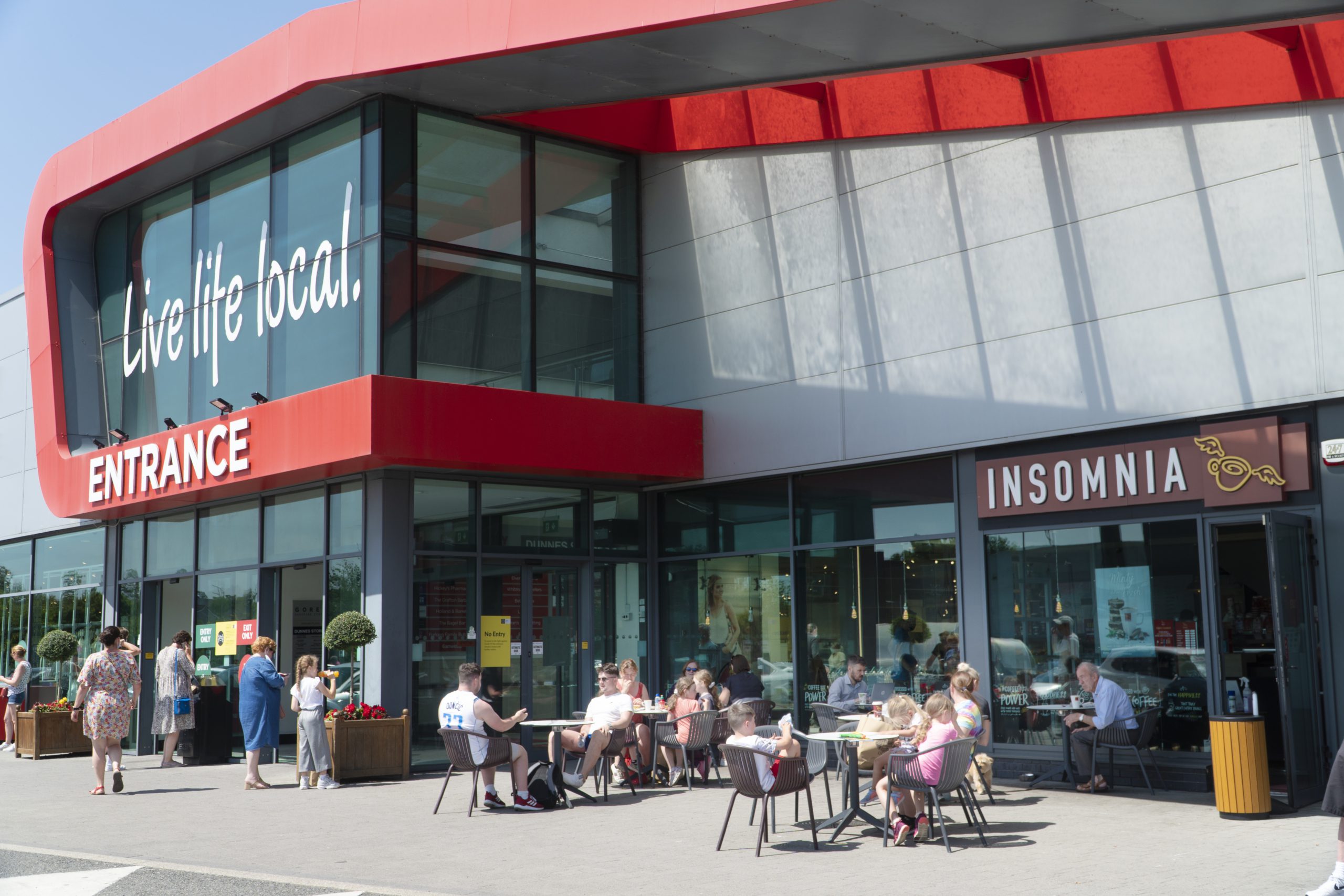
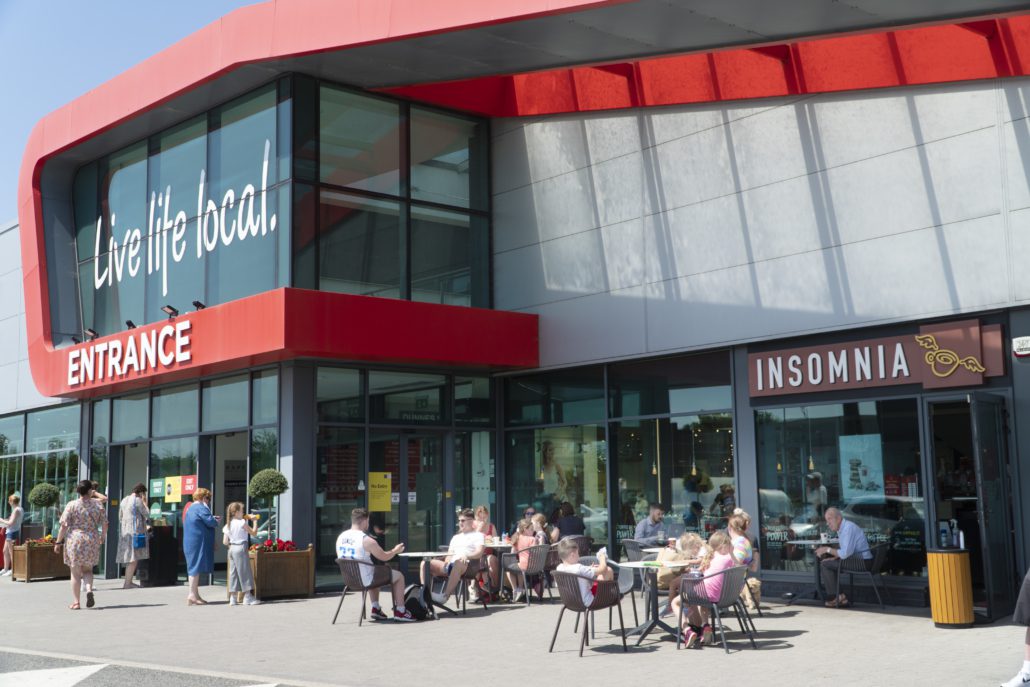 What is a Community Shopping Centre?
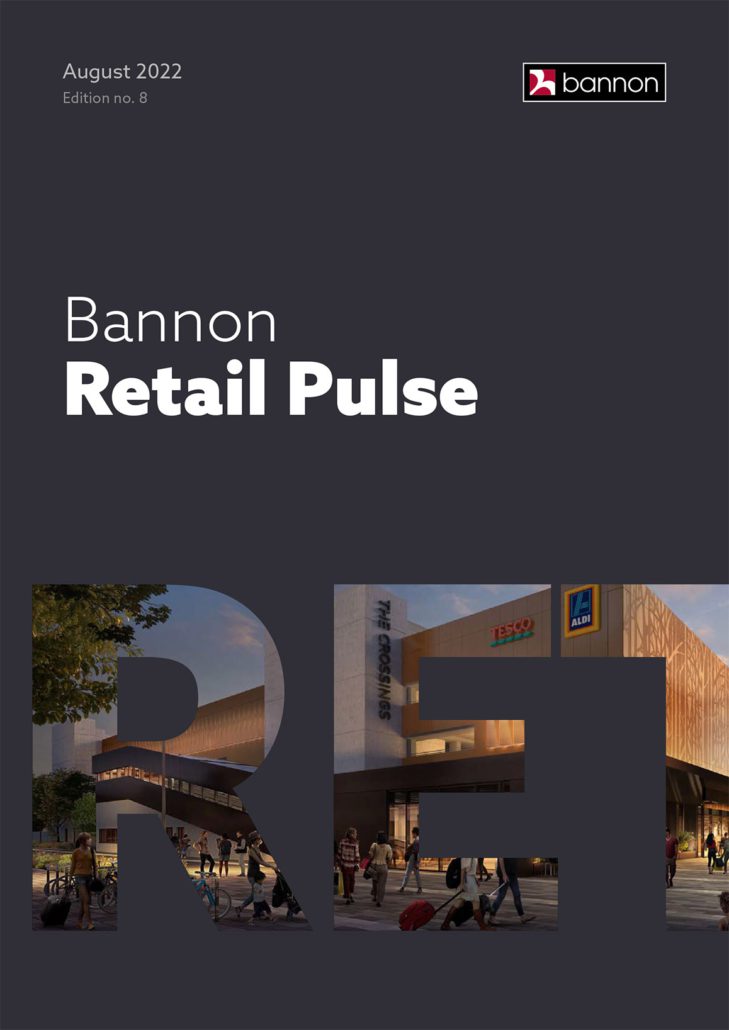 Bannon’s latest monthly Retail Pulse has now gone live. Our focus in this publication is on New Developments, where we identify a number of new retail schemes due for completion in the next 24 months. On our footfall monitor more positive trends feature with High Street footfall, by example, showing a 25% increase year on year.
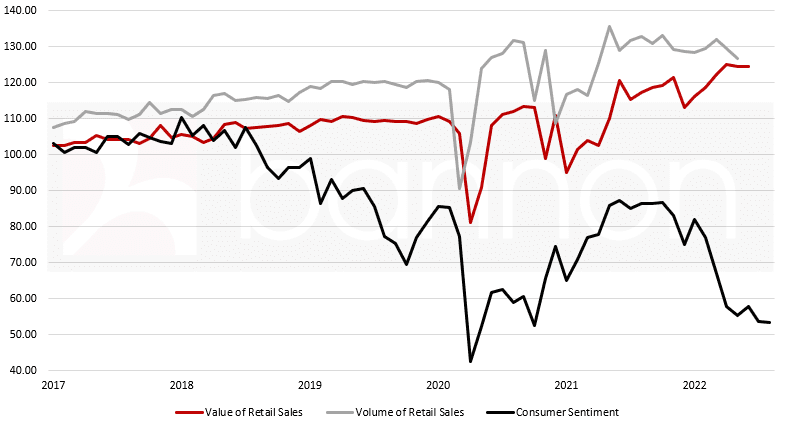


 The Bannon Retail Pulse July 2022 issue is now available. This month, our Executive Chairman Neil Bannon focuses on the juxtaposition between robust economic statistics and a persistently negative narrative. Read Neil’s commentary ‘The Most Depressing Boom’ on page 4.
 The H1 Bannon capital markets report is out now and worth a read as Roderick Nowlan feels certain sectors are passing an inflection point….