Bannon KeepCups and Chilly’s Water Bottles
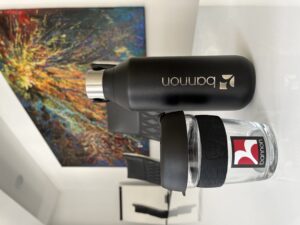
The Bannon KeepCups and Chilly’s water bottles arrived today for all staff. As a firm we are strongly committed to reducing waste and promoting wellbeing. No more plastic coffee cups for the Bannon team!

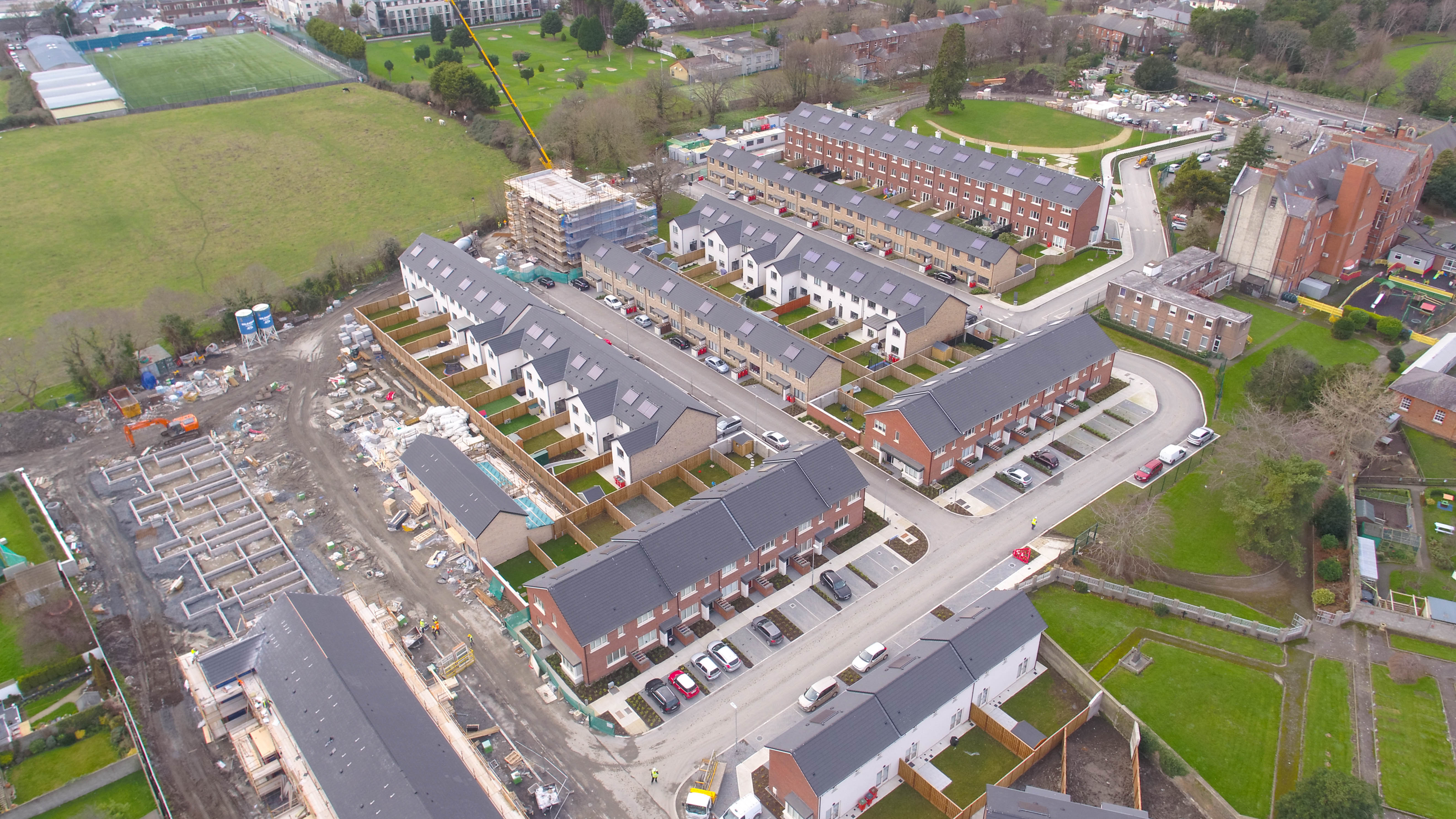


The Affordable Housing Act 2021 brought about changes to the Part V process. The most significant change is the requirement for new housing developments granted planning permission after 3rd September 2021, to have a 20% rather than 10% Part V (social and affordable) provision. Of the increased 20% provision, at least half must be allocated for social housing support. The remainder can be used for affordable housing which can be in the form of either a purchase or cost rental (or a combination of both).
The over-arching aim of Part V provisions is for the State to capture a portion of the increase in land value resulting from the granting of planning permission for qualifying residential developments. According to the Government’s Housing Agency, the preferred option which should be pursed by local authorities is the acquisition of completed units on the development site, by means of a transfer to the local authority or to an Approved Housing Body (AHB). The net monetary value (NMV) obtained by the local authority must be the equivalent of 20% of the difference between the market value of the land on the date on which planning was granted and the existing use value.
For a development site with planning permission and a market value (MV) of €3 million and an existing use value (EUV) of €500,000, the NMV due to the Local Authority will have increased from €250,000 at a 10% obligation to €500,000 at a 20% obligation. Therefore the determination of an appropriate market value has considerably greater significance to the overall costs associated with any proposed scheme of development. Importantly, Section 96(7) of the Planning and Development Act provides that either party can refer the matter of NMV for determination by a Property Arbitrator in the event of disagreement with the Local Authority or their representative. However, any reference to Arbitration needs to be done in a timely manner as the conveyance of completed residential units will be contingent on the Part V issue being resolved.
Niall Brereton BSc MRCIS MSCI is a Registered Valuer and has considerable experience in preparing Part V Valuations on behalf of landowners and developers and negotiating agreements with Local Authorities.
We are delighted to share our latest Bannon Retail Pulse. This month we focus on the Food & Beverage Sector where we report on strong take-up and low vacancy across the sector. Our Retail Pulse is updated monthly and all are available on our website bannon.ie.

To view the full report, please click here.
At Bannon we manage over 75 individual commercial assets including Shopping Centres, Retail Parks, Neighbourhood Schemes, Multi Let and Single Let Offices. This represents over 7 million sq.ft of commercial real estate in Ireland, with an estimated value of €2 billion.

Given our involvement and exposure within this industry, we are regularly engaged to assist purchasers with the property management due diligence process associated with large scale property transactions. This process is particularly complex when it comes to the purchase of multi let retail assets.
When concerns are presented, an investor can only then appreciate the importance and benefits of a pre – sale due diligence. It highlights the perils associated with buying an asset and ultimately determines the price they will pay for the asset on closing.
A typical due diligence process will involve several specific fields of expertise, namely: Legal, Tax, Building Surveying, Planning, Sustainability, Property Investment and Management.
Once engaged, Bannon will work closely with the relevant advisors to ensure a thorough review of all property management related topics are analysed. As part of a due diligence process for a commercial property we would typically provide advice concerning the following items;
The list above is dependent on the complexity of the asset in question and can be amended to take account of asset specific variables.
Ordinarily the above information would be readily available from a data room which would be set up by the vendors agent. Once the information is received it takes some time to comprehend and consolidate such a vast quantity of information into a format which is easily understood by both our client and legal representative when negotiating the finer detail on closing of a sale.
In advance of such negotiations, we will equip our client with the findings from the due diligence process, paying particular attention to areas of concern. Common concerns which can arise from a due diligence process include;
If you are considering an investment in a commercial property, please do not hesitate to reach out to a member of the Bannon Property Management team.
Author: Eugene Burns, Associate Director, Bannon
Date: 27th April 2022

Property valuations tend to be of the ‘bricks and mortar’ variety, i.e. producing a valuation of the physical building either with vacant possession or based on an investment income stream. In addition to these traditional valuations, the Bannon team regularly undertake specialised valuations of a trading going concern. This involves valuing not only the building but also accounting for the value attributable to the business carried on therein. It is a niche aspect of valuation, whereby we, the valuer are required to understand both the property and the business to arrive at a value based upon the marriage of both elements.
Where traditional property valuations are often based upon comparison transactions including lettings and sales which set benchmarks against which a valuation is assessed, the valuation of a going concern is much more nuanced. One of the main impediments to such valuations is that going concerns are rarely openly traded in the commercial markets and therefore tangible comparison evidence is often scarce or completely lacking.
Even were there to be a bountiful supply of comparison transactions, the intricacies of the valuation of a going concern involves a much deeper understanding of the general industry in which the business operates, as well the mechanics of the subject business.
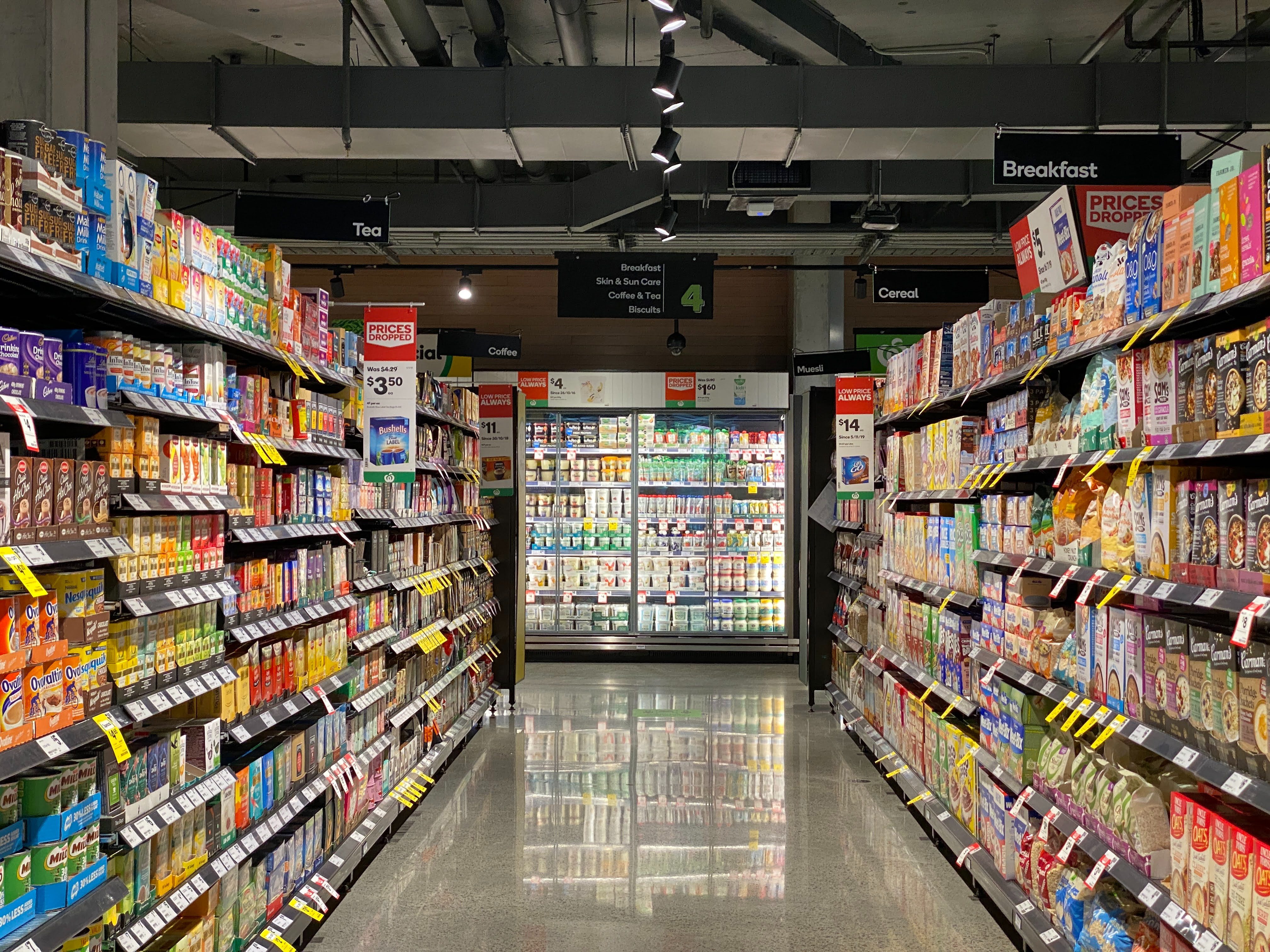
Bannon has carried out many valuations of convenience store and supermarket going concerns for many years. Based on long-established relationships with retail clients, we have a deep understanding of how these businesses function and the key criteria that impact their trading performance. This understanding provides Bannon with the insight to analyse the trading profit and loss accounts of the business. We understand the profitability of the operation based on establishing a sustainable EBITDAR (Net Earnings) position and the route and cost required to achieve that position.
In forming a view on a stabilised Net Earnings position, we review a number of items including but not limited to the following:
After concluding a stabilised Earnings position we then conclude a capitalised value, only after taking account of required capital expenditure and acquisition costs.
A further point that is becoming increasingly important in assessing a business are the ‘Green’ credentials of the building and the operation. Those businesses that have embraced ESG and invested accordingly should see benefits in more efficient operations resulting in cost savings. Businesses that have been slow to move with the times will experience higher costs that will impact the bottom line and reduce operating margins.
The valuation of supermarket going concerns is a highly niche aspect of commercial valuation practice. As market leaders in the retail sector, Bannon is uniquely placed to carry-out such valuations. Contact Ben Semple, Divisional Director and Registered Valuer from the Bannon Valuation Team for more information.
Email: bsemple@bannon.ie
Dated: 13th April 2022
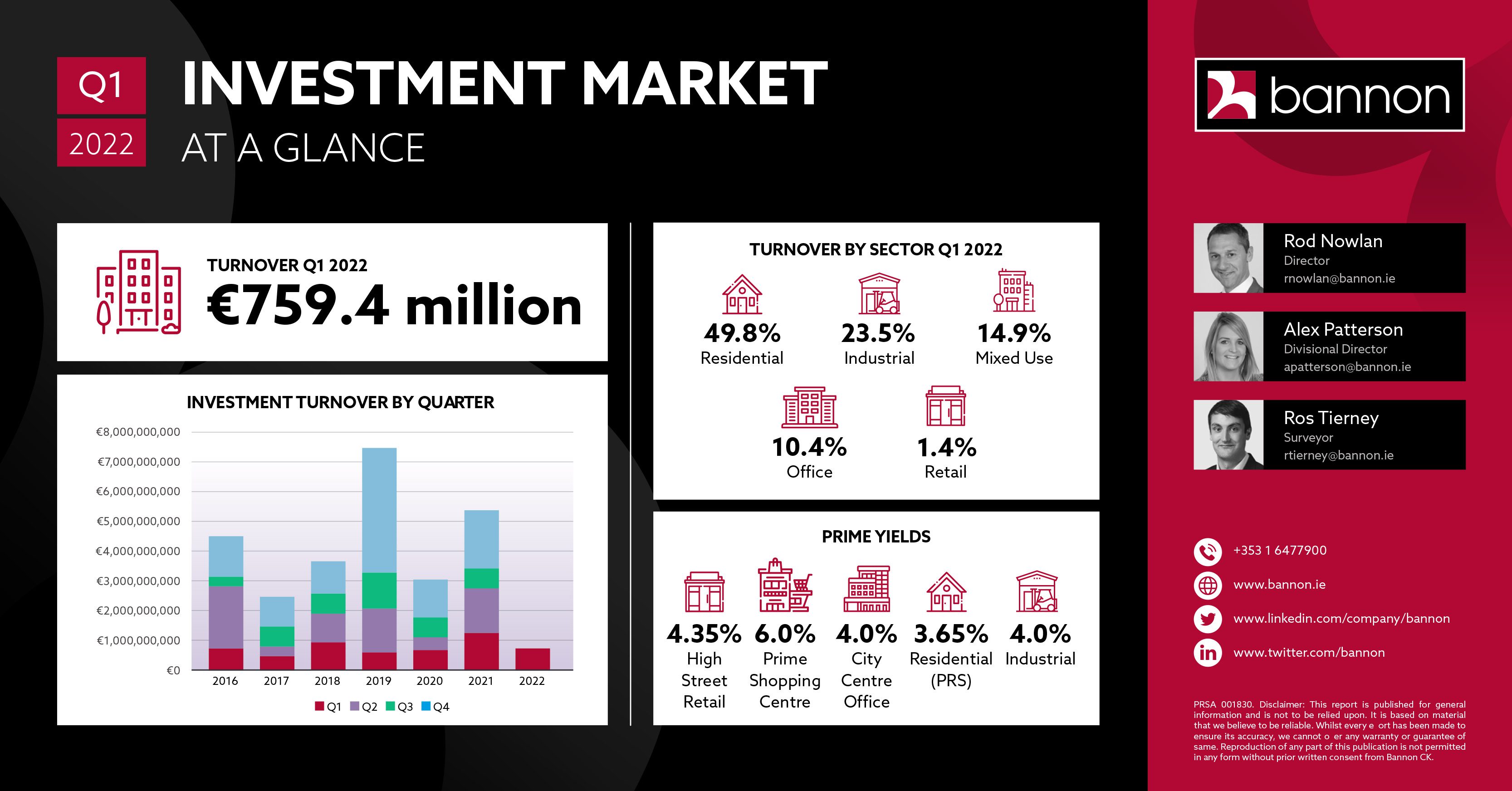
While it is still too soon to quantify the impact of the geo-political and macroeconomic backdrop on the Irish commercial property market, based on the Q1 figures and advanced pipeline transactions we anticipate that 2022 will still become one of only three years to record a turnover in excess of €5bn.

To view the full report, click here.

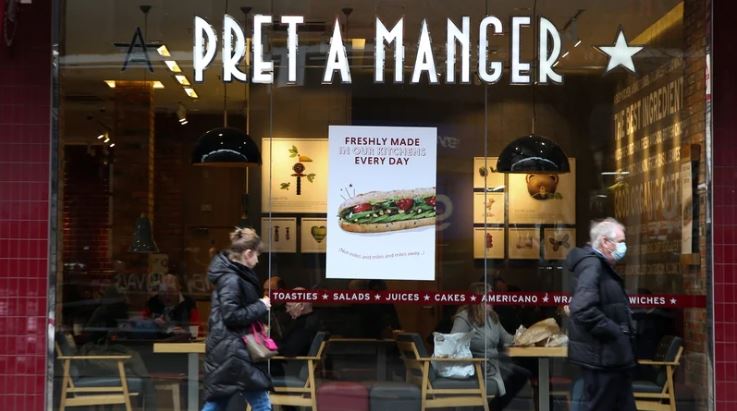
Around 500 jobs are to be created across the island of Ireland by coffee and sandwich chain Pret A Manger.
The company is to open up to 20 shops within the next decade, as part of its entrance into the Irish market.
The outlets in the Republic and Northern Ireland will be rolled out by Carebrook Partnership Limited under a franchise arrangement.
The first shop is set to open on Dawson Street in Dublin this summer, creating 25 jobs.
“Setting up shop in the Republic of Ireland and Northern Ireland has been our plan for a long time, and we’re thrilled that we’re finally able to make it happen,” said Pano Christou, Chief Executive Officer at Pret A Manger.
“There has long been demand from our neighbours on the island of Ireland to bring Pret’s freshly prepared food and organic coffee, and now with the backing of Carebrook Partnership Ltd we’re able to do so.”
“We look forward to making this partnership a success.”
Carebrook Partnership Ltd has worked with Pret for three decades and runs many of its stores in London where it is a common sight on city centre streets.
Carebrook is majority owned by UK and US food sector veteran, Gerard Loughran, who grew up in Nenagh, Co Tipperary.
Ray McNamara from Dublin, who has 25 years’ experience in the Irish food industry and owns Ann’s Bakery is also a minority shareholder.
“We’ve been working with Pret for over three decades, ever since they arrived in London,” said Gerard Loughran, CEO, Carebrook Partnership Ltd.
“Having grown up in Tipperary, and with more than two decades of experience in the hospitality and food industry, I’ve always wanted to bring Pret to Ireland and Northern Ireland, so I’m delighted that this will soon become a reality alongside my co-owner Ray, who has great connections and links to the food sector in Dublin with 25 years’ experience.”
“We look forward to welcoming our new customers, soon.”
Last year Pret announced that it would aim to double the size of the business within five years, including launching into five new markets by the end of 2023.
Pret is owned by investment group JAB and founder Sinclair Beecham.
It currently has shops in the United Kingdom, United States, Hong Kong, France, Dubai, Switzerland, Brussels, Singapore and Germany.

Very positive news from the Department of Transport with the publication of Ireland’s first EV Charging Infrastructure Strategy 2022-2025.
We have been swamped with noise around EV charging over the last number of years. Bannon has installed charging units at a number of retail centres across the country, with more in the pipeline. Whilst there is clearly a need nationwide for a charging infrastructure to accompany the push to electrify the national fleet, the planning and installation of this infrastructure needs to be informed by the rational analysis of reliable data.
At Bannon we have access to an enormous database of nationwide data about how people use cars to access shopping destinations and where they come from, with over 100 million customer visits generated by the portfolio annually. This data can be used to establish which retail schemes need more charging points to satisfy their customer requirements, which schemes can be used as charging stop over points for people on longer journeys and which journeys could be redirected to public transport, cycling or walking. Using data to ensure that resources are deployed where they will be of most benefit is at the core of sustainability.
The Department of Transport is inviting input on the draft strategy to be sent to evinfrastructure@transport.gov.ie
Electric Vehicle Charging Infrastructure Strategy 2022-2025 PDF
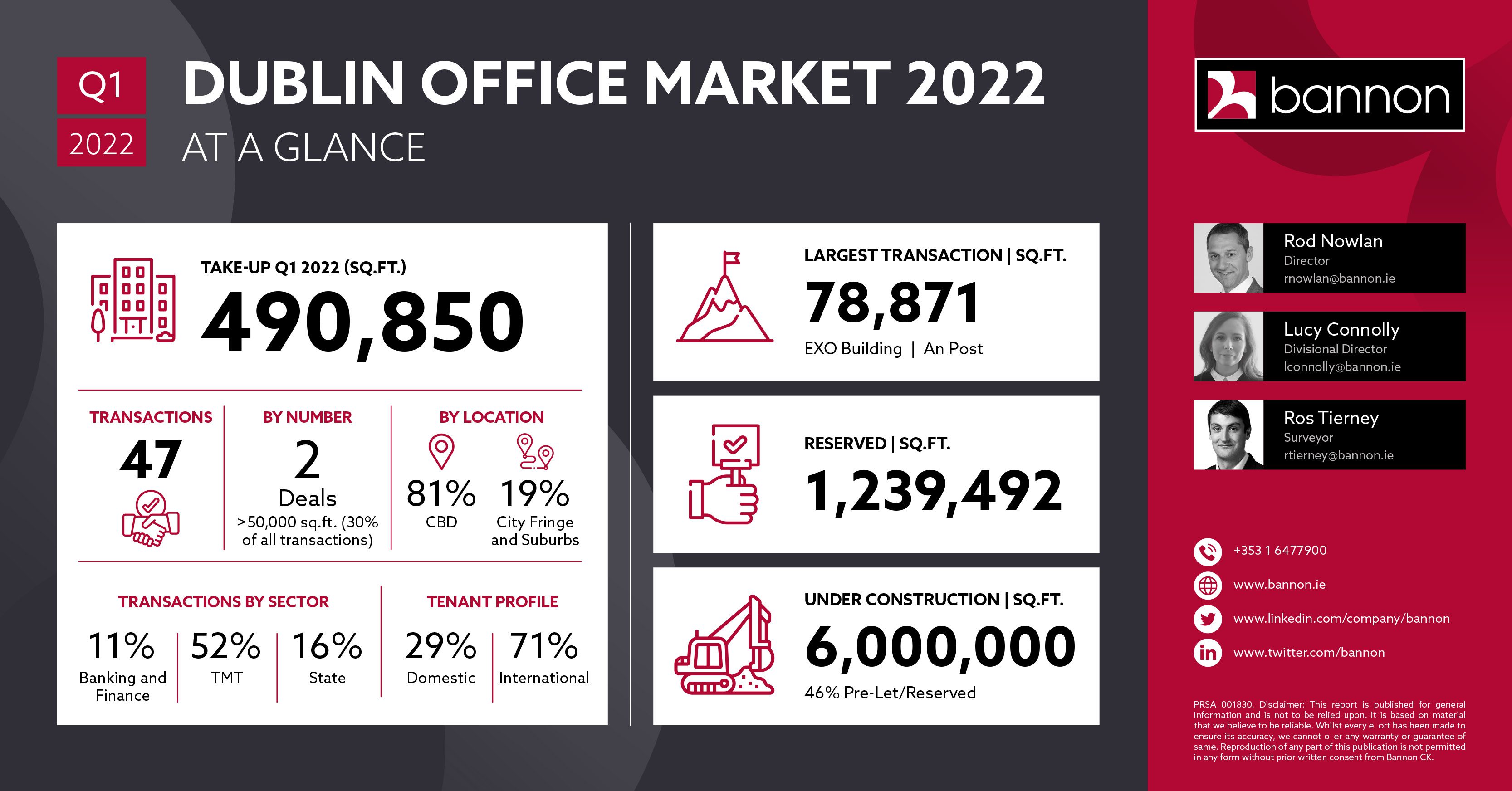
Dublin office market take up has exceeded 490,000 sq.ft. across 47 transactions this quarter. Whilst this is a positive start to the year when compared to Q1 2021, it does represent a 54% decrease on Q1 2020 (pre-covid) figures. However, we would note that there is over 1,200,000 sq.ft. of office accommodation currently reserved and a number of unfulfilled requirements in the market, which should result in a more robust Q2/Q3 in terms of take up.

Bannon is delighted to announce that it has entered into a partnership with Site Passport to establish the Bannon Verified Supplier platform. Site Passport transforms the way companies access, evaluate, monitor and analyse their supply chain. They do this by providing smarter, integrated and automated solutions that deliver increased competitiveness, enhanced reputation and reduced risk.
The Bannon Verified Supplier platform is a bespoke online resource designed in conjunction with Site Passport to ensure that all contractors working on Bannon managed sites meet the highest levels of standards. In order to qualify as a Bannon Verified Supplier, our partners must meet the following minimum criteria:
To date we have verified over 80 contractors through the process. The verifying process ensures that only the most proactive and efficient contractors are engaged on Bannon managed sites. We insist that all our contractors are committed to meeting sustainability and environmental goals in line with our company ethos. All contractors must demonstrate that they have a proactive sustainability policy that is being adhered to and actively monitored We also encourage contractors to use the most efficient and environmentally friendly products available to the market.
As market leaders, Bannon manages over 75 commercial assets including Shopping Centres, Retail Parks and Offices with a combined footfall of over 100 million visitors per annum. Therefore, we put a premium on ensuring that all contractors who work on Bannon managed sites are industry leaders who like us, strive to meet the highest of standards. This is imperative to our role as managing agents. Bannon is committed to ensuring that all assets under our management are safe, clean and a welcoming environment for all users. This is achieved by partnering with contractors who share our values and are committed to our best-in-class approach. The Bannon Verified Supplier platform is another tool to help Bannon achieve this.
Author: William Lambe, Divisional Director, Bannon
Date: 1st April 2022

Major reform of the Leaving Cert is being planned from 2024 onwards which will include spreading project work and exams over fifth and sixth year.
The move aims to reduce student stress levels around the traditional written exams and introduce teacher-based assessment for projects and other course components.
Minister for Education Norma Foley is keen to proceed with reforms which would see students entering senior cycle in September 2023 sitting Paper One in English and Irish at the end of fifth year.
Over several years, 60 per cent of marks for all Leaving Cert subjects will be based on written exams and 40 per cent on additional assessment components such as project work, orals or practicals.
Teacher-based assessment of these additional components will be externally moderated by the State Examinations Commission.
The announcement on Tuesday follows a four-year review of the senior cycle by the National Council for Curriculum and Assessment (NCCA), based on consultations with students, teachers, parents and industry.
The review found while there was broad agreement exams should remain, it proposed giving greater weight to continual assessment, projects or other course components over a two- or three-year period.
On foot of Tuesday’s announcement, a selection of schools will shortly be invited to become pilot schools and participate at an early stage in revised curriculum and assessment arrangements.
Among the changes announced are:
* The introduction of two new subjects – drama, film and theatre studies; and climate action and sustainable development – which will be ready for students in pilot schools starting fifth year in 2024;
* An initial tranche of new and revised subjects will be available in pilot schools from September 2024, when students entering fifth year will study updated subject curricula, with updated assessment models in chemistry, physics, biology and business;
* Future oral exams and the music practical performance will take place during the first week of the Easter break of sixth year, as is the case this year;
* Leaving Certificate Applied (LCA) students will have improved access to maths and foreign languages from September 2022;
* A new qualification will be introduced at level one and two on the National Qualification framework to provide an appropriate level of assessment to some students with special educational needs, building on the equivalent programme at Junior Cycle level;
* Access for all students to a revised transition year programme will be encouraged.
Under Ms Foley’s plans, the NCCA and the State Examinations Commission will develop, in consultation with education partners, how an externally moderated, school-based form of assessment would operate.
However, teachers’ unions on Tuesday moved quickly to voice their opposition to any plan that involves members assessing their own students.
Teachers’ Union of Ireland (TUI) general secretary Michael Gillespie said: “Our members are fundamentally opposed to assessing their own students for State certificate purposes and therefore external assessment and State certification – which retain significant public trust – are essential for all written examinations and all additional components of assessment.”
Association of Secondary Teachers’ Ireland (ASTI) president Eamon Dennehy said certification in State exams must be “entirely externally assessed”.
“This must be retained in all aspects of the development of the Leaving Cert. It is vital that the integrity of the state exams system is maintained,” he said.
Ms Foley said the redeveloped senior cycle aims to deliver “equity and excellence for all”.
“This programme is timely and ambitious – we must not rush, but cannot delay. The timing I have set out will ensure that students will feel the benefits at the earliest possible time, with notice of these in advance.”
She said the reforms will reduce the pressure on students that comes from final assessments based primarily on exams.
“We will move to a model that uses other forms of assessment, over a less concentrated time period, in line with international best practice,” she said.
Ms Foley said these changes will enable the education system to maintain its high standards.
“Our current system has many strengths. But we know that it can be improved, to better support our students, to reduce pressure while maintaining standards, to keep pace with the changes in practices internationally and to meet the needs and expectations of our students and of our society in preparing our young people for the world ahead,” she added.

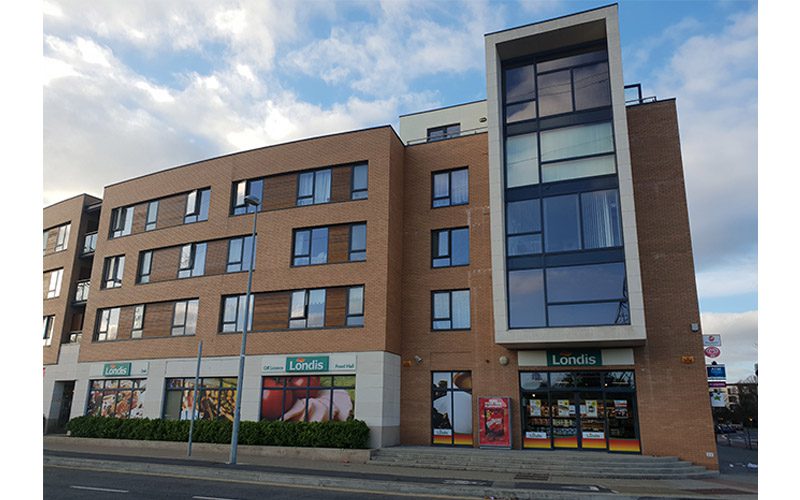
Agent Bannon is guiding a price of €1.9 million for a community retail investment opportunity comprising four retail units and a standalone creche at Adamstown in west Dublin.
The units, which are below a modern residential development called the Sentinel Building, are occupied by Londis (with a guarantee from parent company BWG), Mizzoni’s Pizza and Pamper Yourself, together with one small vacant unit. The creche is operated by Giraffe Childcare. All of the units are presented in excellent condition throughout and benefit from prominent road frontage.
The annual passing rent is currently €163,375 with substantial reversionary potential. The asking price offers the prospective purchaser an attractive initial yield of 7.84 per cent, rising to a potential double-digit yield on the letting of the vacant unit and the settlement of the outstanding Londis and creche rent reviews. The properties extend to a total floor area of 15,264sq ft and have a weighted average unexpired lease term (Wault) to break of 6.43 years and a Wault to lease expiry of 8.72 years.
The subject units are in the southeast of Adamstown and 750m from Adamstown train station. The surrounding area is predominantly in residential use with a mix of high- and low-density housing. Current population estimates suggest a resident population of about 5,000 and once fully complete this is projected to be 25,000 people.
Ros Tierney of Bannon expects to see “significant interest from investors seeking a high-profile grocery and necessity portfolio with value-add potential through asset management”.

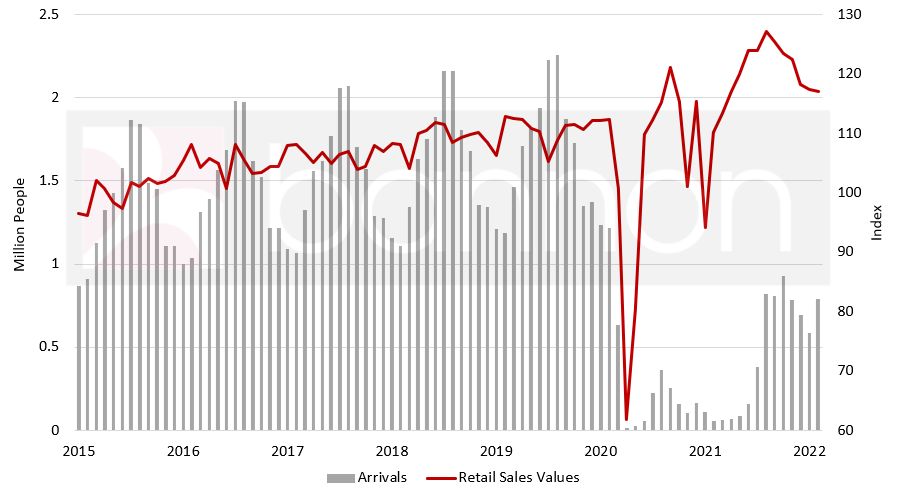
The CSO (Central Statistics Office Ireland) reported retail sales values for all business increased 4.3% on pre-pandemic levels. Taking a deeper dive this figure includes bars which remain 28.45% below 2019 data. When bars and motor trade are excluded, retail sales values have jumped 11.6% when compared to 2019 and 2020.
This positive performance is despite the level of overseas travelers to Ireland remaining 35% below 2019 and 2020 figures. The full return of tourists to Ireland will spell further good news for the retail sector.
Despite the negative narrative in the press recently the Retail Sales figures released by the CSO paint a very positive picture of the sector. Overall the value of retail sales (excluding cars & bars) were up 11.6% on February 2019. The only red figures on the index are bars, department stores and books, all other 19 indicators are positive versus February ’19 & ’20. The real stand out number is Clothing & Footwear which was almost 1/3 higher than in February 2019.
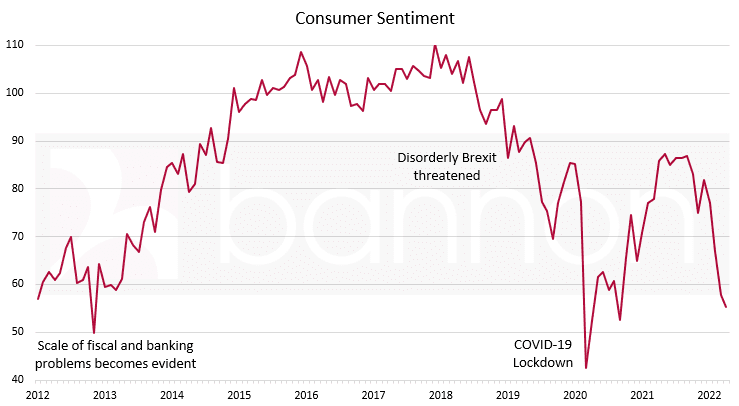
These figures do not reflect the downturn in Consumer Sentiment that has been recorded since the war in Ukraine hit the headlines and in the past the Irish Consumer has proven very sensitive to macro economic events as evidenced in the Summer of 2016 after the Brexit vote. It will be interesting to see how the CSO data is portrayed in the press.
We have pleasure in enclosing The Bannon Retail Pulse Report for March 2022. March witnessed further improvement in footfall trends, reflecting the lifting of restrictions earlier in the year. This will improve further as we can now look forward to an increase in tourist numbers in the months ahead. Transactional activity was extremely busy in Q1 and will continue into Q2.
For retail enquiries and intelligence, please contact any of the team.
To view the full report, please click here.

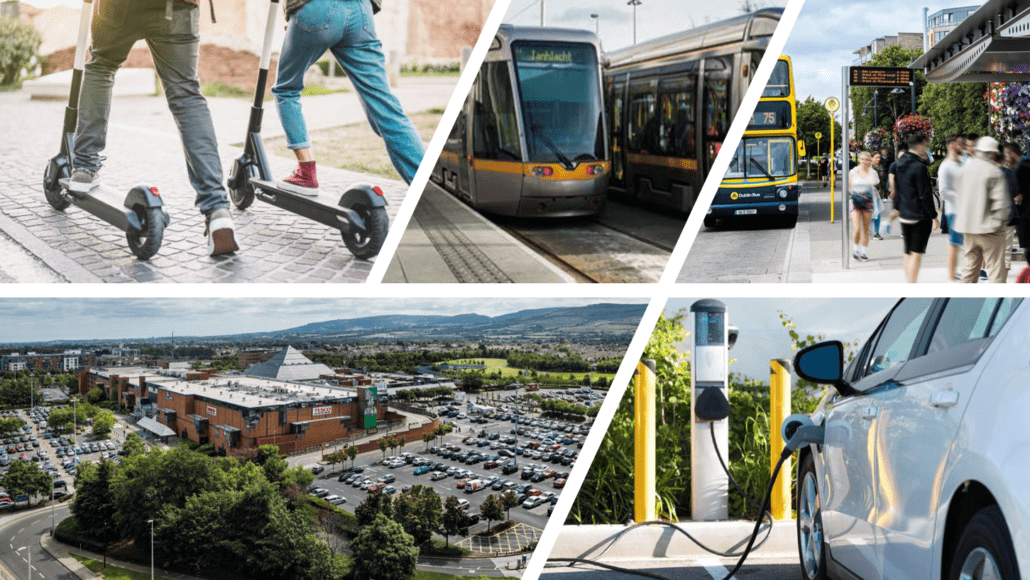
Urban Transportation Hubs. A snazzy name for a car park or a way of rethinking how we move about our cities and towns?
There is an opportunity to reimagine the role of car parks. Giving over space within the facilities to accommodate secure bike parking, charging stations for electric bikes and scooters, dedicated spaces for car share schemes and a range of EV charging options for those that need rapid charging, to the owner who just needs a slow charge overnight can turn these buildings into true transport hubs.
They can form a central part of a transport interchange where customers pivot from one form of transport to another pre-booking their required option on a dedicated app. Arrive on your bike, park it securely for the day and take out pre-booked EV charge appropriately to make a trip to Galway. Arrive on a shared scooter and rent out an electric bike.
Reusing and refocussing existing infrastructure intelligently is ultimately the key to sustainability, why not start with car parks?
Blog post written by Cillian O’Reilly, our Sustainability Manager. You can contact Cillian by email on coreilly@bannon.ie

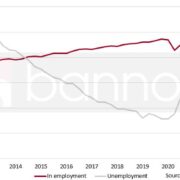
The strength of the Irish Consumer was further emphasised this week with the CSO reporting a 2.0% annual increase in weekly earnings to €864.51 for Q4 2021. When compared to pre-pandemic levels this increase jumps to 9.9%.
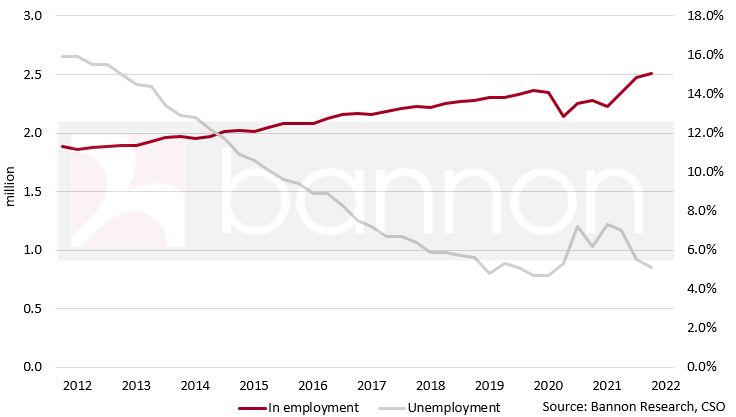
The CSO Labour Force Survey also reported a year-on-year increase in the Labour Force (8.9%) along with a decrease in unemployment to 5.3% which resulted in record employment of 2.5 million people.
The result of these two factors can only be positive for the Irish retail market.
Author: Cillian O’Reilly, Surveyor, Sustainability Manager, Bannon
Date: 2nd March 2022

It is fascinating how the Irish media can find the negative in any piece of data. Today’s Irish Times has a headline proclaiming that retail sales are down 1.5%, a downbeat message that seems at odd with the economy at large and our own data. The comparison is between retail sales in January and December. In reality there are very few years when retail sales in January reach 98.5% of those achieved in December given when Christmas falls!
Not worthy of inclusion in the article is that retail sales excl. cars in January were 7% higher than in in pre COVID January 2020! They are 17% higher than January last year but the comparison with COVID impact periods would be as misleading as the IT article. It shows the benefits for investors of real data and expert analysis and the negative narrative does create opportunities for the well informed astute investor. For more information contact Consultancy@bannon.ie
Author: Neil Bannon, Executive Chairman, Bannon
Date: 2nd March 2022

Bannon are delighted to bring you our February Retail Pulse. As we look towards a complete removal of COVID restrictions on Monday next what does our latest report tell us about how the market is likely to perform over the coming months?
To view the full report, please click here.

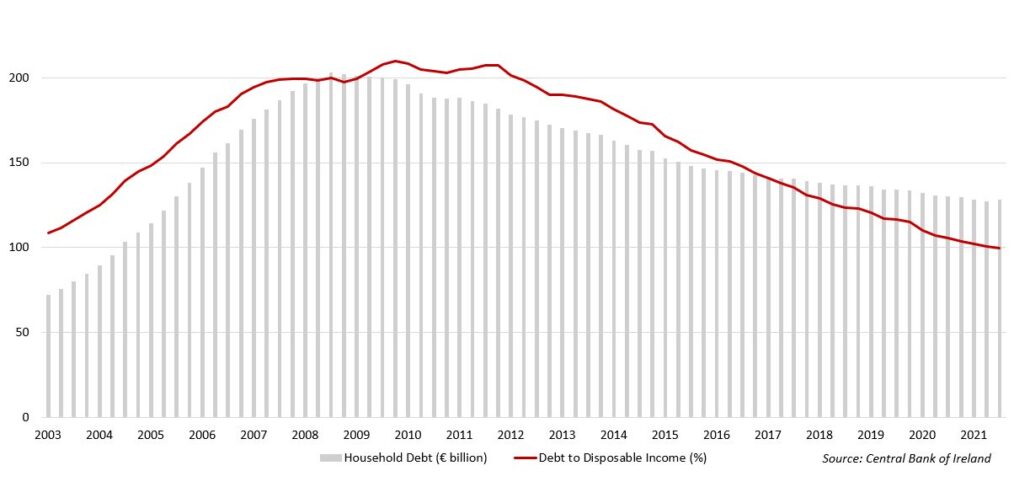
The strength and resilience of the Irish consumer has shone through once again in the Central Bank of Ireland’s Quarterly Financial Accounts. The accounts show household net worth rose by 9% in the year to Q3 2021 and now equates to €188,457 per capita. In the same period household debt dropped by 2%. As a result, Ireland’s household debt has fallen to 99.7% of disposable income, down from 106% one year ago and below 100% for the first time since the series began in 2002. Ireland’s household debt to disposable income ratio is now the seventh highest across the euro area.

There is a word in the Irish language which describes a storyteller. It is “seanchaí”. The author, Frank Rose, has explored storytelling and its effect on human behaviour and decision making in his recently released book “The Sea We Swim In” published by Random House. One of the themes of his book is the role of storytelling in the marketing of products. Telling the story of a product’s journey rather than simply including it in a catalogue, results in increased sales.
This theory is based on the belief that consumers make a purchasing choice based on available product information. When invested in the product’s origin story and journey, they are persuaded to purchase in greater quantities and at a higher price point. Through our retail clients, we see increasing consumer queries regarding the provenance of the goods they are buying and the story of the journey the products have taken to arrive on our shelves.
In recent LinkedIn articles we have provided updates on the great number of retail occupiers who are refurbishing and redesigning the space that they occupy within our centres. In these refurbishments there has been a shift towards lifestyle designs. This allows the retail space to enable and promote the story of the products. Consumers can handle and explore in-store before a potential purchase or online order.
Post lockdown, we have worked with over 20 retailers who have invested in store refits across our portfolio of 50 shopping centres and retail parks. In our recent Retail Pulse Jan 22 / Q4 2021, sales in shopping centres for December 2021 was 6% above the same period in 2019. This shows that there is an increased amount of business available to support this investment in stores.
Consumer behaviour regarding the story, provenance and origin of retail products is also matched by investors’ Environmental Social and Governance (ESG) requirements regarding their property portfolio. In future updates we will highlight case studies on how our current retail stock is being refurbished and redesigned to include sustainability and environmental factors. This may in turn be an opportunity to evolve and harness the consumer movement towards a more immersive retail story telling retail journey.
For now, we at Bannon will continue to be the seanchaí for the Retail Sector in Ireland!
Author: Peter Nicklin, Property Management Surveyor, Bannon
Date: 14th February 2022

The planning system in Ireland is currently undergoing a raft of proposed changes with more changes likely to come in the coming years as the Government seeks to implement its ‘Housing for All’ strategy. While these changes will seek to address the constraints being experienced by the planning system, and which in turn impacts on housing output, new Development Plans being put forward by some Local Authorities are likely to have a detrimental impact on housing delivery.
The recently published Draft Dublin City Development Plan 2022-2028 proposes significant changes to lands which are zoned ‘Z15 – Institutional and Community’. Lands with this use designation typically relate to properties such as colleges, residential institutions, and healthcare facilities such as hospitals. Within the previous Development Plan, residential uses were open for consideration on Z15 lands subject to certain criteria such as the provision of 25% public open space and the preparation of an overall masterplan.
However residential uses will no longer be open for consideration under the new Draft Plan and will only be considered in “highly exceptional circumstances”. It is estimated that there are some 1,833 acres within the Dublin City Council administrative area with a Z15 land use zoning. While a large proportion comprise schools and educational facilities there is a significant portion occupied by religious institutions and bodies. With the decline in vocations over the past number of decades and the ageing profile of the members of most religious orders, a number of them have taken the decision to rationalise their property footprints and release their lands for residential development. This trend is likely to continue over the coming years. High profile examples of residential developments on Z15 lands include Marinella in Rathgar, Ardilaun Court in Raheny, Hampton and Grace Park Wood both in Drumcondra.
If Local Authorities are serious about delivering on the Government’s ‘Housing for All’ plan then all potential options for the delivery of housing should be maintained, including on Z15 lands, particularly when this zoning has successfully delivered quality housing projects in the past.
Submissions on the Draft Development Plan are being invited on or before next Monday, 14th February 2022.
Author: Niall Brereton, Director of Professional Services, Bannon
Date: 8th February 2022

Ireland’s largest, domestically owned commercial property consultancy firm Bannon, has been appointed by Davy Real Estate to manage Stephens Green Shopping Centre. Located in the most prestigious and cultural area of Dublin city centre, the shopping centre comprises over 320,000 sq. ft. of lettable retail floor area.
Bannon manages over 50 retail shopping centres and retail parks across the country, covering six million sq. ft. of commercial real estate worth c. €2 billion. As market leaders, Bannon has advised and managed the country’s most notable retail spaces in the last thirty years such as Dundrum Town Centre, Blanchardstown S.C., Swords Pavilions. and The Square. Commenting on the appointment, Director of the Bannon Property Management team, Ray Geraghty said “We are extremely proud to be working with Davy Real Estate on Ireland’s most iconic retail destination and the first premium shopping centre built in the country. The appointment is further validation of the team’s unrivalled experience managing assets in the retail sector.”
Since the start of 2022, Bannon are responsible for the management of the shopping centre which includes over 100 retail outlets. As the retail sector emerges from the effects of COVID-19 lockdowns, Bannon’s management role will involve the smooth day-to-day running of the busy centre and ensuring rent and service charge collection is maximised for Davy Real Estate.
Ray Geraghty continued “Our experience is supported by a strong cross departmental approach in Bannon. The Property Management team work seamlessly with the Consultancy, Agency and Professional Services arms of the business. This results in a consistent line of communication to our clients. We are excited to get to know the occupiers of Stephens Green Shopping Centre, and working closer with them, centre management and the investors to make the centre stronger, more profitable and more sustainable.”

Achieving progress in the move to greater sustainability in any organisation requires fundamental changes in how we manage and direct our businesses. This requires the buy in of all the stakeholders, the internal team, our clients and our suppliers. Our experience with change management is that it is only truly successful if you change culture.
That’s why, when Bannon started on its sustainability journey a number of years ago, we stopped using plastic bottled water and switched to chilled tap water, provided keep cups for the team’s caffeine obsession and started using electric scooters, thankfully now legal, and Dublin City Council bikes to get to local meetings.
Simple changes like this accompanied the more significant changes such as moving our entire Property Management portfolio to renewable energy sources. Making the big moves required for a sustainable future is easier to achieve when the simple changes are clear and evident.
Blog post written by Cillian O’Reilly, our Sustainability Manager. You can contact Cillian by email on coreilly@bannon.ie

In our latest Dublin Office Market Review and outlook, we examine activity in the sector over the last 12 months and look at some key predictions for 2022.
To read the full report, click here.

We are delighted to launch our new look Retail Pulse.
2021 had a challenging start for the majority of occupiers and investors as uncertainty on the back of Covid continued to take a hold on the sector. As the year progressed however retail sales improved across most of the sub-sectors which contributed to occupancy rates remaining high. We remain very confident for 2022.
Keep an eye out for our monthly bullets as we track movement and give our insight into the retail sector.
To view the full report, please click here.

Despite month on month reductions, recently released CSO Retail Sales Index figures for December 2021 report a 3.6% increase in sales values and 2.2% reduction in sales volumes when compared to 12 months prior however these figures do not paint the full picture. When motor trades and bars are excluded, these figures rise to increases of 5.4% and 0.4% respectively. The true strength of the retail sector shows through when the data is compared to pre-pandemic levels which shows a 10.2% increase in sales values and 11.4% increase in sales values compared to December 2019.
Taking a deeper dive into the data it is evident the traditional festive rush was more subdued in December 2021 with a stronger November trade showing evidence of consumers forward planning.
Top performing sectors for December 2021 were bars following their recent reopening (value increase 39.8%, volume increase 36.5%) and pharmaceutical, medical and cosmetic articles (value increase 11.1%, volume increase 9.9%).

Every rent review has its own peculiarities. It is essential to take account of such items as the hypothetical term, break clauses, headline rent versus net effective rent and the specification of the premises to be reviewed. It is also important to ascertain if any occupier improvements have been carried out and whether these are to be disregarded for rent review purposes.
Des Byrne, Director at Bannon, has over 30 years’ experience in rent reviews on all types of commercial property and is an experienced Arbitrator. Des answers some key questions about rent reviews.
1. What types of rent review exist?
2. Is the rent to be calculated by reference to the Consumer Price Index where the CPI is tracked?-
3. How would my Rent Review be instigated?
Leases may provide that the rent review may be agreed between the parties at any time, it may require that it be triggered by a rent review notice which may be issued by the owner or by either party.
4. How is my rent calculated?
The rent will be calculated by reference to the provisions of the rent review clause, taking into consideration certain assumptions and disregards.
5. Can I agree my rent by negotiation?
Yes, this is the normal practice and in the event of negotiations proving inconclusive. However if negotiation fails to result in agreement, there would normally be provision that the matter may be referred to an Arbitrator or to an Independent Expert.
6. What is involved in Third Party Adjudication (Arbitration / Independent Expert)? How is an Arbitrator or independent expert appointed?
The lease would normally advise as to how the third-party valuer may be appointed. There may be provision where the Arbitrator/Independent Expert can be agreed between the parties.
Failing agreement, there may be provision that the matter can be referred to an appointing body such as the Society of Chartered Surveyors Ireland or the Law Society for such an appointment. Once an appointment is made, the Arbitrator or Independent Expert will write to both sides indicating how the matter may proceed. It may proceed either by way of an Oral Hearing or by written documents i.e., the forwarding of Submissions and Counter-Submissions.
Each side will have to prove their case at Arbitration and offer their true opinion of rental value and they will attempt to prove this rental value by a reference to comparative transactions.
The parties themselves may agree in advance of the Arbitration as to how the costs can be split (perhaps each side agreeing to pay their own costs and half of the Arbitrators costs). When this is not possible the Arbitrator has power under the Arbitration Act to determine costs.
A party who wishes to limit their exposure to costs may decide to serve a Calderbank Offer on the other side which may have the effect of limiting their exposure to costs. A Calderbank Offer is an offer to settle the rent review at a particular figure without prejudice save as to costs.
7. Is it possible to Regear my Lease?
Sometimes this is possible particularly where occupiers have the benefit of break clauses or when a lease is due to expire within a short period of time.
In such circumstances, it may be possible to agree a lower rent in recognition of an occupier agreeing to forfeit their break option or agreeing to extend the lease by a particular period.
8. Other Considerations?
Particularly in relation to office rent reviews, it is important to determine the category of office with which one is dealing i.e., is it Grade A space or of a different quality. The specification of the building is also important particularly in relation to fitting out, mechanical systems and floor to ceiling heights.
In the current economic climate, comparisons may be viewed upon as pre-pandemic, during pandemic and post pandemic if we reach that point.
Retail rent reviews are tending to become contentious with the occupiers seeking lower rents in city centre locations affected by the pandemic. On the other hand owners are seeking higher rents in suburban shopping centres which are beginning to be rediscovered by employees who are now working on an agile basis.
For further information, contact Des Byrne, Director in the Professional Services and Valuation Team at Bannon (Email: dbyrne@bannon.ie).

Pan European investor and asset manager M7 Real Estate has paid just under €15 million for two office blocks in south Dublin.
Developed in the late 1980s as part of the wider Merrion Shopping Centre scheme, the Nutley and AIG buildings comprise an overall floor area of 4,016sq m (43,235sq ft) along with 83 undercroft car parking spaces. The subject property is currently generating total rental income of €1,439,932 a year.
The Nutley Building is let to a number of occupiers including Bonkers Money, the Japanese Embassy, the Austrian Embassy and Global Standards while the AIG Building is let to a single tenant with a number of sub leases in place.
While The Irish Times reported that the deal for the two offices was close to being finalised in October 2020, it is understood the proposed transaction was completed only in recent weeks. Commercial real estate consultants Bannon handled the sale.
Following its latest purchase, M7’s Irish portfolio now comprises 18 assets extending to just under 1,100,000sq ft, primarily in industrial and logistics space.
In October 2020, the company paid about €13.5 million for the long leasehold interest of five fully let units at the Sandyford Business Centre in south Dublin.
The purchase of the portfolio gave it control of five of the scheme’s 10 units along with an associated provision of 200 car parking spaces. The portfolio’s office accommodation covers a combined area of 4,532sq m (48,786sq ft) and is producing annual rental income of €1,192,578 with a weighted average unexpired lease term of 5.8 years, with breaks at 4.6 years.
In August 2020, the company paid €6.25 million for the former Kildare headquarter office and distribution facility of convenience store operator ADM Londis, while in January 2020 it acquired the Primeside Park industrial estate in Dublin for €6.75 million.
The group also controls the Century Business Park in Finglas, which it acquired for €4.47 million in September 2019, and the Westlink industrial estate in Dublin 10, which it bought for €13,870,000 in 2018.
Its first investment here came in 2017 when it bought Fumbally Lane, a combined office and residential development in Dublin 8 which was on the market for €24 million. M7 sold Fumbally Lane to BCP Asset Management in 2018 for €33.5 million, following the completion of a comprehensive asset management programme which enabled the property’s vacancy rate to plummet from 17 per cent to 2 per cent through the addition of 19 new tenants, and its annual rental income grow by €1.14 million.
M7 operates across 14 countries. It manages a portfolio of about 835 retail, office and industrial assets with a value of about €5.1 billion.
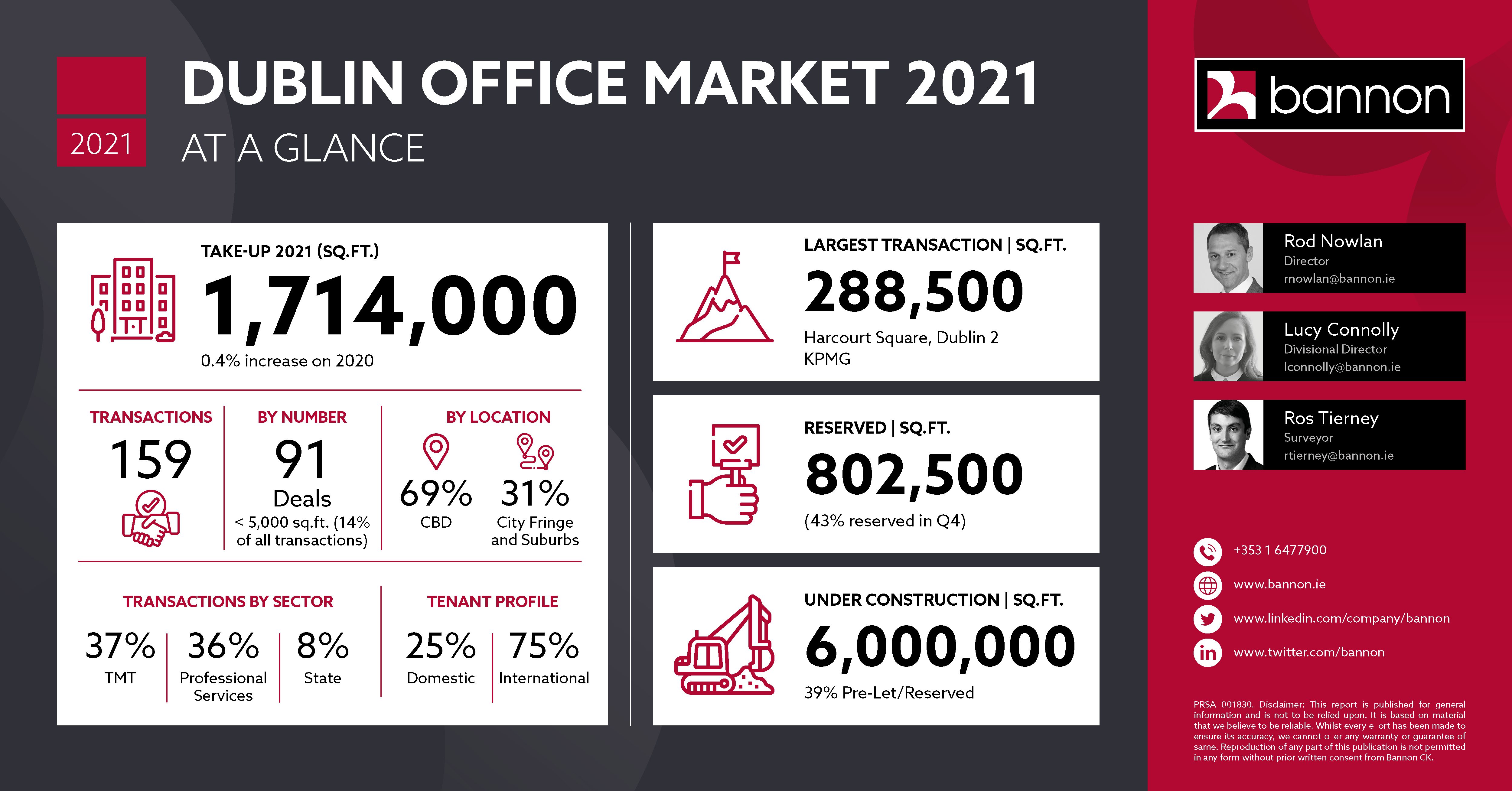
Take up for 2021 exceeded 1,700,000 sq.ft. There was a notable increase in market activity from H2, with Q4 attributing over 1,000,000 sq.ft. to the final years take up figure. This was largely boosted by 2 transactions in excess of 200,000 sq.ft. (representing 29% of total take up).
We are off to a strong start for 2022 with over 800,000 sq.ft. of accommodation currently reserved.

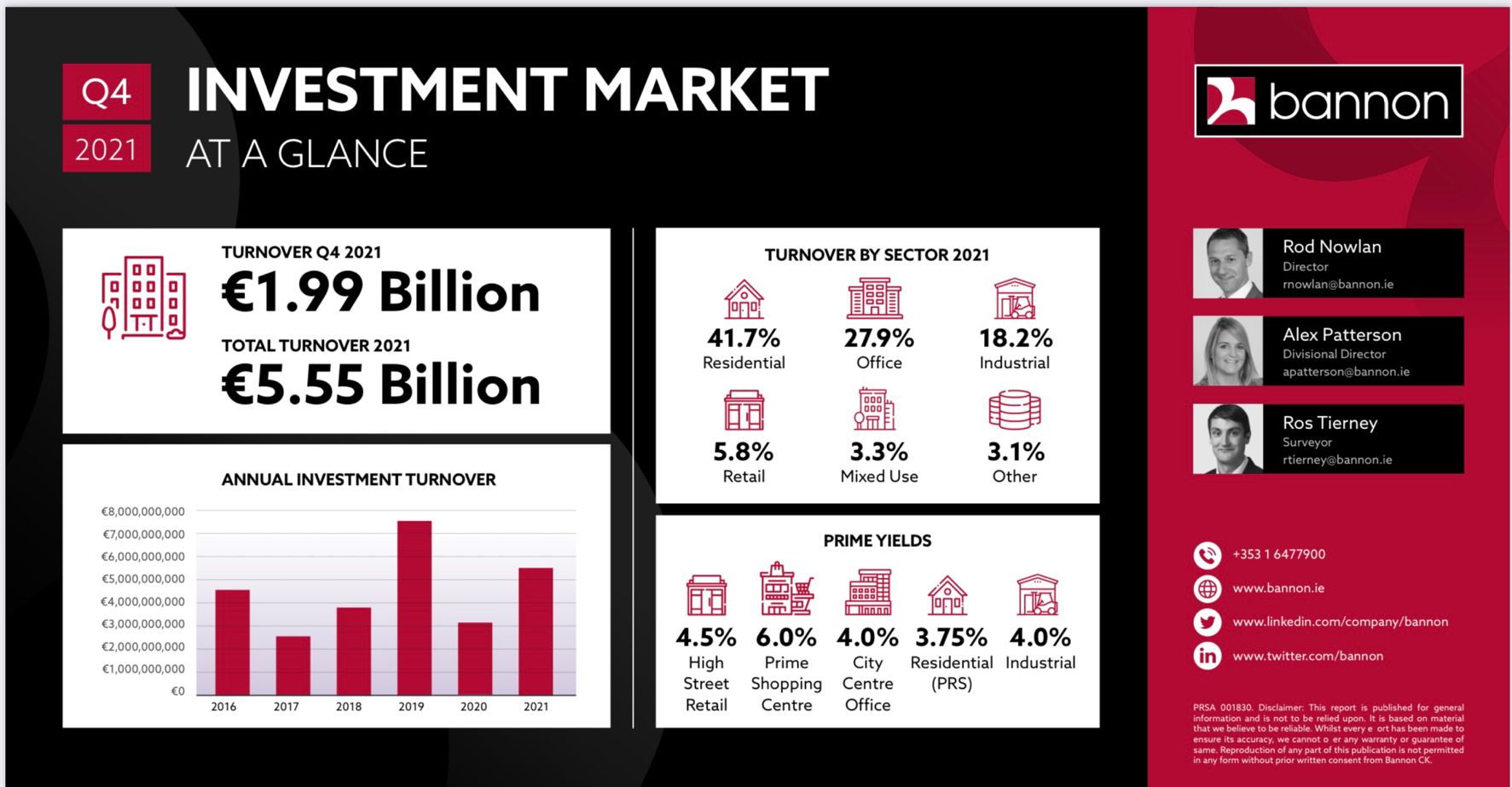
The Bannon snapshot shows an exceptional year for PRS with almost 42% of turnover (despite a weak Q4) and the wider market as a whole showing the second-highest annual turnover on record. 2022 likely to see the resurgence of retail and consolidation of sheds!
Since the retail sector emerged from lockdown in May 2021 we have worked with 20 retailers who have invested in store refits cross our portfolio of 31 shopping centres and 19 retail parks. Shop local this Christmas!
Revised street categorisation reflects retail shift to focus on shopper experience.
The recently published Draft Dublin City Development Plan 2022-2028 proposes changes to Dublin City Council’s approach to retail in the City Retail Core (Henry and Grafton Street environs). The revised categorisation of some streets aims to support a more diverse retail experience while preserving the role of Grafton and Henry Street at the top of the retail hierarchy.
Street categorisation involves recognising key shopping streets within the Core as suitable for specific use, protecting them as shopping destinations. The changes were informed in part by the ‘Role and Function of Retail in the Dublin City Centre’ retail study carried out by Bannon for Dublin City Council in early 2021.
Street Category Changes
Category 1 designation focuses on a predominately higher order retail user mix at street level, aiming to promote premium retail within the city centre. Under Category 1 low-order retail services are not permitted and non-retail services may be provided for, on merit, providing they do not undermine the primary retail function. The revised plan has allocated the Category 1 designation to Henry/Mary Street (O’Connell to Jervis Street) and Grafton Street only. O’Connell Street, Middle Abbey Street, Liffey Street Lower, Wicklow Street, South Anne Street, Duke Street and South King Street have all been moved from Category 1 to Category 2 streets.
Category 2 applies to streets where there is an existing mix of operators, such as retail, food and beverage, cultural and entertainment, or where there is the opportunity for increased diversity of retail character on the street. The objective is to allow for a retail mix that is complimentary to the Category 1 street while enhancing the vibrancy of the shopping experience within the City Centre.
This plan underscores Henry and Grafton Street as the City’s premier retail destinations whilst the re-categorisation shall be supportive of a more diverse and vibrant retail offer within the broader retail core. The changes will allow the City Centre to better reflect what is happening in the global retail market with a shift to Omni Channel Retailing and a greater focus on the experience that retail destinations offer rather than just the products they sell. This approach strengthens the City Retail Core’s ability to attract spend from the workers, students and tourists that have been so sorely missed.

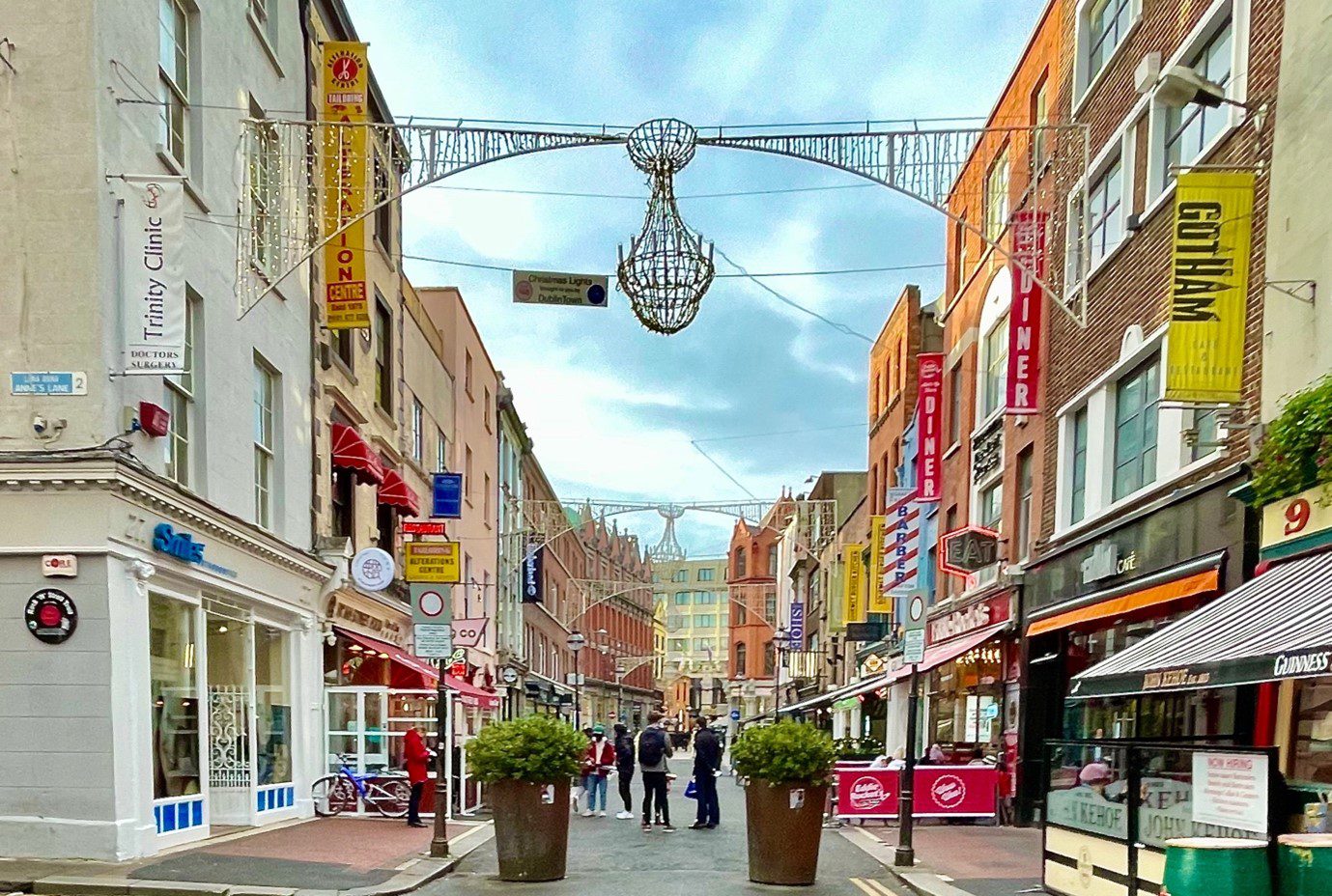
South Anne Street (pictured) has changed from a Category 1 to a Category 2 Street. This will be supportive of the burgeoning F&B activity in the area.
George Colyer is a member of Bannon’s Consultancy Team. It provides strategic solutions for stake holders in the Property Market.

Our chairman and head of Consultancy Neil Bannon was invited to present to Dublin City Council this morning on how to tackle retail vacancy in Dublin City Centre, really positive session with great sharing of ideas & initiatives.
Bannon is pleased to have assisted Penneys in sourcing a 15.3 hectare (38 acre) site at Great Connell, Newbridge, Co. Kildare to facilitate the development of a state of the art logistics hub/distribution centre for the retailing giant.
Kildare County Council granted planning permission for the 55,277 sq m (595,000 sq ft) facility which will be accessed off the Newbridge South Orbital Relief Road. When constructed the building will serve all 36 Penneys stores across Ireland. The warehouse will feature 20 metres clear eaves height, 34 HGV dock leveller loading doors and an extensive automated goods handling system.
The area is home to several other high profile companies including Pfizer, Lidl (Regional Distribution Centre), Murphy Group and KDP Ireland (Keurig Dr. Pepper). It is also situated close to Junction 10 (Newhall) on the M7 motorway.
The site was sourced on an off-market basis following an extensive selection process. Niall Brereton who handled the transaction commented “We are delighted to have been able to acquire such an extensive and highly accessible site for Penneys. It will play a huge role to ensure the company’s continued growth as Ireland’s most popular retailer”.
CGI of Proposed Scheme (Model Works)

Covid-19 has flipped the performance of retail assets on their head. The previously-held view was that the prime to tertiary hierarchy was – city high street, major town centre, retail park, grocery retail and local necessity centres. However, in terms of demand and performance from the occupiers on the ground, this traditional hierarchy has now been reversed and is resulting in differentiation within a sector previously considered by many investors as a homogeneous entity.
Footfall is a very effective barometer to highlight this shift. High street has undoubtedly been the most negatively impacted retail market sector with Covid-19 decimating footfall and in-shop spend. Bannon estimates that there are almost 40 shops either vacant or available on Grafton Street and Henry/Mary Street out of a total of 162. Similarly the hospitality sector, including food and beverage, like non-essential retail, has been severely impacted during Covid-19. Despite a strong recovery city centre footfall counts for Q3 2021 were still 30 per cent below 2019 levels. According to the IPD Index year-on-year total returns within the sector are showing minus 12.5 per cent.
In stark contrast the necessity retail sector (being grocery, medical and service-related offers) as well the retail parks have proved to be exceptionally resilient through Covid and continue to perform very strongly. Car counts in many retail parks for Q2 and Q3 2021 exceeded 2019 levels with retailers reporting considerable turnover growth. Provincially convenience-focused shopping centres have remained resilient with limited vacancy as shoppers choose convenience and to shop locally. We are seeing footfall levels return by up to 90 per cent of their 2019 equivalents.
In the latter half of 2021 the ‘money’ began to follow the data into retail parks as is evidenced by the position taken by AM Alpha in Nutgove Retail Park (€66.3 million) and M&G Investments through the acquisition of the Parks Collection Portfolio (€74.5 million) and the agreed acquisition of Manor West (€56 million). We estimate retail parks transactions will represent more than two thirds of all retail transactions in 2021 and will be the only retail sector within the IPD showing positive total returns for 2021 (currently running at plus 6.3 per cent).
Supported largely by the threat of inflation, the resurgence in the retail grocery sector had already commenced pre-Covid in the UK and Europe, with long-let standalone grocery often trading at yield levels of between 4 and 5 per cent. This demand is beginning to emerge in the Irish market, with a shrinking gap between what the sector is trading at in the UK and the perceived value in Ireland. More recently we have seen a number of transactions which are at materially stronger yield levels than market expectation and these are due to sign before the end of the year.
Due to the structural limitations in scalability in the “grocery market” sector in Ireland (where most anchor stores are owner occupied) and the large delta which is developing between “pure grocery retail” and “necessity retail” (being service, health, medical and food-related occupiers) this sub-sector may come into more mainstream investment focus in 2022. The disconnect between the emerging grocery yields (5 per cent to 5.5 per cent) and those in the supporting “necessity retail” (9 to 10 per cent plus) seem irrationally high, especially as the necessity retail operator’s turnover is derived from the same customer base as their high-value grocery anchor neighbours. These centres along with retail parks serve to highlight opportunity within the sector where the negative narrative in the overall retail sector is keeping yields high despite resilient trading.
Rod Nowlan is an executive director at Bannon


![]()
Background
The Property Management team at Bannon currently manage over 70 commercial sites across Ireland. The portfolio is made up of Shopping Centres, Retail Parks, Business Parks and Office Parks.
In recent years there has been an unquestionable shift in weather patterns, and this is particularly noticeable in the colder winter months. One such example was the severe weather experienced in February 2018 when Storm Emma hit Ireland. During the course of the storm, we saw significant accumulations of snow across our sites and temperatures as low as –11.0°C.
In any given year we see c.100 million visits to Bannon managed sites across the country and maintaining safe access to these sites is a crucial part of our role as Property Managers. We manage this risk by appointing contractors to carry out gritting services during periods of cold weather and snow clearance when required.
A number of years ago we recognised the obvious synergies associated with managing our winter maintenance services on a portfolio basis. For that reason, we have split our portfolio into three distinct zones (see below) and we tender the contract every 3 years.
Zone 1 – Greater Dublin Area
Zone 2 – South & South East
Zone 3 – Midlands, West & North West
Tender
A sub-team of Property Managers were appointed to oversee the tendering of the Winter Maintenance contract for the portfolio. The following tender process occurred;
Phase 1 – Review of portfolio geography and creation of 3 distinct zones
Phase 2 – Preparation of Request for Tender (RFT) document
Phase 3 – Shortlisting of suitable contractors including a visit to contractors’ facilities
Phase 4 – Issue RFT to shortlisted parties
Phase 5 – Review & analysis of tenders
Phase 6 – Selection & contract award to winning tenderers
In total the RFT was issued to 10 contractors and we received 6 complete tender submissions. The submissions were assessed and ranked based on pre-set criteria. All but one tenderer submitted a proposal for all three zones. The sub-team assessed the proposals and made a recommendation to the directors of the department to appoint three separate contractors (one per zone). This recommendation was followed and the contracts were awarded to the following parties;
Zone 1 – Greater Dublin Area – SAP Landscapes
Zone 2 – South & South East – O’Brien Facilities
Zone 3 – Midlands, West & North West – Ken Fitzsimons Landscaping
Benefits
The benefits of carrying out a procurement process of this nature are far reaching, to include;
Overall, we have seen significant benefits in procuring our Winter Maintenance services on a portfolio wide basis. Our retail clients can enjoy consistency of service across all sites. With a proactive and data driven approach, we ensure that footfall does not drop and visitor health and safety is managed.

Neil Bannon is a leading expert on retail property in Dublin. In the upcoming December 2021 issue of the Dublin Economic Monitor, Neil provides his thoughts on the future of the Capital’s retail core.
In advance of the publication, the below video gives a snapshot of Neil’s views on Dublin’s retail sector and the outlook for the future.
With works now complete, we are pleased to welcome Greenlight Reinsurance as the first occupier of #50CityQuay, the latest company to join the #WindmillQTR. With two further floors currently reserved, we have one ‘own door’ office floor available to lease (1,313sq.ft). Please contact Lucy Connolly or Ros Tierney for further information on 01 647 7900.

Client: St. Finian’s Diocesan Trust
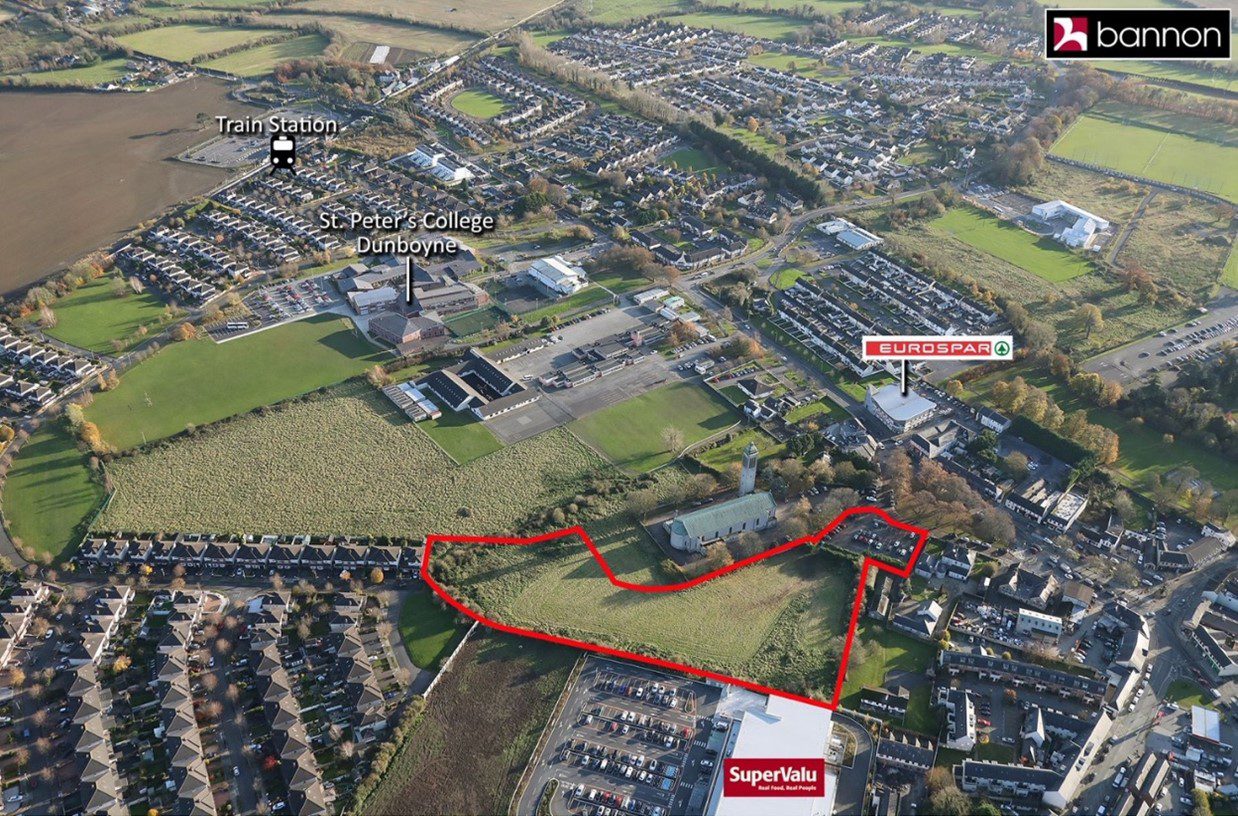
The Brief: The Parish of Dunboyne identified lands adjoining St. Peter and Paul’s Church as being surplus to their requirements and as a potential means of raising funds for the Parish, particularly in the face of the financial challenges posed by Covid-19. Bannon, as joint agent, were approached to provide advice on the optimum method of disposal and how to maximise the potential of the lands, given our previous experience and expertise with the disposal of lands owned by religious institutions. The surplus land, extending to 3.54 acres, included a surface car park which was used by parishioners and church goers and needed to be replaced/relocated.
Our Solution: An alternative car park location was identified in conjunction with the design team on the lands to be retained by the Trust. Potential purchasers were provided with the specification of the proposed car park and were requested to incorporate the provision of the new car park on behalf of the Trust as part of their bid proposals.
The outcome: Following a competitive bidding process the property was transacted at a price substantially higher than the guide of €2.5m. Furthermore, the purchaser has contractually undertaken to complete the proposed new car park, subject to planning permission, on behalf of the vendor to the required specification. This means that the responsibility, and more importantly the substantial costs of project managing and overseeing a substantial works programme, has been removed from the Trust.
Testimonial: “St. Finian’s Diocesan Trust engaged Bannon as a joint selling agent in respect of the lands at main Street, Dunboyne, Co. Meath. We found Bannon to be thoroughly professional in their approach, and their market knowledge in this sector contributed greatly to achieving a successful sale.”
Fr. Patrick O’Connor.

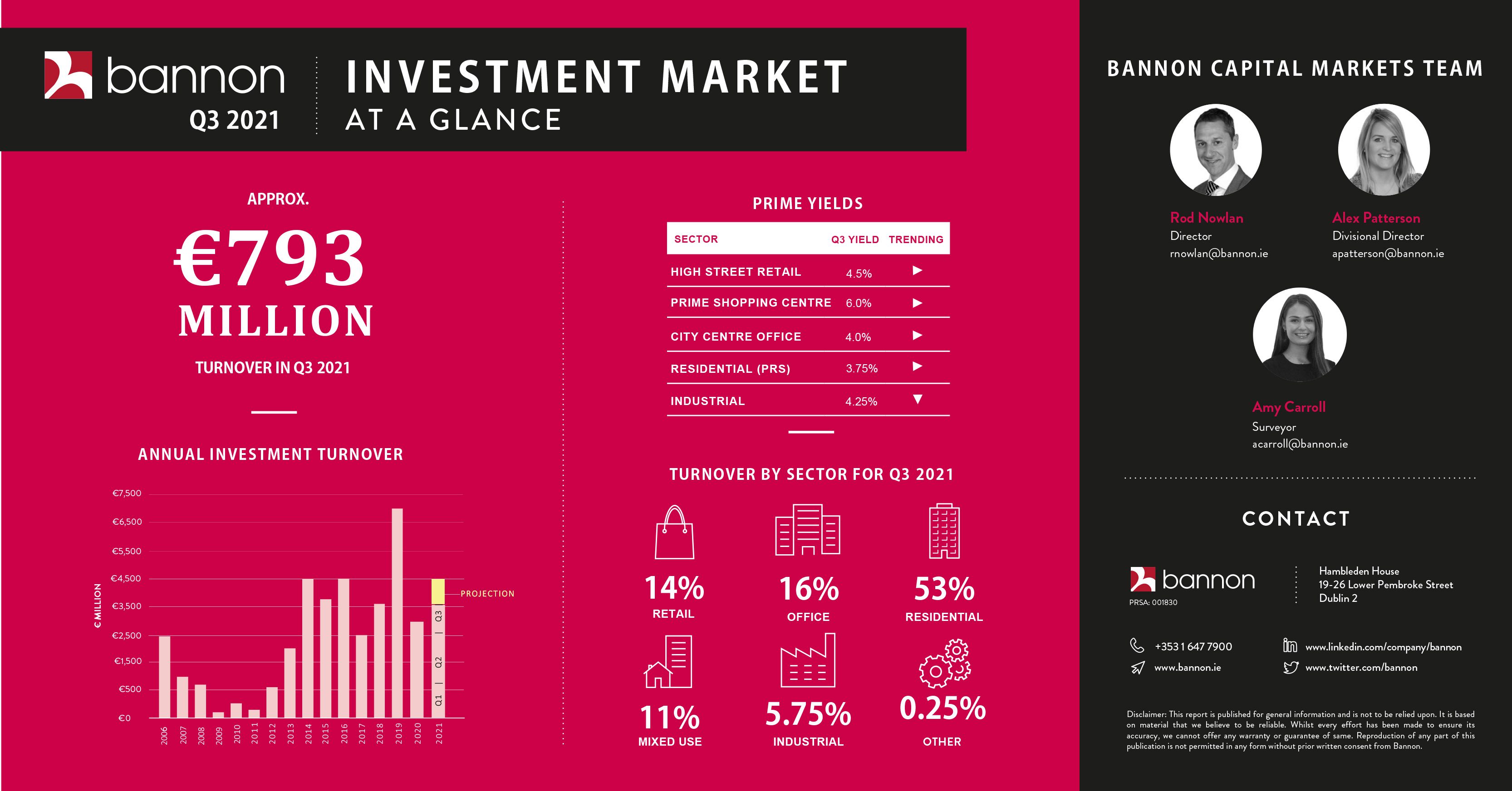
The Bannon Capital Markets snapshot highlights that the Retail Sector has finally emerged from the shadows at 14% of Q3 turnover of €794m …..but PRS remains the dominant player @ 50%. While Q3 was always going to struggle to match the pent up demand that emerged in Q2 @ €1.5bn, the outlook remains very strong. There is approx. €1.3bn on the market or at agreed stage which leaves our projection of €4.5bn for 2021 intact, an annual out-turn that will only have been surpassed once (in 2019)!
The retail industry in Ireland employs c285,000 people. That is 12.5% of the working population. As leaders in the sector, we are very proud at Bannon to manage over 50 shopping destinations across the country. These destinations are home to over 1,100 businesses who in turn employ 10’s of thousands of local people. Supporting trade locally is supporting your local community. As we reset after COVID, make the right choice, shop local.
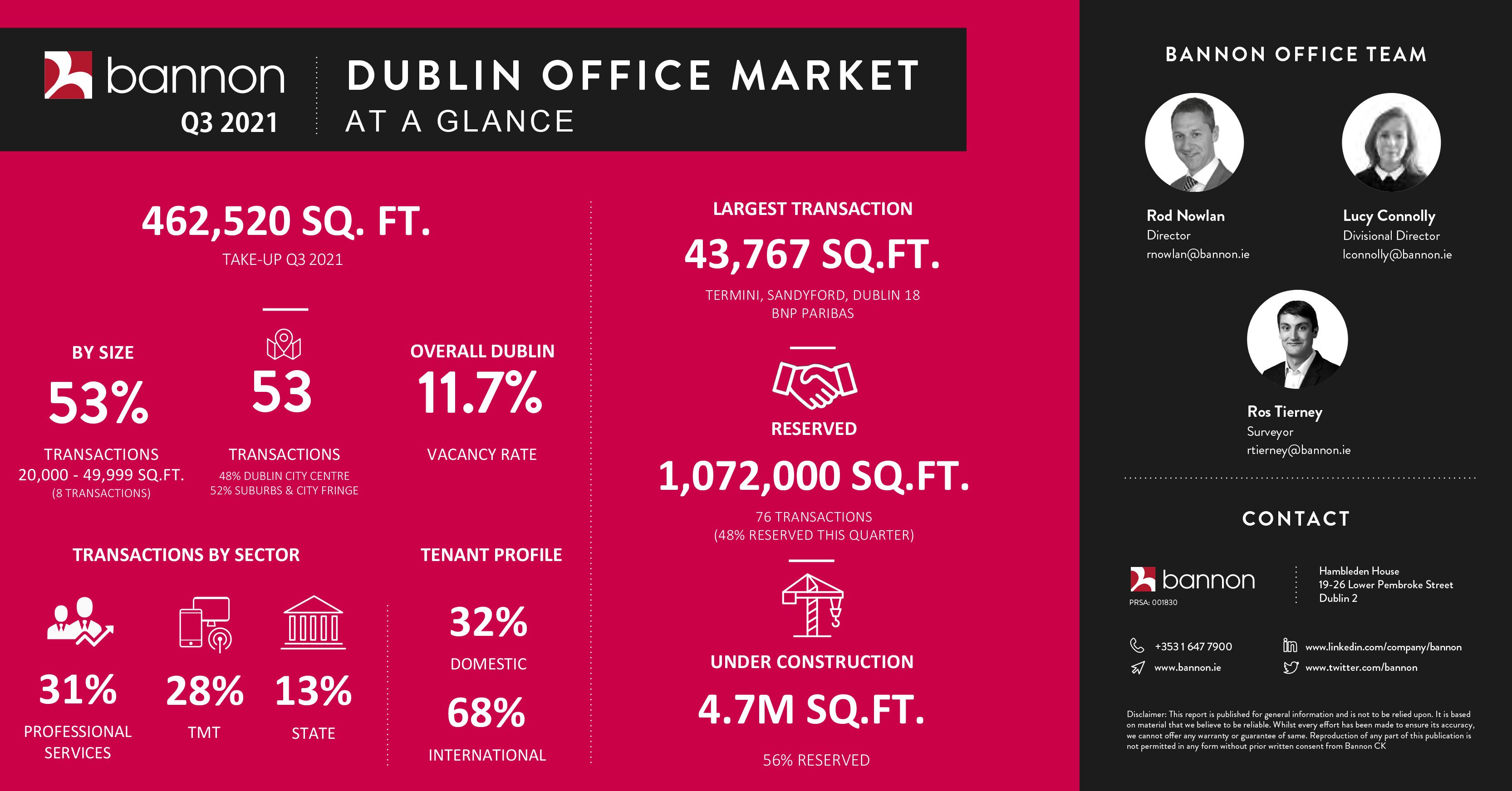
Take up for Q3 has exceeded 460,000 sq.ft. across 53 transactions. This represents a 92% increase on Q3 2020 but more importantly a 26% increase on Q3 2019 (pre covid).
This quarter has seen a significant jump in activity in the suburbs, particularly in the South Suburbs which accounted for 41% of all transactions.
As we enter Q4 there is over 1,000,000 sq.ft. reserved, this coupled with an increase in active requirements and the continuation of a phased return to the office should bode well for the office market for the remainder of the year.

The ‘Office’ has featured heavily in the press over the past 18 months and indeed in everyday conversation, as working from home became a necessity for most office-based employees. Countless articles and blogs have been published with sensationalised headlines such as “What will the office market look like after the great remote working experiment?” to “Productivity of remote workers could determine the fate of the office market”.
Our view is that the office will now assume a wider function with a more consolidated, improved, and focussed environment to manage the challenges of hybrid working and employee engagement going forward.
Over the last 6 years, Irish office developments have evolved considerably with numerous exceptional schemes being delivered. These buildings have attracted leading global firms to Dublin in particular and the expansion of many more as they continue to increase their presence and EMEA HQs. Due to the new standards set by these firms, occupier expectation has increased which has resulted in developers placing more emphasis on emulating what the tech sector has traditionally offered to their employees: amenity, a perk, a perceived life work balance. They have achieved this through the accumulation of amenity-based facilities such as: high end shower and bicycle facilities, concierge services, tenant events, better reception areas, coffee docks and townhall spaces. This together with improved building standards and environmental and sustainability credentials coming more to the fore has given rise to the creation of world class and award-winning office buildings in Ireland.
However, the office sector is about to enter a new phase. Traditionally offices required a centralised location which has been challenged by technology. Prime offices were traditionally clustered around transport infrastructure in a central business district where multiple advantages of proximity to transport, telecommunication infrastructure and labour combined to attract a premium from occupiers, but technology is challenging the need for multiple office functions to take place in a centralised location. This need must be replaced with desire. The user of the building now places more focus on it being a positive environment for their business and their teams.
Like the revolution that has taken place in the retail market where the ability to shop online challenged traditional assumptions on the functionality of real estate, investors in the office sector must adopt an experience focussed strategy. The nascent breakthroughs the sector has made recently to enhance user experience must be expanded upon, implemented at an early stage in the development process and maintained through a proactive management regime.
As real estate’s function evolves, how do we deliver a successful solution for this next phase in the evolution of the office? As mentioned previously User experience is key and this can be achieved through many innovations. These changes do not have to be seen as challenges but as opportunities to be proactive and differentiate a proposition from that of their competitors.
Through Bannon’s extensive property management portfolio and experience in working as design consultants on several large new schemes, our role in working with investors and developers on identifying and enhancing the user experience for office occupiers and their teams has come into sharp focus.
For the investor the asset cannot be just about place making or achieving optimal rental outcome. An investor must consider it as a longer-term play by exploring tenant optimisation i.e. perhaps leasing a portion of the scheme at lower rents to amenity-based occupiers to carefully coordinate a desired aspirational environment. Correct implementation of property and asset management functions is fundamental, they are key to ensuring the functionality for their occupiers from both a corporate and personnel perspective. Communication with occupiers is essential as creating positive experiences for users of the buildings will in turn lead to greater loyalty and enhanced values.
As we move closer to a return to the office in whatever form, recruitment and retention will continue to be the driving force in office acquisitions. Therefore, to adapt to a hybrid model, promote productivity and engage with the ‘new employee’, the office needs to evolve to reflect what people want to use every day. The era of passive office investment is over.
Lucy Connolly is a Divisional Director at Bannon. She has 15 years’ experience acting for a wide variety of private clients and companies in relation to commercial property, office acquisitions, sales and lettings. Contact Lucy by email on lconnolly@bannon.ie
The function of all forms of real estate and the specific requirements of its users continues to change at pace. The most significant factors driving this evolution are non-financial – Environmental, Social and Governance (ESG) requirements.
At Bannon, we are seeing a profound shift from clients towards more sustainable practices. With environmental issues coming to the fore globally and a particular focus of the impact on the real estate sector, Bannon has been proactive in applying innovative and market leading initiatives across assets within our portfolio.
In simple terms sustainability means meeting our own current needs without compromising the ability of future generations to meet their own needs. This encompasses the economy, society and the environment and is often referred to as profits, planet and people.
We know that ESG and sustainability related innovations need to be adopted into every aspect of the management of real estate. Given the scale and variety of assets under our management we are acutely aware of the positive impact changes we implement will have on, the environment and the users of our clients’ buildings.
In partnership with our clients, we have implemented over 40 specific sustainability initiatives in the last 5 years. These initiatives will remove a cumulative 500,000 kg of carbon dioxide annually.
A small sample of the sustainability innovations implemented across our portfolio include:
The focus on sustainability has numerous benefits to all stakeholders and wider society. This ranges from lowering carbon emissions into the atmosphere to a reduction in costs for users of assets. Simultaneously sustainability initiatives provide added value to the assets for investors.
It is very easy to pay lip service to the latest trends in the industry and not take action to back these up. In order to achieve meaningful change, sustainability has to now be at the fore of real estate management. Bannon has recognised this and will continue to work in partnership with all stakeholders to make sure we continue the progress already made.
William Lambe is a Divisional Director with the Property Management team at Bannon.
The Property Management team in Bannon oversees a portfolio of 75 assets for a range of institutional, private equity and private clients.

Retail is back and it’s here to stay, says Christine Dolan of Quayside Shopping centre in Sligo Town.
The centre manager believes that the majority of Irish consumers prefer the social experience of a trip to the shops over the convenience of e-tail.
She told the All-Ireland Business Times that Quayside is busier than ever.
“I think people have missed coming into the shops”, she said. “It’s a totally different experience to shopping online.”
“People love the social aspect of a day out shopping and I think most people are sick of the virtual experiences – there are a lot of people who have been quite lonely through the pandemic and you can’t beat meeting up with friends for a lunch date while having a browse through the shops.”
“There’s a great buzz around at the moment and people are starting to mix again and enjoy themselves.”
A 2020 report by Deloitte found that retail is Ireland’s largest industry and the largest private sector employer, employing almost 300,000 workers – with three in four of those employed based outside of Dublin.
Quayside Shopping Centre opened its doors in 2005 as the largest shopping centre in the northwest of Ireland.
With 130,000 feet of floor space the centre boasts 43 retailers including TK Maxx, Lifestyle Sports and Next.
Quayside lost two retailers over the pandemic, one of them was a Carphone Warehouse store which was a casualty of the Group’s decision to close 80 stores in Ireland last year.
Christine revealed that units have since been filled by two new tenants with more set to come on board.
While Christine admits that competing against online retailers will be a tough challenge in the years to come, she is not worried about the long term future of her industry.
“What we’ve proven here time and time again is that we are resilient.”
“We’ve been through a recession and we’ve come out stronger on the other end so I have no doubt that we will get back to where we were pre-pandemic.”
“In fact, I think we’ll be in a better place.”
According to the Central Statistics Office’s Retail Sales Index retail sales increased by 3.3% in June this year compared to May on a seasonally adjusted basis. On an annual basis, retail volumes were 10.6 per cent higher than in June last year.
Interestingly the retail sales figure for June this year was 13.4% higher when compared to two years earlier, before the Covid-19 pandemic.
Quayside Shopping Centre recently landed its third Business All-Star Accreditation in recognition of its contribution to retail in Ireland.
Reacting to the news, Christine said: “I am delighted to be part of an ambitious All-Star Business. To be accredited for the third year in a row is a huge honour and I see it as recognition of the hard work that goes on behind the scenes.”
Quayside’s focus over the next few months is to promote the “shopping centre experience” and Christine revealed that the centre will be introducing an initiative to help local craftspeople and creators.
She said: “We have plans to relaunch our very successful Christmas markets and hope to do this a little bit early this year. The markets provide a wonderful opportunity for local traders who may have been out of work the last while and want the chance to set up a pop up shop or trading stall.”
“We really want to celebrate with our customers and give something back to the local community this year.”
To learn more about Quayside Shopping Centre Sligo, visit their All-Star showcase page here.

Five Lamps Spar store guiding at €900,000.
Ros Tierney of Bannon says: “We expect to see significant interest from pension investors. This is a high-profile, resilient property with a tenant who has performed strongly throughout the Covid-19 pandemic. The investment offers the purchaser an attractive yield and a long lease term.”

In a wide- ranging feature for “My Job” in the business section of today’s @IrishExaminer, our founder and executive chairman @NeilBannon talks about the the importance of sustainability and what it means in practical terms, how clients are seeking to leverage the firm’s market leading expertise in Retail and apply it to a new user experience for the office.
He believes that there is a need for a big reset in how we imagine the office, moving it from being merely a functional space with a desk to a new proposition where it is an experience-led, productive, enjoyable place to create, collaborate and engage with colleagues.
Neil also talks about prospects for Cork and its hinterland plus how – as Ireland’s largest domestically owned Commercial Property Consultancy in a market dominated by global brands – our firm not only succeeds, it thrives.
Thanks to John Daly at The Irish Examiner for the opportunity.
Take a look at the link below:
We were delighted to hear our Executive Chairman Neil Bannon interviewed on Executive Chair, part of Newstalk’s “Down to Business” radio show on Saturday. Neil and Bobby discussed the big changes to the nature of the Office and how it will move from being functional to experiential. He provided the valuable insight that Investors and Employers are now going to be more concerned about the experience of being in the office. It will no longer simply be a place with a desk but instead somewhere you look forward to visiting in the new hybrid working world.
As a result, he mentioned that Bannon had seen a notable increase in clients seeking to have the firm leverage our market leading Retails skills and apply them to the Office. Other topics covered included how Neil’s Law degree helps with complex lease and purchase negotiations, setting up Bannon with his father Joe and how an independent, Irish owned business, excels at competing with multi-national competitors in this market.
Take a listen…..


Hambleden House
19-26 Pembroke Street Lower
Dublin 2
D02 WV96
Ireland
»Map
Phone: +353 (1) 6477900
Fax: +353 (1) 6477901
Email: info@bannon.ie


| Title | Price | Status | Type | Area | Purpose | Bedrooms | Bathrooms |
|---|