Angel Nails are now open at Manor Mills Shopping Centre

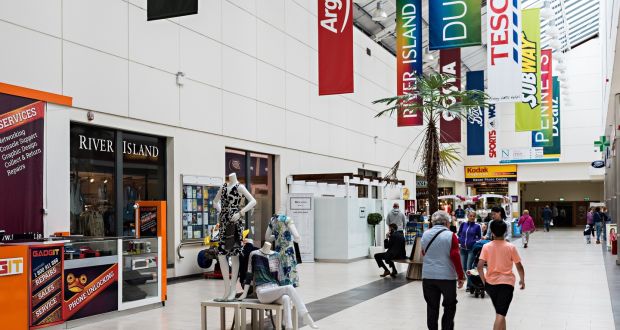
Angel Nails are now open at Manor Mills Shopping Centre, located at Kiosk 4 (bottom of travelator)

Angel Nails are now open at Manor Mills Shopping Centre, located at Kiosk 4 (bottom of travelator)

Urban Eyes are opening in Pavilions shopping centre, Swords!
New Local Independent Sunglasses Store looking to bring the classic and new brands to Ireland.
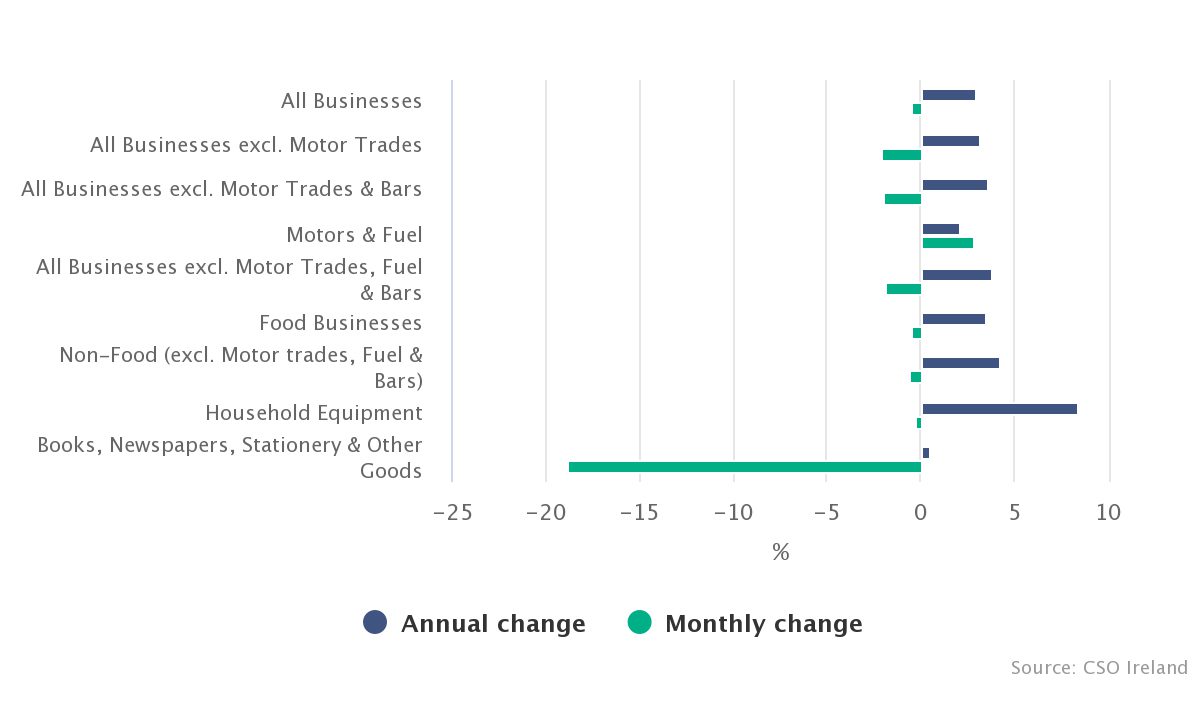
The volume of retail sales decreased 0.5% in October when compared to September on a seasonally adjusted basis and increased by 3.0% on an annual basis. When Motor Trades are excluded, the volume of retail sales decreased by 2.1% in October 2019 and rose by 3.2% when compared with October 2018.

The sectors with the largest month on month volume decreases were Other Retail Sales (-9.3%) and Fuel (-5.2%). The sectors with the largest monthly volume increases were Pharmaceuticals, Medical & Cosmetic Articles (8.1%) and Clothing, Footwear & Textiles (3.0%).
There was a decrease of 1.0% in the value of retail sales in October 2019 when compared with September 2019 and there was an annual increase of 1.4% when compared with October 2018. If Motor Trades are excluded, there was a decrease of 2.4% in the value of retail sales in the month and an increase of 0.5% in the annual figure.
Hollister is set to become the latest retailer to join the line-up at the Blanchardstown Centre.

The American clothing brand has agreed a 10-year lease for a 582 sq.m (6,265 sq.ft) unit at the hugely-successful Dublin scheme.
Hollister will join JD Sports who signed up last year for a 1,100 sq.m (11,800 sq.ft) store within a 55,000 sq.ft extension that is under construction. Distributed across two levels adjoining Blanchardstown’s central mall, the development will comprise eight new retail units upon completion next year.
Commenting on Hollister’s decision to locate at Blanchardstown, Pat Nash, managing director of Multi Ireland & UK, said: “This signing underlines the growth of our offering and our ability to provide the broadest retailing choice in both our retail parks and our covered malls.”
Separately, Fingal County Council has granted planning permission for the development of an additional 3,200 sq.m (35,000 sq.ft) extension at Blanchardstown’s Blue Mall entrance.
Existing eateries
This space is being earmarked for the provision of a number of new restaurants ranging in size from 142 sq.m to 861 sq.m (1,528 sq.ft to 9,267 sq.ft). The extension will be located within close proximity to the Odeon cineplex and several of Blanchardstown’s existing eateries including Nando’s Milano and Eddie Rockets.
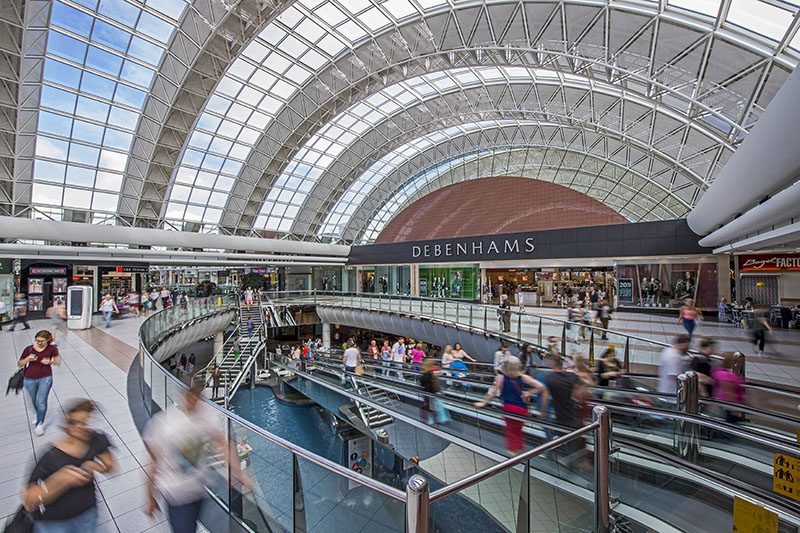
Developed originally by Stephen Vernon’s Green Property in 1996, the Blanchardstown Centre is acknowledged as one of Ireland’s foremost and most successful retail and leisure operations with more than 16.5 million visitors annually. The scheme includes more than 180 stores and is anchored by Dunnes Stores, Marks & Spencer, Penneys and Debenhams.
Bannon are delighted to be part of the Blue Mall extension with strong interest from both National & International F&B operators.

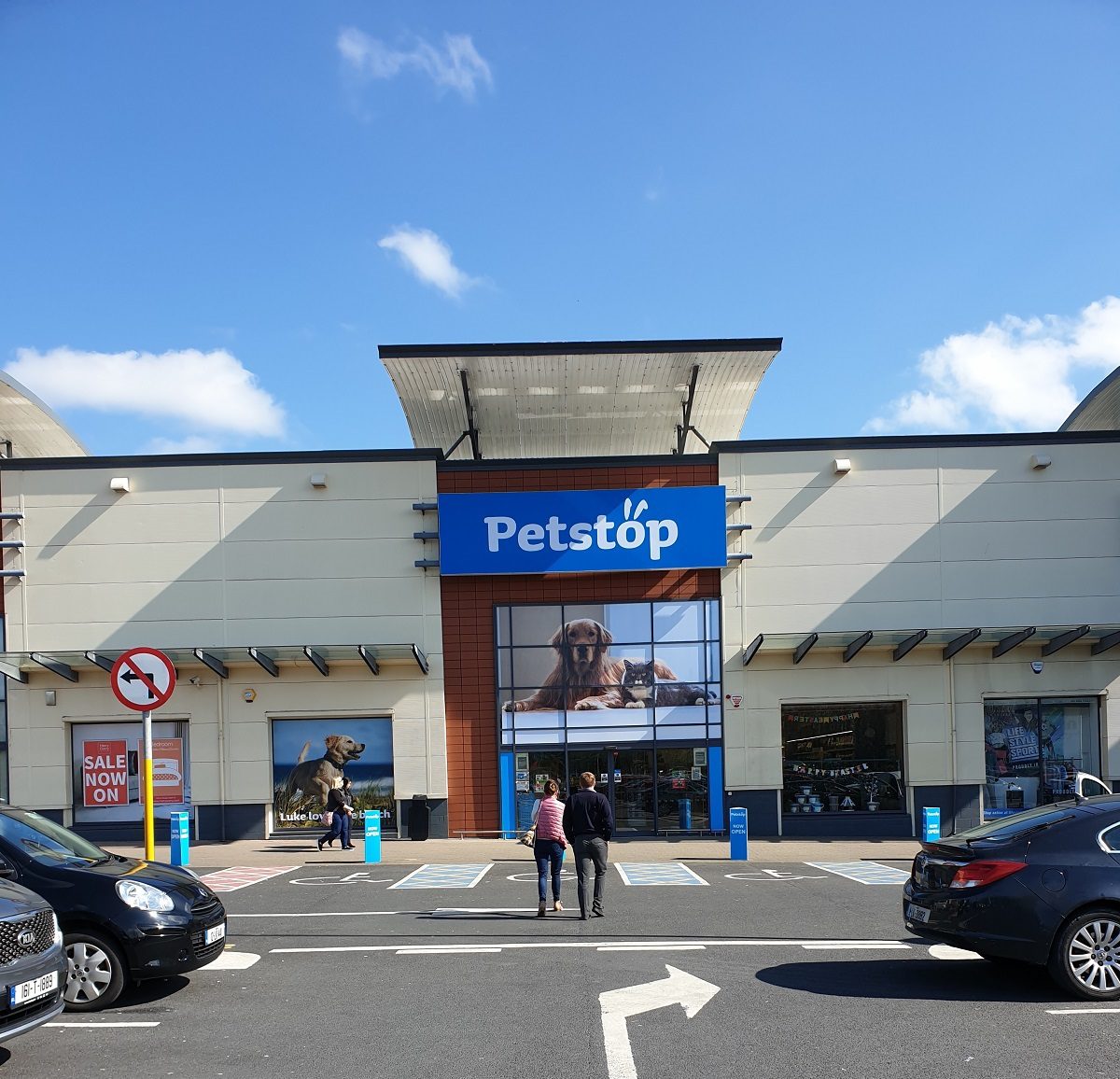
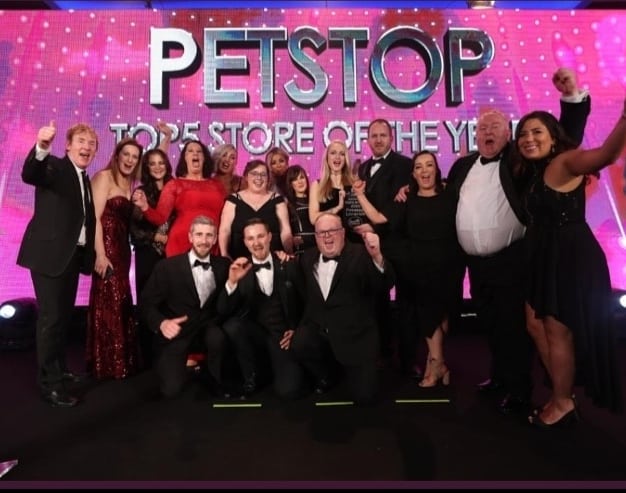
BIG congrats to Petstop Ltd, in Bannon managed Limerick One Shopping Park for winning Pet Store of the Year and the Top 5 Store award at the AIBMS Retail Excellence Awards on Saturday night! Great to see the store doing so well a year on from leasing the space through Bannon!
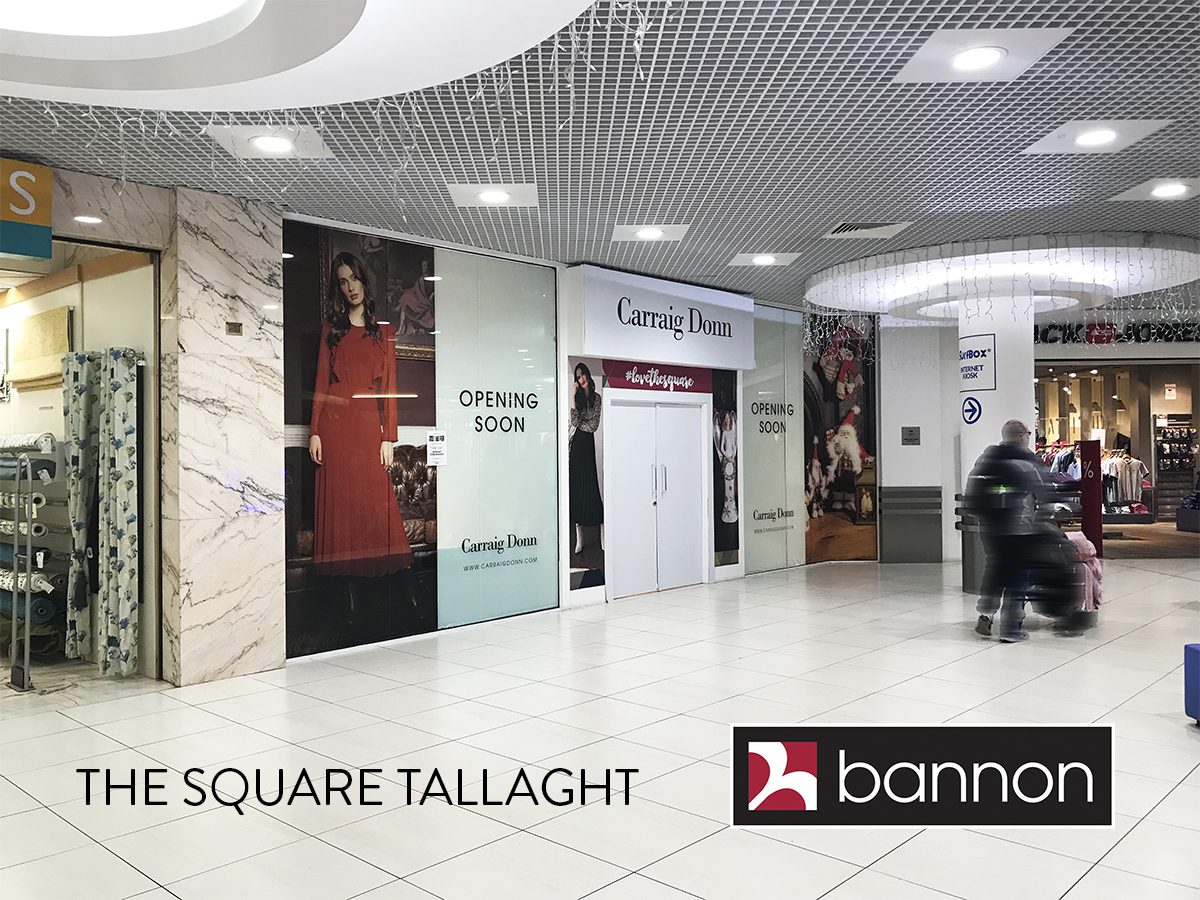
Carraig Donn are delighted to open their brand new store in The Square Tallaght today from 11am, where they are offering 20% off full price stock, goodie bags for the first 50 customers plus more exclusive opening offers!


Dublin’s largest menswear fashion Diffney is now open on Level 1 in The Square Tallaght.
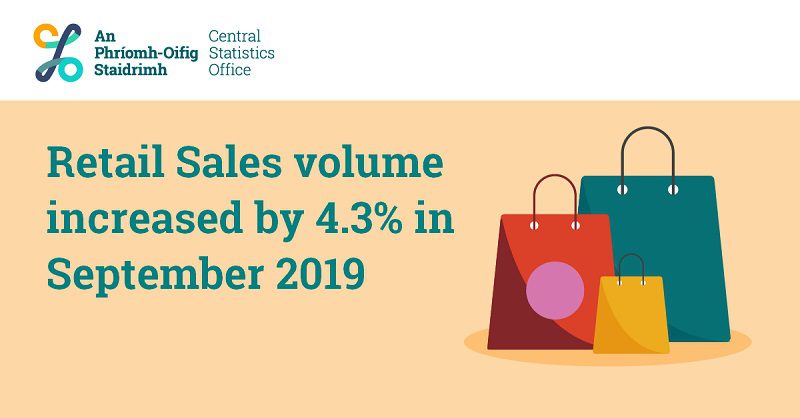
The volume of retail sales increased 4.3% in September when compared to August on a seasonally adjusted basis and increased by 4.2% on an annual basis. When Motor Trades are excluded, the volume of retail sales increased by 2.3% in September 2019 and rose by 4.7% when compared with September 2018.
The sectors with the largest month on month volume increases were Hardware, Paints & Glass (8.8%) and Motor Trades (8.4%). The sectors with the largest monthly volume decreases were Department Stores (-2.2%) and Clothing, Footwear & Textiles (-2.2%).
There was an increase of 3.8% in the value of retail sales in September 2019 when compared with August 2019 and there was an annual increase of 2.8% when compared with September 2018. If Motor Trades are excluded, there was an increase of 2.0% in the value of retail sales in the month and an increase of 2.1% in the annual figure.
The filing of its accounts confirmed last week that Smyths Toys is already making a financial return on its deal last year to acquire the central European operations of Toys R Us.
The family-owned group is now – individually and collectively – profitable in Ireland, the UK, Germany, Austria and Switzerland. That surely makes Smyths the most successful ever Irish retailer abroad.
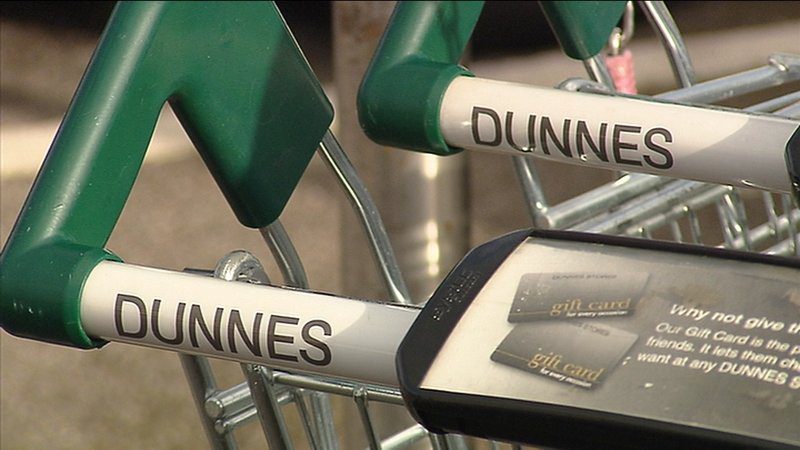
The two biggest indigenous Irish grocers, Dunnes Stores and Musgrave, are larger, more storied, family-owned operations than Smyths. Yet the toy retailer has succeeded abroad where they have failed.
Dunnes and Musgrave both have operations in Spain, but in recent years both effectively abandoned their forays into Britain.
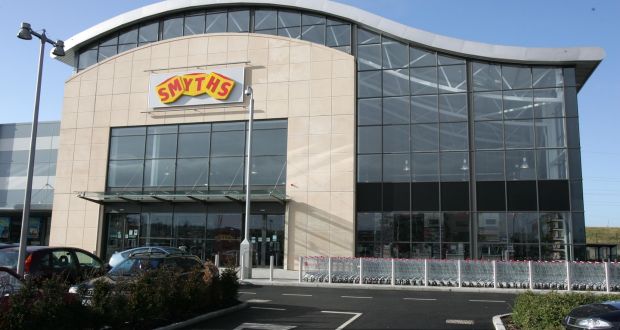
Smyths, meanwhile, has completely conquered the British market, opening more than 100 large retail outlets there in a little over a decade, vanquishing its specialist rivals. Its UK sales are now about €675 million.

Its prospects for maintaining growth in Britain are likely to slow as Brexit keeps sterling weakened, and Smyths runs out of unserviced locations to open new stores. As it already dominates the specialist Irish toys market, Smyths’ most obvious avenue for further growth became Europe.
The global insolvency last year of Toys R Us provided Smyths with a golden opportunity to buy out of bankruptcy the German-Swiss-Austrian stores of its US rival. The accounts filed last Friday show it paid less than €62 million to gain control of more than 90 outlets, which made Smyths profits of almost €14 million in 2018.
As it fine tunes them to better fit its sophisticated big box retailing model, their financial contribution may improve further.
The wider Smyths group is now on course for annual sales of close to €1.4 billion. Despite the success of its foreign forays, the group still made an annual profit of just €36 million.
With margins of less than 3%, Smyths may be tempted to expand its footprint even further if it wants to keep growing profits in years to come.
Brexit and the recent wet weather failed to dampen consumer confidence here over the last few weeks as grocery sales grew by 3.3% in the 12 weeks to October 6.


New figures from Kantar show that Dunnes has now been the country’s biggest retailer for a full year as it increased its market share of the supermarket sector to 22.5%, up from 22.1% the same time last year.
Kantar said Dunnes’ continued success, evidenced by 5.5% sales growth in the past 12 weeks, has largely been driven by its Shop & Save voucher campaign.
Meanwhile, SuperValu passed Tesco to take the number two spot for the first time since December 2018.
Kantar said that SuperValu has enjoyed larger basket sizes and growth in some of its core categories in the latest 12 week period.
Charlotte Scott, consumer insight director at Kantar, noted that both Dunnes and SuperValu have benefited from an out of season boom in sales of cleaning products.
“Shoppers have been indulging in a spot of seasonal autumn cleaning, perhaps thanks to the popularity of internet sensation Mrs Hinch and being kept indoors by the recent wet weather,” Ms Scott said.
She said people have spent an additional €7.2m on household cleaning in the past 12 weeks, which is up 5.9% on last year and driven by Ireland’s two largest retailers.
Meanwhile, despite falling behind SuperValu in the retailer rankings, Tesco enjoyed a return to growth this period, with shoppers making an extra trip compared to last year.
Kantar noted that confectionery has been a key category for Tesco, and is growing at an impressive 31.1% rate.
Charlotte Scott said that Tesco’s promotion on tubs of sweets, pricing them at €3.99, has proved particularly popular and it has even had to put quotas in place to limit shoppers to a maximum of four per person.
And Aldi reached a new record market share at 12.6% in the latest 12 week period under review. It saw an additional 21,000 shoppers through its doors, with a particular push to target young families.
Meanwhile, Lidl’s performance at a total level has also improved, with sales up 4.9% and its market share increasing to 11.9%.
Kantar noted that while Lidl’s existing shoppers are visiting more often, and spending more when they do, penetration has dropped slightly by 0.4%.
McGarrell Reilly’s plans for a new €75m Lusk Village Quarter in Lusk, Co Dublin, have been amended to include eight units with a combined 1,000 sq m for use as retail, restaurant and café outlets. Its plans also include a 2,500 sq.m supermarket that will be let to the discount operator Lidl, which will be the quarter’s retail anchor.
Lidl expects to be operating on site by December 2020, subject to the granting of amendments to the permission.
The amendments will also allow for two or three other retail units comprising 300 sq.m as well as parking spaces for 128 cars.
Sean Reilly is executive chairman of the development company and James Quinlan of Bannon is handling the commercial lettings.
Demand for these shopping facilities is reflected in a retail impact assessment conducted on behalf of McGarrell Reilly which shows over 85% of Lusk residents leave the area to do shopping.
Amenities will also include a crèche, a public square with a newly commissioned art piece, a village green and a playground. Spanning 15 acres, the project will accommodate over 150 new family homes. Its first phase will provide 56 homes at Station Road, which are now on sale, including 18 social and affordable homes. McGarrell Reilly has spent over €100m to date in Lusk and delivered over 700 homes to the area since the late 1990s.
Planning permission has been granted for a large new retail and residential development in south Dublin, despite strong opposition from the owners of the Dundrum Town Centre.
An Bord Pleanála has rejected an appeal by several parties including the Dundrum Retail Limited Partnership against the decision of Dún Laoghaire-Rathdown County Council to approve a €75 million project that will form part of the existing retail park and office development at The Park in Carrickmines.
The developer IPUT has plans for a neighbourhood shopping centre including two supermarkets, retail warehouses, restaurant, café, seven-screen cinema, crèche, offices, car showroom, medical centre and indoor skydiving facility as well as 130 apartments on a 10.5 hectare site close to the M50.
The overall development will extend to almost 84,000 sq m in four blocks extending in height from two to six storeys.
Commenting on the ruling, IPUT said it was “a major step forward in realising our ambition to reinforce Carrickmines Park as the leading out-of-town retail destination in Dublin”.
The development was also opposed by the owners of the cinema multiplex in the Dundrum Town Centre as well as Olivia Buckley, a Fianna Fáil candidate for the Dundrum area in the recent local elections.
DRLP, which is a joint venture between UK property group Hammerson and German insurer Allianz, said it was not opposed to the new development in Carrickmines in principle.
However, it claimed the proposed level of retail floor space was excessive for a neighbourhood centre particularly given there was no significant immediate residential catchment population to justify its scale.
DRLP said the proposed cinema and leisure uses would undermine the viability of existing town and district centres in south Dublin and represented a material contravention of the council’s development plan as well as running contrary to a range of regional and national planning policies.
Ms Buckley opposed the development claiming there was no requirement for another large retail centre or massive cinema complex in south Dublin and expressed concern it would impact on other nearby centres including Dundrum, Stillorgan and Dún Laoghaire.
Oversubscribed
She claimed retail warehousing was already oversubscribed in the capital, while the extension of The Park would also create serious traffic congestion on the M50.
Ms Buckley said it was disingenuous to call what was proposed a neighbourhood centre and branded such a description as “seriously misleading and inaccurate”.
Movies@Dundrum claimed the proposed multi-screen cinema would impact on its business when it relied on the planning system to protect its investment.
However, IPUT said there was a clear and long-standing need for a neighbourhood centre in Carrickmines as it was located in a significant growth area.
Dún Laoghaire-Rathdown County Council also said the development was an appropriate location for the centre as it would cater for new and emerging communities.
In its ruling, An Bord Pleanála said the centre would make a positive contribution to the urban character of the area.
The board said concerns relating to noise, vibration, dust and traffic could be satisfactorily mitigated by various measures and claimed the proposed development would have significant, direct, positive effects for the local population.
“Provision of neighbourhood centre facilities will reduce trips from the area to other locations,” it admitted.
IPUT successfully appealed a number of planning conditions imposed by the local authority that sought to deliver the project on a phased basis, which the developer claimed were overly prescriptive.
However, IPUT failed to overturn the condition which required it to construct a link road to Ballyogan Road before any other construction work began. IPUT claimed it was “unreasonable and unnecessary” and could impact on funding and the viability of the project.
It secured some minor concessions in its challenge to the scale of development contributions imposed by the local authority, which totalled almost €13 million.

Hammerson and Irish Life, joint owners of the Swords Pavilions Shopping Centre, have announced that luxury bath, body and home brand, Rituals Cosmetics will be opening its fourth stand-alone store in Ireland at Swords Pavilions, in the heart of North Dublin. Located close to the newly opened Superdry and JD Sports stores the 800 sq ft boutique will open on Wednesday 4th September 2019, enhancing the centre’s premium offer.
Founded in 2000 by Raymond Cloosterman, Rituals Cosmetics is the first brand in the world to combine home and body cosmetics, with an expansive product line including body care, scented candles, fragrance sticks, assorted teas, natural skin care and soulwear.
This latest announcement follows the opening of Swords Pavilions’ new dining quarter earlier this year with American burger chain Five Guys and well-loved pizza brand, Milano having already opened restaurants in the scheme. In July modern Persian kitchen Zaytoon also launched its new format restaurant at the centre.
This will be Rituals’ second stand-alone store opening in Ireland with Hammerson, having signed for a boutique in Dundrum Town Centre which launched in September 2018. The brand also has an outlet store in designer shopping destination, Kildare Village, owned by Hammerson through their partnership with Value Retail.
Simon Betty, Hammerson Director of Retail Ireland, said: “Rituals is a great addition to the brand offer at Swords Pavilions, demonstrating the continued demand from premium brands for high quality retail space in strong consumer catchments such as Swords Pavilions. Lettings such as this are a prime example of our strategy to ensure the centre remains the main retail and leisure destination in North Dublin.”
Rituals UK & Ireland Managing Director, Penny Grivea, said: “We are so excited to be opening another stand-alone store in Dublin at Swords Pavilions, allowing us to introduce the Rituals experience to as many customers as possible. Whether it is enjoying a hand massage at the water island or simply a cup of herbal tea upon arrival, the team can’t wait to help the Pavilions customers slow down and transform daily routines into meaningful rituals. This opening marks an exciting time for the brand, building upon our existing retail presence in Ireland.”

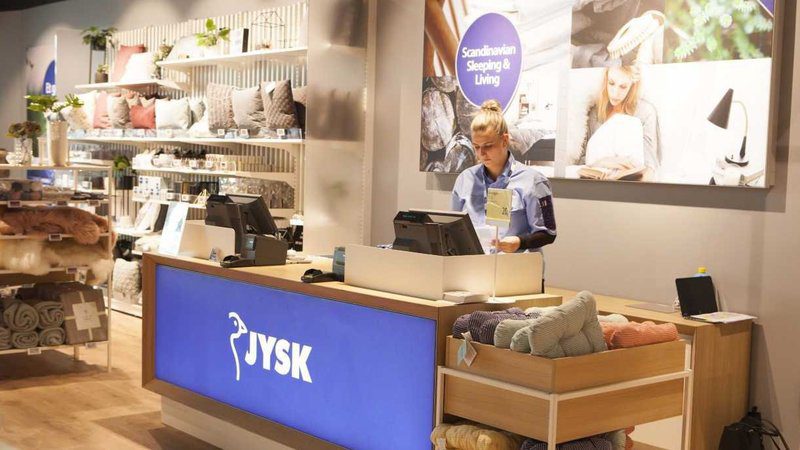
DANISH HOME RETAIL brand JYSK is planning to open 40 Irish stores within the next five years, effectively more than doubling its previous expansion plan for the country.
The 40-year-old Scandi retailer opened its first Irish store in Naas, Co Kildare in April and has since opened in three more locations. Earlier this year, JYSK – which is pronounced “yusk” – said it was planning 15 stores across the Republic.
The company has since revised these plans and said it now aims to open in 40 locations here over the next three to five years, which it says will help its Irish operation generate annual sales of up to €70 million.
To help source potential locations, JYSK – which sells a range of home furnishings and mattresses – is planning to meet with potential landlords at a showcase in Dublin in mid-September after encountering difficulties with its growth plan here.
Poul Erik Larsen, JYSK’s expansion director, said it has been more time-consuming and expensive to open new stores in Ireland compared to other European locations.
“We have noted that in other parts of Europe, we can issue and sign a lease contract within two to four weeks, whereas in Ireland, this is taking up to 16 weeks in some cases,” Larsen said.
“To achieve the volume of stores we want in the Irish market within two to three years, we need to secure a steady flow of new locations and that is something we’re actively pursuing right now.”
THERE has been a widespread welcome for news of a proposed development at Arthur’s Quay in which Marks and Spencer would be the anchor tenant.
Limerick’s Tiernan Properties has signed heads of agreement with the British retail giants to become the anchor tenant for a major €60 million development on the city’s Arthur’s Quay.
Chief executive Michael Tiernan told the Limerick Post that the plans are “at an early stage but we will now hopefully have a discussion with Limerick City and County Council and subject to a successful outcome to those discussions, we will move forward.”
The development will be dependent on other factors, mostly delivery of infrastructure outlined in the Limerick 2030 plan which has already been adopted and acted on by the local authority.
The new development will involve a site currently occupied by the former Limerick Tourism office at Arthur’s Quay, but public amenities in the park itself will not be affected.
The British chain has been linked to various sites in Limerick city and suburbs over several decades, but has no outlet in the area.
The clothing, food and homewares retailer has now agreed to be the main tenant in the proposed 18,580sq m (200,000sq ft) mixed-use development.
Tiernan Properties said there had been “significant interest” from other major brands in the project, which is expected to boost footfall in the centre of Limerick.
The developers said getting a “key target” like Marks & Spencer on board “validates the wider project” and would prove pivotal for Limerick.
“We have a lot of work to do but as this is a development in line with the aims of the 2030 plan, we believe it would support that plan,” Mr Tiernan said.
Limerick Chamber chief executive Dee Ryan said the announcement that the Arthur’s Quay development is to go ahead was another major boost for the city and region.
“This is more great news for Limerick and the wider city region. To have this and the Ryder Cup 2026 announced for Limerick on the same day is incredible. It shows where the city, county and region is headed.”
“This huge injection of private investment in retail is an important signal of market confidence and ongoing work to revitalise Limerick city centre. We are powering ahead in so many respects as we develop a thriving urban experience for people who live in, work and visit Limerick.
“The retail community, in particular, welcome a boost exactly like this to help attract more people from Limerick and neighbouring counties into the city,” she added
Mayor Michael Sheahan said that along with all the other plans for Limerick, the multi-million euro investment by Tiernan Properties would help revitalise the city centre.”
“Confirmation that Marks and Spencer is to be the anchor tenant will see the company open its very first store in the mid-west region. It has been a long time coming and I am delighted that such a sought after retailer is opening a store here,” Mayor Sheahan concluded.

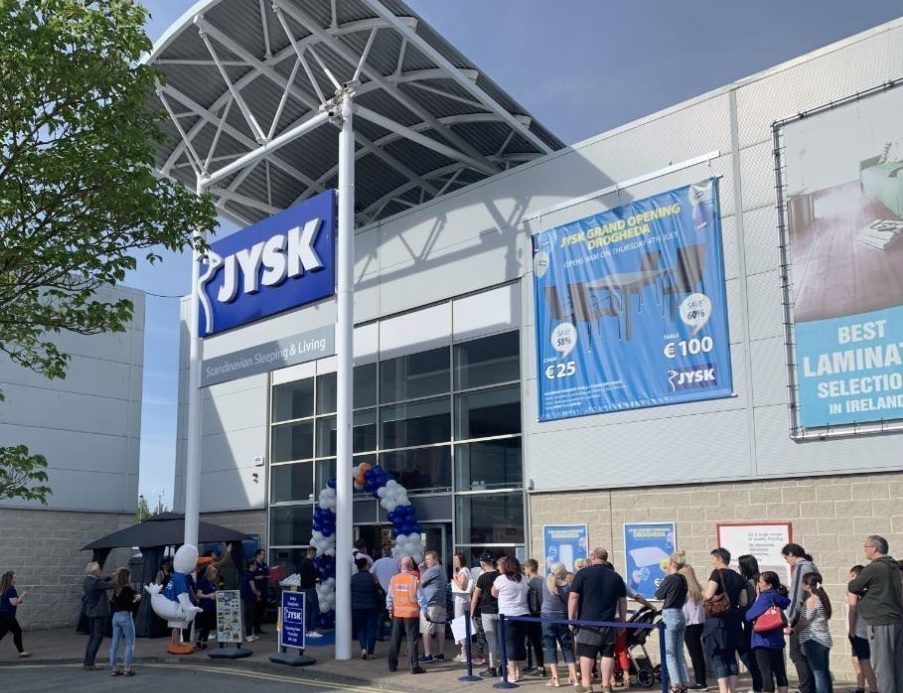
Scandinavian furniture and homeware chain JYSK opened their second Irish store this morning at Drogheda Retail Park as people queued up to get into the new JYSK store which was officially opened at 9.00 am.
Founded in Denmark in 1979, JYSK , (it’s pronounced “Yusk”), is a global retail chain with more than 2,700 stores worldwide selling everything for the home, it has a turnover of €3.6 billion a year and employs some 23,000 people.
The Drogheda JYSK store is the group’s second in Ireland, it opened its first branch in Naas in April and stores are also scheduled to open in Navan later this month and Portlaoise in August.

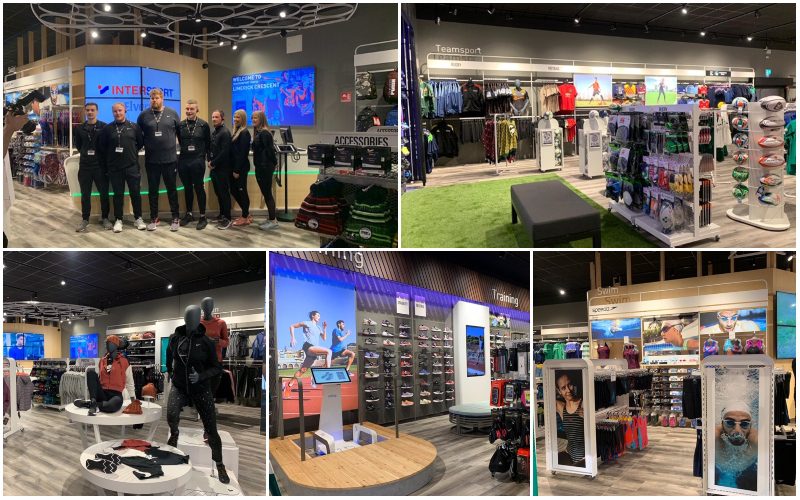
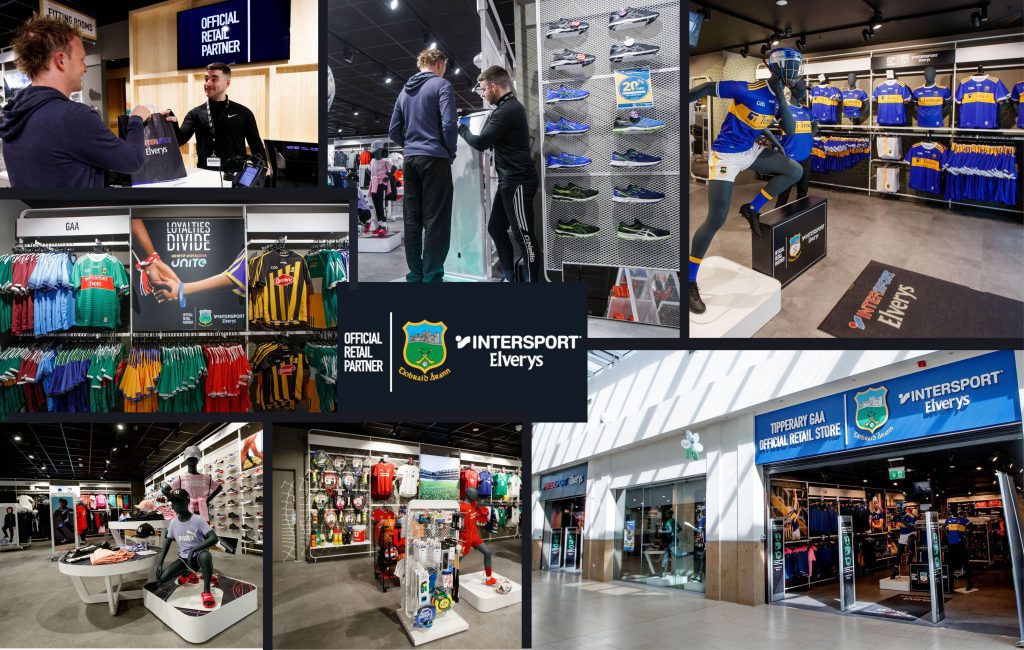
Intersport Elverys who proudly invested in Tipperary GAA, are delighted to announce they have officially opened their new store in Thurles Shopping Centre with the widest range of GAA, running and training gear for kids and adults.
Intersport Elverys, in partnership with Tipperary GAA invited fans young and old to meet the Inter County players and browse the new store. There was exclusive interviews, fun activities and exclusive discounts on the day.
They were joined by Tipperary players Seamie Callanan, Noel McGrath and Ronan Maher on the day who took pictures and signed autographs with fans.

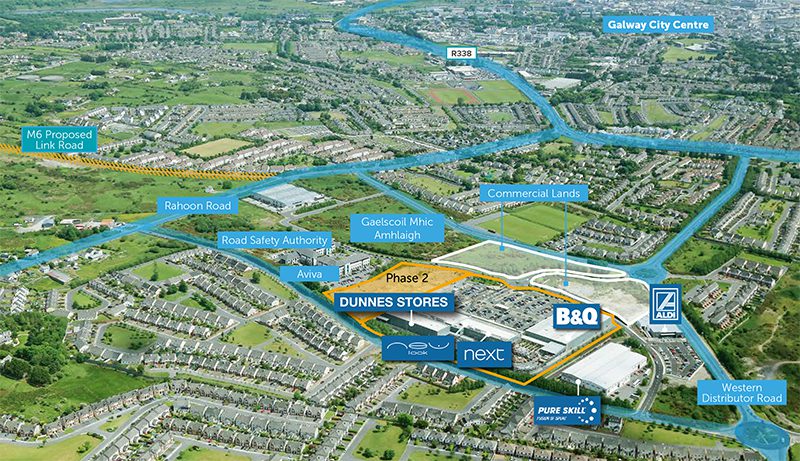
Boots has become the latest major retailer to sign up at the landmark Gateway Retail Park in Galway.
The pharmacy-led health and beauty retailer has agreed to take a new 700 sq.m (7,500 sq.ft) premises at the scheme.
Boots are understood to be paying a rent in excess of €35 per sq.ft per annum for its new store which is under construction as part of the second phase of the retail park. Boots will be located immediately adjacent to the new branch of Harvey Norman.
Due for delivery in the first quarter of 2020, the second phase at Gateway will comprise an additional 11,148 sq.m (120,000 sq.ft) of retail space offering eight new retailers, three new food and beverage operators and a gym. Current tenants at the Gateway park include Dunnes Stores, Next, New Look, McSharry Pharmacy and B&Q.
Gateway’s asset manager, Paddy O’Connor of Sigma Retail Partners, believes Boots’ decision to locate at the scheme further underpins it as the destination of choice for retailers in Galway.
Darren Peavoy of Bannon who handled the letting on behalf of the landlord said the remaining units at the scheme are all under offer.
Insurance giant Irish Life intends to double the size of its retail investment business over the next five years to €10bn. It also plans to acquire a number of residential developments, investing “hundreds of millions” in residential properties.
Irish Life acquired the sought-after Fernbank development in Dundrum, south Dublin, last year for €100m.
In an interview with the Sunday Independent, CEO David Harney said the company intends to conclude similar deals shortly. “I doubt we will be doing two deals like Fernbank every year, but if we’re doing one deal like it annually we would be pretty happy,” he said.
Harney also confirmed that the company lost out to Brewin Dolphin in its bid to purchase the wealth-management arm of Investec.
“We do think that in Ireland too many people have too much on deposit rather than in broad-based investments.
“We’ve grown our multi-asset portfolios into a €5bn business over the last five years and we’d love to double that over the next five,” he said.
Harney, who was speaking after the launch of the company’s new MyLife health improvement app, also signalled the company’s intention to acquire more wealth management businesses.
Irish retail sales values grew by 4.7% in the first quarter of the year when compared with the same period in 2018, aided by a ‘mild late winter’ and ‘early spring’, research showed.
While these figures are robust, it must be highlighted that in this period last year, Ireland found itself under a blanket of snow and was suffering the disruptive effects of Storm Emma, according to Retail Ireland latest Retail Monitor which the group published today.
“After a rocky fourth quarter of 2018, in which trade ebbed and flow almost by the day, retailers will be hoping that a level of consistency to trade can be found in 2019,” Thomas Burke, director of Retail Ireland, said.
“It is clear that retail sales patterns in the second half of 2018 were heavily impacted by Brexit related commentary.”
Brexit Extension
The Ibec group that represents the sector, highlighted in its report that an extension to the Brexit negotiating period until October seems to ‘have calmed nerves somewhat’.
“The daily game of brinkmanship is no longer leading news bulletins, and for hard-pressed Irish retailers this is good news. On the back of this we have seen an uptick in consumer sentiment as people’s worst fears of a crash out Brexit, have been allayed, at least for the moment.” Burke added.
There has also been a modest uptick in consumer confidence this quarter coming off the back of some respite from Brexit uncertainty which is reflected in the sales data.
Supermarkets and Convenience Stores
The report showed, that primary driver for volume over value growth continues to be ‘competitive action’ for supermarkets, with the battle for market share between multiples ‘very intense’ and the ‘slower but inexorable’ continuing growth of discounters also contributing to downward pressures.
A buoyant economy has been good news for the convenience sector, which is also in growth, the research indicated.
The Monitor also shows that while sales are up across almost all categories of retail, the ever-present trends of discounting and the continuing shift to online are also evident, particularly in retail categories such as computers and electrical goods and department stores.
In terms of the outlook for the remainder of the year, Burke highlighted that many businesses will have budgeted against the performance of Summer 2018.
“For those categories that are particularly reliant on good weather to drive footfall and sales, clearly this will prove challenging. With no guarantee of a similar prolonged spell of fine weather retailers will have to be creative if they are to achieve such heights once more.” he concluded.
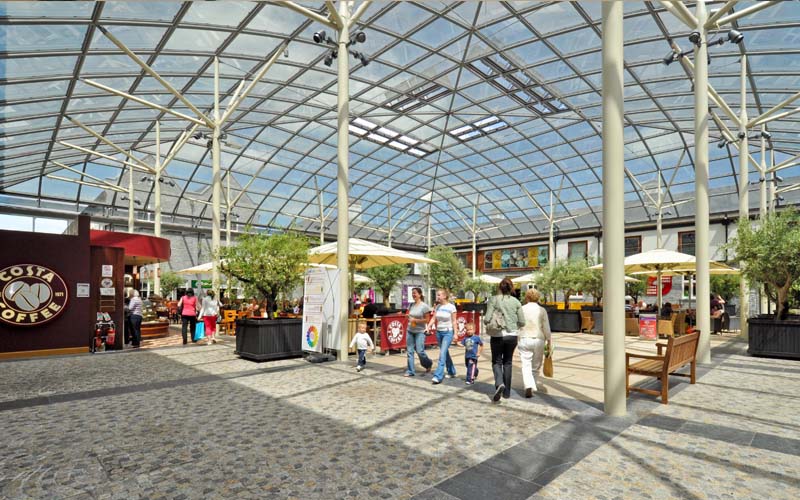
Costa Coffee will open a brand new store in Waterford Retail Park on the Outer Ring Road this summer. The new coffee pod will take up a floor area of approximately 2,600 sq. ft and will result in a bright and spacious high-spec coffee offering with outdoor seating. It joins other big-name retailers in the retail park including anchor tenant Harvey Norman, Homestore & More, Curry PC World, Halfords, Home Focus, EZ Living Interiors and Maxi Zoo.
Costa Coffee is a multinational coffee house company and is the second largest coffee house in the world. Costa Coffee is present in 31 countries across the globe and it opened its first store in Ireland in 2005. Its number of stores have been growing ever since and it has multiple stores all over Ireland.
The asset manager for Waterford Retail Park, Jenna Culligan from Sigma Retail Partners, said “We are delighted that Costa Coffee is joining our very strong tenant line-up in Waterford Retail Park. As part of our strategy for this park we identified that food and beverage was missing for the park and we sought to provide this for the retail park. As everyone knows Costa Coffee are one of the biggest coffee chains in the UK and Ireland and we are absolutely delighted to have them on board.”
Waterford Retail Park is easily accessed from Waterford City and is less than a 10 minutes’ drive away. The retail park is located along one of the main access routes to Waterford City from the M8 and N25 (Cork Road) and benefits from free customer parking. Waterford Retail Park is also located close to Waterford Greenway and the new Costa Coffee store will be a great pit-stop for visitors heading to and from the Greenway.
Bannon are the letting agents for Waterford Retail Park.
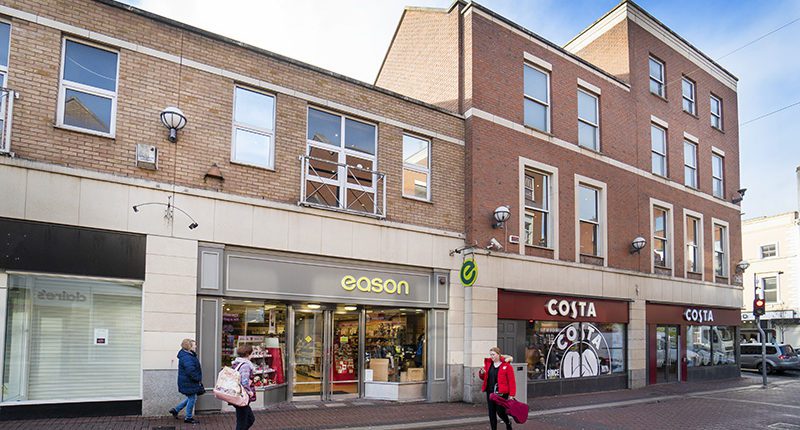
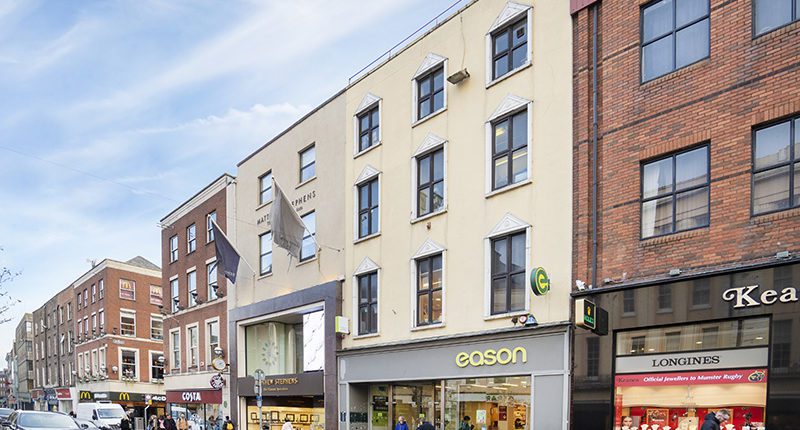
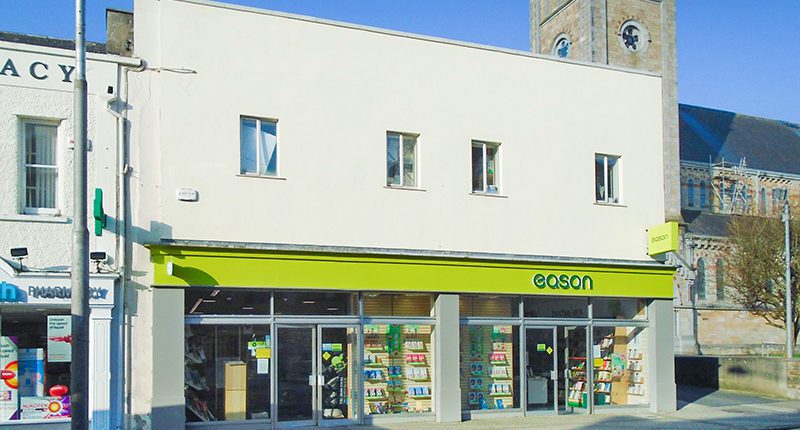
Stationery and book seller Eason has launched sale and leaseback deals for three stores which it owns in Limerick City, Tralee, Co Kerry and Clonmel, Co Tipperary.
The launch provides an opportunity to compare the returns which regional high streets can offer to investors.
For instance with these three properties the net initial yields will range between 7.5% and 11.5%.
The Limerick building is a mid-terraced property extending to 12,573 sq ft of which 9,461 sq ft is devoted to retail. Agents Bannon are guiding €2.2m for the property and offering a 25 year lease at an annual rent of €180,000. This equates to a net initial yield of 7.5%.
Set on a 0.1 acre site, the Limerick building ranges in height from a four storey over basement on O’Connell Street to ground and first floor on Cruises St. The basement extends under adjoining properties at 10 O’Connell Street and 1, 2 and 3 William Street.
Eason’s Tralee store at 25 The Mall, is on a prime stretch directly adjacent to Penney’s. Joint agents Bannon and Walsh O’Sullivan are seeking €1.23m and with an annual market rent of €120,000, they say this equates to an immediate return of 9% after standard acquisition costs are deducted.
The four-storey building extends to a net internal area of 6,483 sq ft incorporating a large retail area of 3,948 sq ft.
The Clonmel store is located at 19/20 Gladstone Street, in the main commercial area of the town centre. Joint agents Bannon and Moynihan Curran are asking €560,000 and with an annual rent of €70,000 this equates to a net initial yield of 11.5%.
Most of the lease terms are similar for all three stores with new leases for 25 years, five yearly open market rent reviews and a break option at the end of year 10.
These sales are part of Eason’s plan to sell 13 properties in the Republic which could generate €60m of which about €20 million would be invested in its retail business. The rest of the proceeds will be divided among its 220 shareholders.
It has already sold a retail outlet in Carlow town which it had let to another retailer and in January Eason agreed a deal to sell its 184,886 sq ft warehouse on 8.4 acres at St Margaret’s in north Dublin to Irish property fund Iput for €19m.
Sale and lease back deals are also among the options being considered for its flagship store on O’Connell Street in Dublin as well as its store on Patrick St in Cork city centre but the future timing and details of those have not yet been decided.
Last month Bannon launched a sale and lease back on Eason’s 11,200 sq ft store at 33 Shop St, Galway City with an €8m guide price. Its annual rent of €525,000 would equate to a net 6% initial yield.
Contact our Capital Market’s Team today on 01 6477900 for more information.
Bannon are delighted to have secured Petstop for the former Maplin unit in Limerick One Shopping Park.
At a rent of €24 per sq.ft for the 7,500 sq.ft unit, this letting further illustrates Limerick One’s regional importance as a premier retail trading destination.


A majority stake in Navan town Centre, which was on the market in 2016 for €62 million, has just been bought for about €43 million.
However, the off-market sale, which was handled by Rod Nowlan of Bannon and has just received clearance from competition authorities, did not include a residential element valued at less than €5 million that formed part of the 2016 offering.
The stake was sold to a fund controlled by Davy at an attractive yield of about 9-9.5%. This is undoubtedly a strong return for an asset of this scale in the Irish market at this time. However, the fall in value of the stake since 2016 is reflective of a softening market for provincial retail assets at a time when traditional retailing faces a significant challenge from eCommerce.
‘Stampede’
Declan Stone pointed to some notable retail transactions recently – principally Kilkenny, Carlow and Globe retail parks (all acquired by Friends First) – but suggested that retail as a sub-sector of the overall Irish investment market had its heyday in 2016 when retail transactions accounted for some 50% of a €4.4 billion market.
“In 2017 it fell to 28% of a €2.28 billion market and up to the third quarter of 2018 only accounted for about 11% of the total €2.53 billion spend,” says Stone.
“For me, the charge into retail in 2016 was somewhat surprising and seemed far more driven by the weight of capital than by underlying occupier demand. Put simply, retail yields tumbled – driving up capital values – but in the background there was little tenant demand to underpin this, and in fact in the intervening 24 months the occupational market has worsened.”
The 65% majority stake in Navan Town Centre came on the market in September 2016 through Savills and Cushman & Wakefield. CarVal Investors had bought loans underpinning the centre during the crash.
A number of deals were reportedly agreed for the stake at a price of about €54 million, but the major international investor concerned did not proceed with a transaction.
Driving force
The 65% shareholding was generating a rent roll of about €4.7 million as recently as 2017.
The balance of the shares in the centre are held by Irish Life.

Danish global home retail brand, JYSK, will open 15 stores across Ireland in the next two years, creating more than 200 jobs.
Founded in Denmark in 1979 by Lars Larsen, over the past four decades JYSK has expanded to 51 countries with more than 2,700 stores worldwide employing 23,000 people.
The first Irish store will open in Naas, Kildare in April, with two further stores opening in Drogheda, Louth and Navan, Meath in May, and a fourth store opening in Portlaoise, Laois opening during the summer.
Roni Tuominen, head of retail, said Ireland is a very important market for JYSK, given the prominent position the retail industry holds in the country for employment and the economy. “As a company, we focus on entering a new market each year, and we are excited that 2019 is the year we bring our brand to Ireland. We will open here with our latest concept stores and deliver exceptional quality products at great prices to Irish consumers,” he said.
JYSK offers a range of products for the home, from the bedroom to the garden. The brand has also enjoyed a world-wide reputation for expertise and knowledge in sleeping culture, which continues to this day, offering everything from mattresses to frames and bases.
Costa Coffee is the latest tenant to join the line-up at Malahide Road Retail Centre in north Dublin. Costa is trading out of a 2,000 sq.ft coffee pod that also has the use of outdoor seating. The letting comes just as the landlord, Irish Life, has resurfaced the car park and upgraded signage, lighting and landscaping.
The centre benefits from its location on the Malahide Road dual carriageway, attracting more than 25,000 customers most weeks. It is anchored by Woodies and Lidl, and other tenants include Halfords, Equipet, Right Price and Tiles.
Joint letting agents Bannon and Lisney are currently marketing two available units ranging in size from 4,950 to 9,895 sq.ft.
Giant retailer Harvey Norman is to open a substantial new store now under construction as part of the second phase of the Gateway Retail Park in Knocknacarra, Galway.
Australia’s leading retailer, specialising in computers, technology, electrical goods, furniture and bedroom fittings, is to rent the 5,574 sq.m (60,000 sq.ft) flagship store in the thriving park, which was acquired in 2016 by Sigma Retail Partners on behalf of Oaktree Capital.
The new store will form part of a 11,612 sq.m (125,000 sq.ft) extension, bringing the overall retail space to more than 30,192 sq.m (325,000 sq.ft).
The planned extension will be the first large-scale retail space to be completed outside Dublin since 2008 and the first in Galway for more than two decades. When completed, the new retail facilities will provide more than 300 permanent and part-time jobs in Galway.
Harvey Norman plans to trade over two levels after agreeing an annual rent believed to be about €900,000.
Tenant mix
Gateway’s line-up of tenants also includes Dunnes Stores, B&Q, New Look and Next. According to letting agent Bannon, signing Harvey Norman as anchor tenant highlights the undoubted appeal of the centre and its mix of tenants. Bannon is also due to announce the identity of a second international trader, which has agreed rental terms on another store extending to 650 sq.m (7,000 sq.ft).
In addition to Harvey Norman, the second phase of the retail park will have up to six new open-use retail units and four food and beverage outlets,
Darren Peavoy of Bannon said the interest in the available shops was hardly surprising given the absence of new trading facilities in Galway and the fact that new outlets in Gateway Park could be used for fashion and other choices.
Blaine Callard, Harvey Norman’s Irish chief executive, said the Irish business had great momentum right now and the addition of the huge showcase store in Galway would be an exciting addition to the network.
“We see from our online business that there is a huge pent-up demand from Galway customers to shop physically in Harvey Norman . . . it has taken a few years but we have finally found a home in the west.”
Marcus Wren of Sigma said a huge amount of work had been put into planning the new extension to the retail park. He added that Galway City Council had been extremely proactive in bringing this long-awaited development to reality.
Canadian restaurant chain Pita Pit and Japanese eatery Musashi are to join Krispy Kreme in trading out of a newly redeveloped block at Ireland’s largest retail and leisure destination, the Blanchardstown Centre in north Dublin.
Both of the new units will extend to around 170 sq.m (1,829 sq.ft) and will include outdoor seating and dining areas, according to management company Multi Ireland. The expansion of the dining facilities comes after the recent opening of the first Krispy Kreme store in Ireland, which has attracted continuous queues for its own brand of doughnuts.
Pita Pit’s new outlet will be its first in Ireland. Founded in 1995 as a healthy alternative to fast food, the company has more than 500 outlets worldwide, mainly in the US and Canada.
The final unit in the block will be occupied by sushi and noodle bar Musashi, which already has five existing restaurants in Dublin. The new Blanchardstown outlet is the first in a shopping centre environment. Already open at the same block is Esquires, the international coffee house chain.
Multi Ireland has spent the past 12 months redeveloping the block, which had been vacant for several years. Putting this space back into productive use is expected to broaden the appeal of the Blanchardstown offering and add around €800,000 to the rent roll.
Simon Cooper, head of leasing, said Multi Ireland was particularly pleased that Krispy Kreme had selected Blanchardstown for their “debut Irish outlet”.
Musgrave, the owner of SuperValu, has agreed a deal to buy the Donnybrook Fair chain of upscale supermarkets in the greater Dublin area.
The Cork-headquartered retailing and wholesaling group finalised a deal to buy the chain this morning for an undisclosed sum from husband and wife team, Joe and Mary Doyle, who founded and control Donnybrook Fair.
Joe Doyle says he will remain involved with the business, to grow the brand in partnership with its new owners. Both sides also suggested the Donnybrook Fair brand will remain intact following the deal.
The transaction includes four stores in Dublin – in Donnybrook, Stillorgan, Malahide and Baggot Street – and one in Greystones in Wicklow. It also includes Donnybrook Fair’s food production facility.
Donnybrook Fair employs about 250 staff.
Dunnes Stores had been close to completing a deal for Donnybrook Fair earlier in the summer, but were ultimately overtaken in negotiations by Musgrave.
The deal strengthens Musgrave’s position in the booming Dublin grocery market, where SuperValu’s base is built mainly around the since-rebranded Superquinn outlets that Musgrave purchased in 2011.
As consumer trends within the Irish grocery market shifts further towards quality Irish foods, the deal also strengthens Musgrave and SuperValu’s offering in that segment of the market, given Donnybrook Fair’s association for epicurean goods.
“Donnybrook Fair increases our penetration of the Dublin food market and our intention is to maintain and grow the brand for the long term. We are looking forward to taking it to the next stage of development,” said Chris Martin, chief executive of Donnybrook Fair.
“Musgrave is as passionate as we are about the heritage and future of Irish food. I look forward to working in partnership with the Musgrave team to grow the Donnybrook Fair brand,” said Mr Doyle.
Seasonally adjusted, the volume of retail sales increased by 6.5% in the month of July, with an annual increase of 5.5%. If Motor Trades are excluded, there was a decrease of 0.5% in the volume of retail sales in July 2018 when compared with June 2018 and there was an increase of 2.9% in the annual figure.
The sectors with the largest monthly volume increases were Electrical Goods (+5.8%) and Books, Newspapers & Stationery (+4.4%). The sectors with the largest month on month volume decreases were Other Retail Sales (-6.0%) and Hardware, Paints & Glass (-5.9%).
There was an increase of 1.6% in the value of retail sales in July 2018 when compared with June 2018 and there was an annual increase of 5.1% when compared with July 2017. If Motor Trades are excluded there was a decrease of 0.6% in the month and an increase of 2.6% in the annual figure.

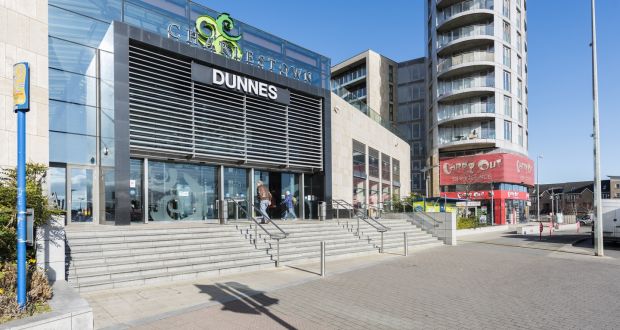
Businessman Eamon Watters, owner of Panda Waste, one of Ireland’s largest waste collection and recycling companies, has acquired a substantial stake in Charlestown Shopping Centre at junction five of the M50 in north Dublin. The acquisition was made through an investment vehicle called Garristown Venture Holdings.
The large-scale shopping centre and an adjoining site with planning permission for 247 apartments and further retail space have been sold for slightly over €42 million, well ahead of the €35.5 million quoted by selling agents.
David Carroll and Rod Nowlan of Bannon’s Capital Markets team handled the sale on behalf of the vendors.
Garristown Venture Holdings is owned and controlled by Ronan Barrett, a Dublin-based businessman who is originally from Co Tyrone. Mr Barrett confirmed that it is funding the acquisition through a combination of equity capital from Citadel’s institutional and private clients and senior and mezzanine debt funding from AIB and Cardinal Capital. Mr Watters is thought to be the primary client in the Citadel entity.
Charlestown is a well-established district shopping centre developed by brothers Michael and Tom Bailey and now under the control of the National Asset Management Agency.
Michael Bailey is a near neighbour of Mr Watters close to the village of Beauparc in Co Meath.
Panda is the largest exporter of recycled materials in Ireland and employs more than 650 people.
Garristown has confirmed that it is at an advanced stage of discussions with a number of prospective tenants for Charlestown, which will see the delivery of new letting and services including a TGI restaurant, a creche and a gym – which will bring the centre to 100% occupancy.
Planning permission
The centre has the benefit of a current grant of planning permission for 247 apartments on adjoining lands.
The new owners are in advanced discussions with John Paul Construction about the commencement of residential development on the site in the fourth quarter of this year.
Garristown says the adjoining land has the capacity to accommodation more than 400 apartments based on the revised density and height guidelines.
The shopping centre and leisure facilities – a rented nine-screen Omniplex cinema and Leisureplex facility – are producing a combined operational income of €2,835,738 – with the shopping centre accounting for €1,935,000 and the cinemas and Leisureplex block yielding €900,000.
More than 75% of the rental income comes from 10 tenants in a scheme which has an occupancy rate of 91%. Charlestown is anchored by Dunnes Stores, which owns its supermarket extending to 6,500 sq.m (70,000 sq.ft).
The other main tenants are Heatons, which pays a rent of €450,000 followed by Boots (€400,000), Leisureplex (€225,000), Carphone Warehouse (€105,000) and Lifestyle (€70,000).
A good proportion of the weekly average footfall of 54,000 is generated by the free access to a 1,350-space underground car park.
Buoyed by a long spell of fine weather, sales in the Irish retail sector grew by 3.4% in the second quarter of 2018, according to a new report from Retail Ireland, the Ibec group that represents the sector.
In its latest Retail Monitor, published today (see attached), the group said sales in the first half of the year have grown steadily with some categories such as grocery, DIY and hardware, and fuel benefiting strongly from the sustained spell of warm weather during June. Following disruptions to trade and loses which ran into the tens of millions arising from Storm Emma earlier this year, this boost will be welcomed by the sector.
Retail Ireland Director Thomas Burke said: “From the prolonged cold snap and heavy snow of March, to the drought conditions of June, weather has had a huge impact on Irish retailers in the first half of this year. With the recent fine spell of weather, our members have reported strong demand for seasonal products such a fans, ice cream, BBQs and patio furniture, amongst other things. This spike in demand pushed retailers supply chains to the limit during June particularly.
“Other once-off events such as the football World Cup and the royal wedding in the UK provided a welcome boost to trade for retailers in the period, with sales of soft drinks, alcohol, and magazines benefiting most. This trend reflects a broader move towards event led retail in recent years as retailers seek to leverage such events to help promote consumer spend.”
Retail Ireland noted however that the fine weather was not good news for all sectors of retail, with some reporting declining footfall and falling sales in the period.
Mr. Burke said: “While many retail categories have been boosted by the long dry spell, other sectors such as department stores, fashion and footwear and hairdressing have reported lower than normal footfall and declining sales in the period, with consumers opting for a trip to the beach or park rather than a day’s shopping or pampering in the warm weather.”
Key retail trends set out in the Retail Ireland Monitor include:
Supermarkets and convenience stores:
Strong figures in June for supermarkets and convenience stores shows that retail sales in this area are finally establishing a sustained pattern of growth. Volume and value are moving together in recent months and the positive impact of June’s good weather on treats and ‘little and often’ shopping is also coming through. Off trade alcohol sales and soft drinks consumption grew as a result of the good weather and the keen interest in the World Cup.
Department stores:
The busy pre-Easter week fell into Q1 this year, making comparatives with the same quarter last year difficult. Nevertheless, total sales values increased by 0.7% compared to Q2-2017, and total sales volumes increased by 4.1%, when compared to the same period last year. Consistently cold weather during April and May weighed on women’s summer clothing sales, whilst record high temperatures at the end of the quarter adversely impacted footfall. Despite these challenges online continues to deliver strong growth within this category of retail.
Fuel stations:
Consumption remained strong in quarter two despite the sharp increases in oil prices from late March 2018. Total sales values grew by 5.9% in Q2-2018, with sales volumes increasing by 1.5% versus Q2-2017. In the non-fuel business, Q2-2018 was very positive. Favourable weather conditions disrupted normal consumer buying patterns in fuel stations. Convenience and ‘food-to-go’ offerings performed well in May and June, with a slight impact on anticipated hot beverage sales. The most significant year-on-year increase was in car wash sales, as improvements in weather conditions drove strong demand for car wash services.
Pharmacies:
Warm weather drove strong seasonal healthcare (hay fever) and sun care performance, coupled with a healthy performance on core toiletries in the second quarter of the year. Beauty related categories performance slowed during the quarter due to the exceptional hot weather in June. On an annualised basis, total sales values increased by 1.9% and total sales volumes grew by 6.8% compared to June 2017.
Fashion, footwear and textile stores:
There was no growth in total sales values in the first six months of 2018, while total sales volumes posted growth of 2.5% during the same period. Fashion retailers report that accessories and menswear were the strongest performers during the quarter. Regardless of the bad start to 2018, in the past 18 months there has been an increased focus on retail development across Dublin and the regions. Larger retail units, redevelopments and extensions have attracted new quality fashion brands to the country’s well know shopping streets and centres.
DIY and hardware stores:
Performance in the DIY and hardware category was dominated by the fine weather conditions with a significant increase in demand for gardening and outdoor categories reported. Initial strong demand for garden furniture, wood care and BBQ products were further augmented in the quarter by a surge in watering related categories, as it became clear that the fine weather would persist. Outside of gardening, the sector saw steady growth in interior, DIY and home products categories, reflective of ongoing positive consumer sentiment and a willingness to invest in home projects.
Books, News & Stationery:
Overall, the category was up 7.0% in value terms and up 5.9% in volume terms, versus Q2 last year. April’s sales were boosted by an initial clawback from the widespread weather disruption in March. Throughout the quarter, the book market continued its positive performance trend year-to-date, while the British royal wedding and the FIFA World Cup provided a temporary relief to the long-term decline in magazine sales performance. Stationery sales were more challenged, particularly in June, with a slow start to the key back to school season, due to the hot weather.
Retail Excellence is today (4 July) calling for targeted solutions for retailers in Budget 2019.
“In an increasingly boundary-less retail environment the representative body are seeking additional online supports and tax fairness measures to protect retailers from the onslaught of cheap, non-European imports,” the retail organisation said in a statement.
“Despite record numbers back at work Irish retail remains vulnerable. Traditionally, a booming economy would mean increased spend in retail outlets but consumer habits have changed and we must react accordingly. This is precisely why Budget 2019 demands retail focused solutions,” Lorraine Higgins, Chief Executive of Retail Excellence said.
In their Budget 2019 submission titled “Retail: Sustaining and Growing an Economy”, Retail Excellence are also seeking a general cut in consumption taxes, a reduction in the cost of doing business, increased funding to get retailers online, increased infrastructural investment, Garda resources, town renewal funding, investment in the Home Renewal Scheme, introduction of measures to increase our competitiveness and improved access to finance.
“One of the single biggest threats to bricks and mortar stores in Ireland and, consequently the retail mix and vibrancy of our town centres, is the glut of cheap, non-European imports being bought by Irish consumers online. The prices of these goods and products are generally distorted as many distance sellers are not registered for VAT in Ireland and therefore do not apply same or duties to the product price which leaves our retailers at a competitive disadvantage. Consequentially, this is a tax fairness issue”.
Further signs of fast growing property values in Dublin’s Dawson Street emerged this week with the sale of the Trailfinders building for a full 60% above the guide price.
David Carroll of Bannon is delighted to have advised Trailfinders on their acquisition.
Agent Cushman & Wakefield initially invited offers of more than €7.75 million for the holiday booking premises at 4/5 Dawson Street. But with five different parties pitching for the site, it took a full four months to complete the sale at a figure around €12.4 million.
The opening bid matched the quoted price of €7.75 million, but thereafter it was a long drawn-out procedure, with most of the bids fixed at €100,000.
The successful bidder was none other than the sitting tenant, Trailfinders, which was challenged in the final rounds by a wealthy private investor.
Earlier in the marketing campaign it looked like the property might fall to BCP International and Meyer Bergman, which spent around €100 million assembling a large property portfolio centred mainly on Nassau Street and Dawson Street. The replacement buildings will have Grafton Street-style shopping facilities.
Jane Dolan of Cushman & Wakefield, who handled the sale of the Trailfinders building, said the operation’s success was down to the fact that she could sell the building by private treaty rather than inviting “best bids”.
The €12.4 million selling price is more than double the €6 million paid for the building some 20 years ago by property developer Gerry Gannon.
Trailfinders’ strong desire to hold on to the Dawson Street premises has been evident for some time. It originally agreed a 20-year lease of the ground floor and basement but has been over-holding the premises since the lease ran out in 2016.
The five-storey over-basement building has an overall floor area of 994 sq.m (10,709 sq.ft) and a rent roll of €399,360. Trailfinders has been contributing a rent of €278,500. Two other office tenants on the top floor have signed deeds of renunciation limiting their rental of the two premises to short-term leases.
The line-up of tenancies also includes a two-bedroom penthouse at the top of the building that attracts a top rent. Trailfinders will continue to have the use of five car parking spaces accessed from Dawson Lane.
The change of ownership comes around a month after Paddy McKillen jnr’s purchase of the headquarters of New Ireland Assurance a few doors away.The Press Up hospitality group will handle the reuse of the block, which is likely to end up with around 929 sq.m (10,000 sq.ft) of retail space on the ground floor.
Green Reit has already transformed part of the Dawson Street area by developing a two-dimensional landmark block at the junction of Dawson and Molesworth streets. Anchor tenants will include a branch of the London-based Ivy Collection of restaurants as well as Barclays Bank and the New York headquartered-Le Pan Quotidien bakery-restaurant.
Vue, the chain which owns a 3,800 seater cinema at Liffey Valley in Dublin, has acquired the cinemas of Irish rival Showtime for an undisclosed sum.
Showtime operates cinemas in Limerick and Ashbourne with 13 screens and more than 2,200 seats between them.
Recently filed accounts for the holding company of these cinemas, Showtime Cinemas Limited, show it incurred a €1.08 million loss for the 12 months to the end of April 2018.
Deals
Vue, which is the third largest cinema chain in the UK, said the acquisition was financed via existing resources.
The transaction came as Vue also announced it had also acquired another company, Cinema3D in Poland.
The deals mean the group, which operates in 10 countries, now has cinemas at 228 sites offering 1,989 screens across Europe.
Currys PC World is coming to Waterford Retail Park. The 13,000 sq.ft. fit-out has commenced and it is due to open the end of August.
Waterford Retail Park is a premier retail park with a high profile location along one of the main access routes to Waterford City from the M8 and N25 (Cork Road). Anchored by Harvey Norman. The other retailers are Homestore & More, Halfords, Home Focus, EZ Living Interiors and Maxi Zoo. Waterford Retail Park celebrates its 10th year anniversary this year.
James Quinlan of Bannon, who is the letting agent for Waterford Retail Park, said “We are delighted that Currys PC World have decided to join the strong tenant line-up in the retail park. Costa have also agreed a deal in the park which will give customers the food and beverage offer that will improve the overall shopping experience at the park”
For further letting opportunities contact Bannon today on 01 647 7900
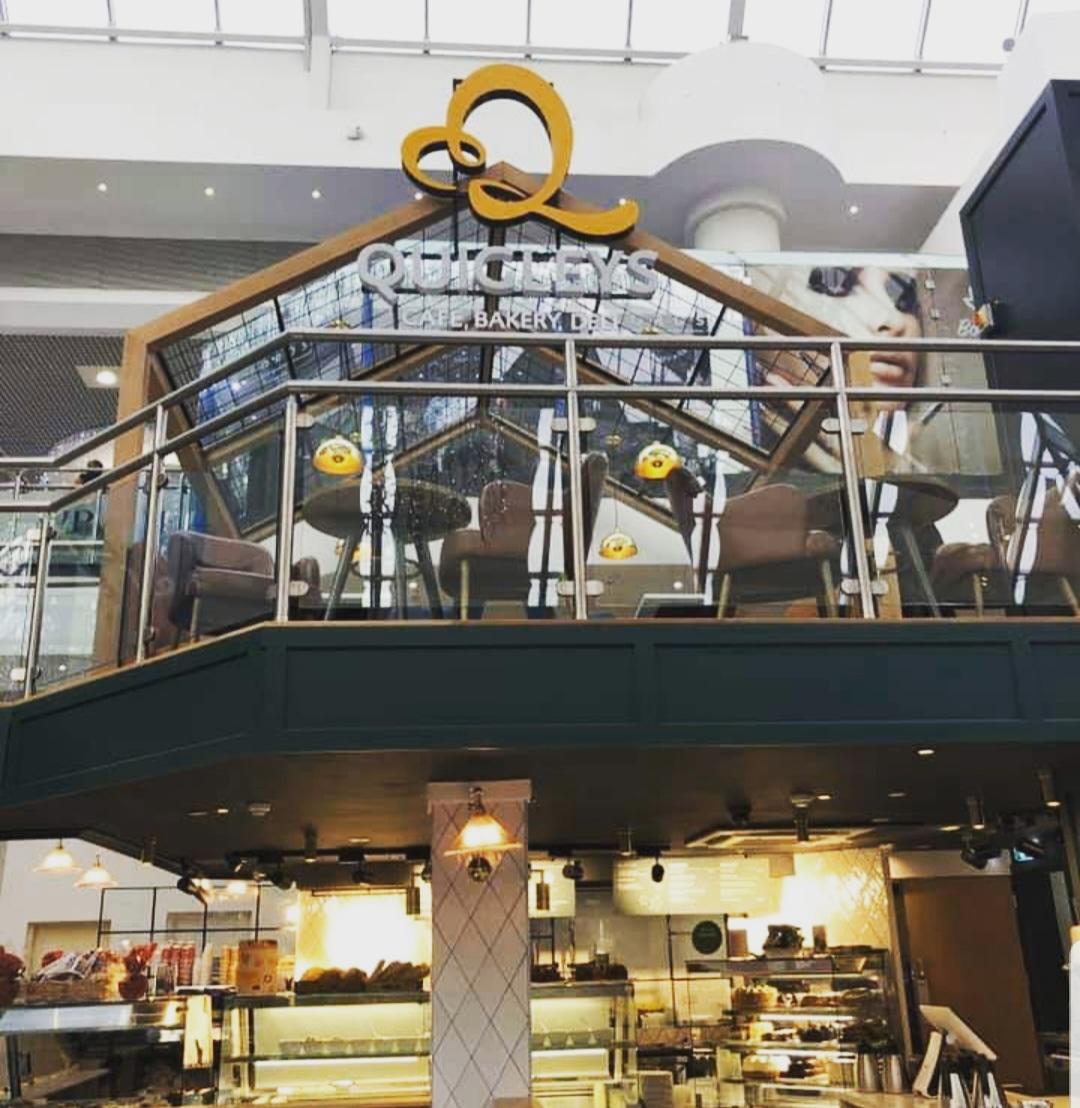
Manor Mills Shopping Centre has just opened a brand new Costa Coffee store and its arrival has generated a lot of excitement in the centre. Costa Coffee has invested heavily in its 1,600 sq. ft new store fit-out which has resulted in a bright, high spec coffee offering.
Costa Coffee is a multinational coffee house company and is the second largest coffee house in the world. Costa Coffee is present in 31 countries across the globe and it opened its first store in Ireland in 2005. Its number of stores have been growing ever since and it has multiple stores all over Ireland.
Sigma Retail Partners are the asset managers for Manor Mills Shopping Centre. Jenna Culligan from Sigma, said “We acquired Manor Mills just over a year ago and one of our asset management strategies from the outset was to bring in additional reputable brands and enhance the food and beverage offer to raise the profile and increase footfall and dwell time into the centre. We just had The Natural Bakery open last week and now we have Costa Coffee, and the feedback we have received from both customers and retailers alike have been very encouraging. We wish Costa Coffee all the best and we are delighted to welcome them into Manor Mills Shopping Centre.”
A significant amount has already been invested into the rebranding of Manor Mills Shopping Centre and plans for further investment are set to continue. The centre has recently installed free Wi-Fi throughout the mall adding further to its appeal to shoppers.
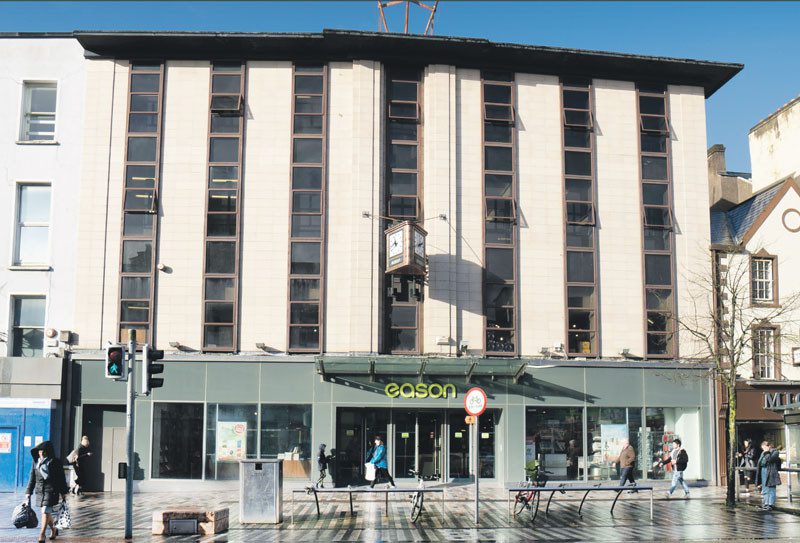
Manor Mills Shopping Centre is centrally located within Maynooth town itself and is located adjacent to Maynooth University. The shopping centre itself is home to 30 retailers including Dunnes Stores, Carraig Donn, Eason and Hickeys Pharmacy. There are over 500 free car parking spaces in a covered car park.
Manor Mills Shopping Centre in Maynooth has just opened a new store ‘The Natural Bakery’, an Irish company that offers a wide variety of breads, cakes, sandwiches, donuts and pastries, made fresh daily from scratch. They opened their first bakery in Kilmainham in 2013 when their owner Luke Ceighan realised there is a demand for more authentic, artisan baked goods. The concept was soon a success and by 2014, The Natural Bakery opened shops in Donnybrook, Rathmines, Ranelagh and Stillorgan. In 2015, Dun Laoghaire, Clarehall, Baggot Street, IFSC and Naas followed. They now have 13 stores in Ireland.
Jenna Culligan from Sigma Retail Partners, asset managers for Manor Mills Shopping Centre, said “We acquired Manor Mills just over a year ago and one of our asset management strategies from the outset was to bring in reputable brands and enhance the food and beverage offering to raise the profile and increase traffic, footfall and dwell time into the shopping centre. We identified the need for a popular bakery that offers a wide range of tasty pastries, cakes and treats for our shoppers. We wish The Natural Bakery all the best and we are delighted to have them added to our centre.”
A significant amount has already been invested in the rebranding of Manor Mills Shopping Centre and plans for further investment are set to continue. The centre has recently installed free Wi-Fi throughout the mall adding further to its appeal to shoppers.
Manor Mills Shopping Centre is centrally located within Maynooth town itself and is located adjacent to Maynooth University. The shopping centre itself is home to 30 retailers including Dunnes Stores, Carraig Donn, Eason and Hickeys Pharmacy. There are over 500 free car parking spaces in a covered car park.
For letting opportunities contact Bannon today on 01 647 7900.
Seasonally adjusted, the volume of retail sales increased by 1.5% in the month of April, with an annual increase of 4.8%. If Motor Trades are excluded, there was an increase of 1.0% in the volume of retail sales in April 2018 when compared with March 2018 and there was an increase of 3.8% in the annual figure.
The sectors with the largest monthly volume increases were Furniture & Lighting (13.2%) and Fuel (5.6%). The sectors with the largest month on month volume decreases were Electrical Goods (-3.0%) and Department Stores (-1.0%).
There was an increase of 6.8% in the value of retail sales in April 2018 when compared with March 2018 and there was an annual increase of 3.8% when compared with April 2017. If Motor Trades are excluded there was an increase of 1.0% in the month and an increase of 1.8% in the annual figure.
Unadjusted indices are available on CSO Statbank.
Musgrave, the retail symbol group that owns brands including SuperValu and Centra, is targeting growth in the food service and digital markets. It is also in discussions with developers about possibly building more stores in Dublin.
The Cork-headquartered, family-owned group released annual results on Tuesday that showed group revenues steady at €3.7 billion, and profits up 9% to €80 million.
Chris Martin, the chief executive, described them as a “solid set of numbers”.
Mr Martin said he expects the group’s sales and profits to grow further in 2018. Brexit, however, remains a threat for Musgrave, whose network includes more than 300 stores in Northern Ireland. He said the group may look to hold larger stocks in Ireland of goods imported via the UK, but this is unlikely to require it to invest in more warehousing facilities.
Mr Martin revealed Musgrave, whose network of mostly franchised stores had retail sales of about €5.1 billion last year, has devised a new seven-year strategy to reposition its retail brands as food market offerings.
Many of its stores, Mr Martin suggested, will ultimately also comprise instore foodservice elements as well as traditional retail. The strategy is dubbed within the group as “Food Island”.
Musgrave is also developing a number of new food brands, as well as charting the expansion of others, such as Chipmongers, which is offered to independent chipshop owners.
Mr Martin said the Chipmongers brand will grow from 10 to 30 outlets in Ireland by the end of the year, including by rolling it out as a concession within its Daybreak retail network, which has 217 stores in Ireland.
“The long-term ambition is to get Chipmongers to 70,” said Mr Martin.
Musgrave, which last year bought the La Rousse Foods hospitality industry supplier from Aryzta, is targeting more acquisitions in the sector. There is nothing specifically “on the table”, however.
In the burgeoning Dublin market, Mr Martin said it was exploring the possibility of building more stores.
“We are excited by the Dublin market. We are having discussions with a number of developers,” said Mr Martin. “We see opportunities for growth and new stores.”
He said Musgrave would explore the possibility of redeveloping some of the sold Superquinn outlets it acquired in the capital – all rebranded since 2011 as SuperValu – on a “case-by-case” basis.
Mr Martin said that above 50% of its more than €80 million capital expenditure over the year would go towards digital initiatives.
It is developing apps to facilitate paying for goods via mobile phone, as well as upgrading SuperValu’s digital operation.
Musgrave is also hoping to grow its goods exporting business. It has dipped its toe into the Chinese market, with a range available on an Alibaba ecommerce site. It also supplies Alosra, a Bahrain supermarket group.
Through this arrangement, it may also supply stores in the future in Saudi Arabia, if Alosra moves into that market.
Mr Martin said Musgrave is expecting growth in its 81-strong Dialprix network in Spain, but it is unlikely to make acquisitions there.
Smyths Toys, the fast-growing Galway-based retail group, has agreed a deal to buy the Toys ‘R’ Us business in Germany, Austria and Switzerland.
It is Smyths’ first foray into mainland Europe. The deal will see the Irish business buy 93 shops and four online stores.
Investment bank Lazard was hired to find buyers for several international subsidiaries of Toys ‘R’ Us following an announcement last month that the US business would be liquidated.
Smyths was founded in Co Mayo and has become a hugely successful retailing business. It is owned by four Galway-based brothers – Tony, Tommie, Padraig and Liam Smyth – and now owns 21 shops in the Republic of Ireland and around 90 in Britain and Northern Ireland.
It has aggressively expanded in the UK since entering the market in 2007. It will open new shops in Dundee and Luton in the coming months.
The company is intensely private – its turnover and profits here are not available as the firm has unlimited status in Ireland.
However, the UK business shows that revenues and profits there are growing strongly. It significantly increased pre-tax profits in its UK operations to £10m in 2016, as sales climbed by 19pc from £334m (€381m) to £396.49m on the back of new store openings.
The revenue increase contributed to pre-tax profits jumping by 69% going from £5.96m to £10m.
The 19% increase in revenues for Smyths Toys UK in the 12 months to the end of December 2016 followed sales growth of 30% in 2015.
Toys ‘R’ Us said in January said it would shut about a fifth of its US stores as part of a plan to emerge from one of the largest ever bankruptcies by a specialty retailer but the plan was unsuccessful.
On Friday, it was reported that Fairfax Financial Holdings had made a bid to buy the Canadian unit of Toys ‘R’ Us Inc for about $300m.
In Britain, it closed all of its 100 shops after no buyer was found.
International real estate investor Hines has completed the acquisition for €165m of Chatham & King, a high-profile mix of offices, shops and apartments next to the Gaiety Theatre on South King Street in Dublin city centre.
In acquiring the scheme from US private equity giant Lone Star, Hines fended off three rival bids.
Two of the competing offers came from German funds, while the third bid came from the billionaire founder of the Zara fashion chain, Amancio Ortega.
Hines’s purchase of Chatham & King sees it take control of a mixed-use building with retail units comprising 33,500 sq ft occupied by Zara, H&M and Warehouse.
The leading data analytics management firm Qualtrics occupies the 31,000 sq ft office space above the scheme’s retail units as its European headquarters.
Also included in the sale is the Chatham Court building, the second phase of the asset to be developed by Lone Star and delivered in the next 24 months.
Upon completion, this phase will include five retail units totalling 15,597 sq ft and ranging from 495 sq ft to 12,680 sq ft. Qualtrics has agreed to pre-let 26,000 sq ft in the building.
The €165m paid by Hines includes €40m to cover the cost of this redevelopment.
Chatham & King has a projected rent roll of €6.8m and a retail weighting of 50pc.
All told, the centre will ultimately incorporate 4,566 sq m (49,158 sq ft) of retail space and 5,568 sq m (56,936sq ft) of office accommodation.
Hines senior managing director in Ireland, Brian Moran, said: “Hines is delighted to close the Chatham & King acquisition, a marquee mixed-use property at the centre of Dublin’s most fashionable shopping, restaurant and commercial district.
“We have acquired both a strongly-performing asset along with a new phase of additional retail and office which will come online in 2020.”
The man given the task of regenerating a significant portion of Dublin’s north inner city is nicknamed Golden Boots but when Friedrich Ludewig arrived in Ireland this week to outline his vision, he was wearing a comparatively sober pair of grey leopard print boots instead. The boots matched his coat.
The retail property developer Hammerson, which is behind the Dublin Central redevelopment covering six acres from Upper O’Connell Street to Parnell Street to Moore Street and Henry Street, has recruited the award-winning and distinctly dapper German architect to oversee the project and they are optimistic he will get it over the line.
It will be a long time coming.
Plans drawn up by previous owners almost a decade ago fell foul of the crash and of planners and of the families of the 1916 rebels who joined forces to fight for the future of Moore Street and to stop the area being turned into a shopping mall.
Today the plans for a shopping mall on the site appear dead and Ludewig’s ideas focus instead on urban regeneration and the creation of a warren of streets and squares to reinvigorate the area while respecting its place in history.
“The plan was to build a shopping centre but that is not what it should be about,” he told The Irish Times as he walked the site on Thursday evening. “That is not what urban regeneration is about.”
He had clearly done his history homework ahead of a series of meetings with stakeholders this week. And on the day he was officially unveiled as the architect responsible for creating Dublin Central he could pinpoint exactly where the 1916 rebels fled the GPO and he effortlessly plotted the route they took towards Moore Street.
“This is probably the most political project I have worked on but maybe not the most historic. Certainly my Chester client would dispute that. But there is a difference between working with Roman history and working with history where the direct descendants of those involved are still alive,” he said.
Standing on Moore Lane behind Moore St, he pointed out that “many things that happened here between the Friday afternoon and the Saturday lunchtime happened not in the buildings but on the streets”.
He pointed to the granite cobble stones peeping out from under a blanket of tar beneath his boots.
“It would be nice to work with these and use ornamental brass plaques in the ground to tell the story of what happened on the streets, creating less of a museum experience and more of an experience which people can stumble upon and find things almost by accident.”
While 14-17 Moore St, where the rebels made their last stand, will be preserved as a national monument, other houses on the street will make way for the new.
“If some of these structures are 1960s crap with nothing behind them, it would be better to rebuild so they can complement buildings 14 to 17,” he said.
He also wants to create a better space for Moore Street market traders rather than pushing them out.
His tour of the plot brought him to O’Connell Street.
“One of the reasons the top of this street is so quiet is that all the pedestrian traffic turns into Henry St. There is a need for more connectivity between the two areas and what we are suggesting is a laneway from Moore Street to O’Connell Street. It won’t have to be big and what we are thinking is that we can go through number 19 Moore St although we are happy to discuss that.”
He compares O’Connell Street to the Champs Elysee “in that it is the prime street of Dublin but we really have to change people’s perception of it and we have to stop it being [seen] as seedy. We need to work out ways to make people stay on all these streets so they becomes a place not just to walk through but to stop in.”
Simon Betty, the retail director of Hammerson in Ireland, suggested the project could be completed within four years creating 9,000 jobs – 6,000 in the construction and 3,000 long-term jobs in retail and office space created as part of the scheme.
“But this [is] not a race,” he insisted. “This is something we have to do right. We are about long-term investment and long-term returns and if we have to hit pause at the beginning for a period to make sure it is right then we are happy to do that.”
His words were welcomed by Brian O’Neill the chairman of the 1916 Families Committee. “We are in a much better place now than we were when we were dealing with the previous owners of the land,” he said.
“We have seen some positive things happen in recent weeks and Hammerson have started to engage with us but trust has to be built. They are now saying they don’t want to build a shopping centre and that is a very positive development.”
Seasonally adjusted, the volume of retail sales decreased by 0.6% in the month of January, with an annual increase of 1.3%. If Motor Trades are excluded, there was an increase of 1.1% in the volume of retail sales in January 2018 when compared with December 2017 and there was an increase of 5.7% in the annual figure.
The sectors with the largest monthly volume decreases were Department Stores (-4.2%) and Motor Trades (-0.9%). The sectors with the largest month on month volume increases were Other Retail Sales (18.4%) and Pharmaceuticals,Medical & Cosmetic Articles (8.1%).
There was an increase of 0.7% in the value of retail sales in January 2018 when compared with December 2017 and there was an annual decrease of 0.7% when compared with January 2017. If Motor Trades are excluded there was an increase of 0.8% in the month and an increase of 3.2% in the annual figure.
CSO reports
The US private equity giant Oaktree has made arrangements to complete the purchase of a controlling interest in The Square shopping centre in Tallaght, Co Dublin, tomorrow. The €250 million sale by Indego and Nama was one of the largest retail transactions in Ireland in 2017.
The 27-year-old shopping centre – Ireland’s largest when it first opened – registered some 22 million visitors in 2017 and currently produces an annual rental income of almost €14 million.
Marcus Wren of Sigma Retail Partners, advisers to Oaktree’s European Principal Group, yesterday commented that The Square had remained in “fractured ownership” since opening in 1990 and as a consequence it had not been possible until relatively recently to meaningfully adjust or manage the centre to reflect the needs of today’s shopper.
He said that Indego, with support from Nama, astutely established a strong platform to manage the asset by acquiring and amalgamating various borrowers interests in the scheme over the past number of years so as to be in a position to sell more than 90 per cent of the unit shops (118) and 100 per cent of the redevelopment potential.
Bernard Hamill, outgoing chief executive of the Indego Group, said that having laid down and implemented their strategic plan, together with the considerable support and assistance of Nama, to bring The Square to a market in a ready state he wished the new owners every success.
Rod Nowlan of Bannon Investment, who acted for Oaktree, commented that with rental levels less than half those prevailing at The Pavilions shopping centre in Swords, the Tallaght investment “represents a virtual sleeping giant”.
“The Square has immense potential for private residential schemes on its 19 acres of surface parking and a virtually untapped food and beverage opportunity on the sunny and picturesque southern side of the scheme,” he added.
Dublin’s Grafton Street is set for a little more variety with plans by the Australian stationary sensation Smiggle to open a new outlet on the street this summer. It will be the company’s second city-centre store – the other one is in the Ilac Centre – and the fourth in Dublin.
Smiggle sells brightly coloured “fashion” stationery that has caught the imagination of children since hitting the UK in 2014. It has more than 100 outlets in the UK.
The planned store on Grafton Street was formerly a pop-up shop at No 32, where German discount grocer Lidl grabbed much attention in the run-up to Christmas with its display of the Heidi Klum fashion brand.
Building owner Irish Life has agreed a Zone A rent of €7,000 per sq m for a floor area extending to 207 sq.m (2,228 sq.ft), bringing the overall rent roll to €275,000.
Letting agent James Quinlan of Bannon, who acted for Irish Life, said the letting highlighted the improving tone of rents on the street, underpinned by demand from international retailers seeking a presence on the most successful prime retail location in Ireland.
High-profile new tenants who have moved into the street in the past 15 moths include Urban Decay, & Other Stories and Victoria’s Secret.
Directly opposite the planned Smiggle store, Irish Life has completed the purchase of 80 Grafton Street, which is rented by Molton Brown on a 25-year lease from 2014.
Martin O’Reilly, head of property at Irish Life, said the company was delighted to welcome Smiggle and Molton Brown to its Grafton street retailer line-up.
Applegreen’s new service station in the Navan Retail Park will open today, creating 50 new jobs. It is Applegreen’s second service station in Navan, with one already located on the Kentstown Road. The new service station is located on the Northern Link Road which connects north Navan to the M3 motorway and caters for over 34,000 cars every day.
Services at the new 24-hour Applegreen station include; Shop, Bakewell Café, Burger King (including drive through), Subway, Splitz ice-cream, barista coffee, self-service and automated carwash, seating area for 110, children’s play area, ATM, Lotto, Payzone, WIFI, truck stop, car park and toilet facilities.
For every cent spent in the shop, Applegreen says it will donate 1 cent to its Charitable Fund. Applegreen’s chosen charities for 2018 are Focus Ireland, Irish Youth Foundation, Debra Ireland, Friends of the Cancer Centre and Food Cloud.
Ahead of the opening of Applegreen Navan Retail Park, Conor Lucey, Head of Retail Operations Ireland said: “As an Irish Forecourt Retailer we are delighted to be opening our second site in Navan and to be offering a wide range of facilities and products. We’re looking forward to serving the local community in Navan, providing 24-hour low fuel pricing, top food offerings whilst also creating over 50 new jobs.”
Bannon handled the letting on behalf of Sigma Retail Partners.
It is estimated that Irish shoppers spent an extra €90m on groceries over the festive period, according to the latest grocery market share figures from Kantar Worldpanel in Ireland, published today for the 12 weeks ending 31 December 2017.
Among the retailers, Dunnes Stores remained the top Irish supermarket. The grocer captured a market share of 23.0% – up 0.3 percentage points on this time last year – and achieved its strongest sales growth since May 2017, up 4.9%. Dunnes Stores’ customers remain loyal to the store, with perks such as the ‘Shop and Save’ campaign encouraging customers to add extra items to their shopping baskets.
Tesco also performed strongly, achieving its highest sales growth since February 2011, up 5.8%. The supermarket’s impressive growth helped it increase its market share by 0.5 percentage points compared to this time last year, and it now stands at 22.8%. SuperValu clocked in sales growth of 2.0%, with the grocer encouraging customers to spend an extra 70 cents every time they shop.
Historically, Kantar say shoppers have chosen to trade up over the Christmas period, however, Lidl seems to have broken the trend this year. The retailer enjoyed a positive performance over the Christmas period, with market share rising to 10.4% thanks to sales growth of 4.8%. While Aldi saw sales rise by 0.9% this was below the overall market level and led to a slight dip in market share – down 0.3 percentage points compared to this time last year.
According to the figures, the trend towards online shopping is showing no signs of slowing down. Online grocers experienced impressive sales growth of 24%, which boosted their share of the market to a record 2.3% over the Christmas period. Although grocery e-commerce shoppers haven’t increased in number, customers who already shop online have upped the frequency of their purchases with, on average, one extra order placed over this period.
Commenting on the figures, Director at Kantar Worldpanel, David Berry said, “Over the Christmas period the average household spent a record €1,532 on groceries – an increase of €38 compared to last year. Much of this increase has been driven by staple items, with fruit, vegetables, meat and poultry posting a combined sales increase of €28m. Shoppers were also partial to a Christmas tipple with sales of alcohol up almost 6% – a boost of €13 million. Wine was the drink of choice this year with white wine and red wine sales up an impressive 10% and 12% respectively.”
Article in the www.businessworld.ie
The volume of retail sales increased by 2.6% in the month of November, with an annual increase of 6.8%. If Motor Trades are excluded, there was an increase of 1.9% in the volume of retail sales in November 2017 when compared with October 2017 and there was an increase of 7.6% in the annual figure.
The sectors with the largest monthly volume increases were Electrical Goods (14.5%), Department Stores (6.7%) and Other Retail Sales (5.7%). The sectors with the largest month on month volume decreases were Pharmaceuticals Medical & Cosmetic Articles (-11.2%), Bars (-1.5%) and Books, Newspapers and Stationery (-1.2%).
There was an increase of 2.6% in the value of retail sales in November 2017 when compared with October 2017 and there was an annual increase of 4.4% when compared with November 2016. If Motor Trades are excluded there was an increase of 1.2% on the month and an increase of 4.5% in the annual figure.
CSO reports
The volume of retail sales was up 4.5% in October compared with the same period last year, but was flat compared with September, the latest figures from the Central Statistics Office show.
If motor trades are excluded, there was a decrease of 0.3% in the volume of retail sales in October compared with September, and there was an increase of 6% in the annual figure.
The sectors with the largest monthly volume increases were pharmaceuticals, medical and cosmetic articles (7.3%); fuel (1.3%); and clothing, footwear and textiles (1.3%).
The sectors with the largest month-on-month volume decreases were books, newspapers and stationery (-2.5%); electrical goods (-2.1%); and other retail sales (-2.1%).
There was a decrease of 0.1% in the value of retail sales in October compared with September and there was an annual increase of 2.5% compared with October last year.
If motor trades are excluded, there was a decrease of 0.3% on the month and an increase of 3.7% in the annual figure.
An analyst with Davy said the data showed “something of a pause in growth” last month, but that the outlook “remains positive” with employment and wages continuing to grow strongly.
Merrion economist Alan McQuaid said retail sales “remain erratic” on a monthly basis, but that the underlying trend is “positive”.
“While most attention has been on new car sales in the past couple of years, which will be lower in 2017 than 2016, personal spending in other areas has picked up over the same period and is becoming more broad-based,” he said.
“Despite the fluctuation in consumer sentiment since the start of last year, overall personal spending was quite robust in 2016, with headline sales up 6.7% on average in volume terms, albeit lower than the 9.5% rise posted in 2015.”
Mr McQuaid said that even allowing for the weakness in sterling since last year’s Brexit referendum, which has enticed some shoppers to spend in Northern Ireland, retail sales in the Republic “have held up quite well”.
“Indeed, VAT receipts for the year to date are running ahead of official Department of Finance expectations,” he said.
“However, with the pound still very weak in relative terms, the worry for retailers is that more and more shoppers will head North between now and year-end, especially for the busy Christmas period.
“Still, personal spending growth is expected to be positive again in 2017, boosted by the continued fall in unemployment, but with the overall increase in headline sales likely to be lower than last year.
“Taking all the factors into account, we are now forecasting headline retail sales volume growth of around 3.5% in 2017.”
Article in the Irish Times


Hambleden House
19-26 Pembroke Street Lower
Dublin 2
D02 WV96
Ireland
»Map
Phone: +353 (1) 6477900
Fax: +353 (1) 6477901
Email: info@bannon.ie


| Title | Price | Status | Type | Area | Purpose | Bedrooms | Bathrooms |
|---|